Stats
5.8Score
Synopsis
No synopsis yet.
We haven’t got an English blurb for this one. It appears once the source description has been translated.
We haven’t got an English blurb for this one. It appears once the source description has been translated.
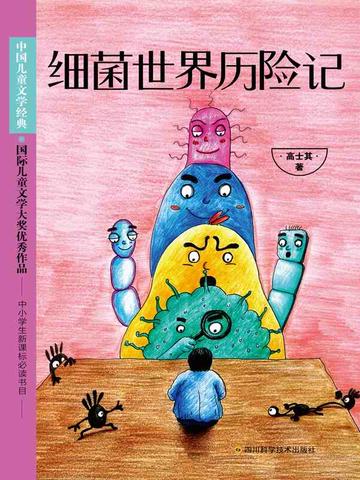
This is a first-person book that shows every lovely child a tiny world under a microscope. The book is divided into three parts: scientific fairy tales, scientific sketches and scientific interesting talks. Science fairy tales are autobiographies of bacteria, telling about different types of bacteria in different organs of the human body; science sketches include the food, clothing, housing, transportation, and morphology of bacteria, etc., And introduce the relationship between bacteria and humans, soil, etc.; Science fun talks mainly introduce some interesting scientific phenomena, principles, etc., Such as mirrors, thermometers, cloth, interstellar navigation, etc.
The author is more objective, using the first person "I" to introduce the bacteria, telling the inner thoughts of the bacteria, objectively describing the harm caused by the existence of bacteria to human beings, and the benefits brought by his own bacteria to human beings. Bacteria are not only eating human flesh and blood. It also plays a role in decomposing substances, so bacteria are still inseparable from the world. In addition, it tells about scientific discoveries later. Personally, I prefer the chapter where the author brings the germs in the first person, which is fascinating. It would be better if there are pictures.
The whole book shows children the world under a microscope from the perspective of a bacteria named "Ji'er". As the pioneer and founder of science popularization in China and a famous science popularization writer, Dr. Gao Shiqi used vivid and childlike language to describe the morphological characteristics, food, clothing, housing, transportation, and living habits of different groups of the fungus family, as well as their impact on human life. The whole book is divided into three chapters: "Autobiography of Bacteria", "Bacteria and People" and "The Immortal Spirit of Cells". I benefited a lot after reading it.
The work describes bacteria in the first person, comprehensively displays the ins and outs of bacteria, and tells readers that bacteria roam in # places that we cannot see, and they also have birth, old age, illness, and death~ It is a model work with the theme of bacterial life and a harmonious combination of scientific content and literary form, allowing us to understand and understand bacteria and realize the importance of hygiene. After reading this set of books, we can clearly realize that bacteria are not absolutely opposed to humans. Some of the barbaric behaviors of fungi that only harm humans are only part of the bacteria. Then the soil revolution subsidized the rural economy; the production of food and clothing contributed to human industry. From this point of view, bacteria are not only the pillars of the biological world, but also the backers of mankind. It tells readers the morphological characteristics, food, clothing, housing, transportation, and living habits of different groups of the bacterial family, as well as their impact on human life. It not only allows us to understand bacteria, but also lets us know the importance of hygiene. Opening this book, those sometimes naughty, sometimes arrogant, sometimes sad, sometimes ferocious fungi tell us all its secrets in its poetic language.
Very good, recommended to watch!
The protagonist of this book is a bacterium named "Ji'er". It tells readers the morphological characteristics, food, clothing, housing and transportation, living habits of different groups of the bacterial family, as well as their impact on human life. It not only allows us to understand bacteria, but also lets us know the importance of hygiene. Opening this book, those sometimes naughty, sometimes arrogant, sometimes sad, sometimes ferocious fungi tell us all its secrets in its poetic language.
Introduced a variety of bacteria and learned about their benefits and harms.
So cool. Vivid description, easy to understand and interesting.
This book is super exciting. Even though I don't usually like to read books, I was fascinated by this book. Who has read my game commentary?
I especially like the bacteria in the book. It gives me a new understanding of bacteria. However, I hate germs that make people sick. This book is very rich in content and very popular in science. Children can gain a lot of knowledge by reading it. I think it is a very good popular science book and worth reading.
Very good description of details
Looks good, sounds good, really good
Interesting and easy to read.
Good👍good👍good👍super super good👍I don't know how to praise it
Bacteria are the existence of the third world. They were previously unknown and played an important role. The author regards them as friends and talks about them in a very interesting way.
The teacher asked me to excerpt. Tell me to choose this.
The gospel for insomnia is healing and interesting
A very nice book.
Use anthropomorphic descriptions to popularize scientific knowledge, which is interesting and not boring.