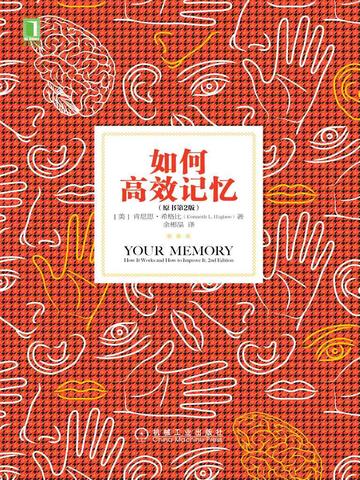
How to Memorize Efficiently (2Nd Edition of the Original Book)
如何高效记忆(原书第2版)
- Status
- Completed
- Source
- Fanqie
Stats
9.0Score
21Chapters
Tags
Synopsis
Reader comments
In booklists 5
Study Books
Are there any books that are helpful for studying? Please recommend! ! ! ! ! !
101.6MViews940Books1dUpdated



A Book for Late-Night Study
15.3MViews1.1kBooks15hUpdated


Looking for Various Study Books
No matter the industry, no type, no difficulty
9.4MViews822Books9dUpdated


Pure Learning Book
I want to read a book similar to "A History of China that is addictive upon first reading (the first collection of works by the popular historical author "Wenhu", a common choice of 572,079 readers)". Books for pure learning
2.2MViews648Books6dUpdated
If You Can't Roll to Death, Roll to Death! I Want to Study Secretly and Surprise Everyone
I am a junior high school student. I would like to ask you for some study methods and helpful books on your bookshelf. It would be best if you can also recommend free learning software and some exercises suitable for the first year of junior high school [Thank you]
286kViews520Books1moUpdated
I have finished reading this book. To summarize my reading experience, Chapters 1 to 6 are about memory-related research. People with backgrounds in psychology and memory research can selectively ignore it. Chapters 11 to 14 are about research on the use of memory systems. In Chapter 12, phonological system memory cannot be applied to our Chinese language, so Chapter 12 can be selectively ignored. People who learn English can choose to read it. , Chapter 14 contains some related research on memory and attention. Chapter 14 is complete nonsense. Memory is linked to attention and cannot be separated. The increase in knowledge in related fields will cause the nerve cells in the human brain to connect with each other. Therefore, forward-looking thinking is a must. When reading, you must think independently. Don't be confused by the author of the book. Some knowledge is useless to some people, so you don't need to read it.
I always felt that my memory was not good before, but after reading this book, I found that as long as I use the right method, everyone can become a memory master. Moreover, the cases in the book also resonated with me very much. I believe everyone can learn a lot from them. The author Kenneth Higbee is really great, and his experience and methods are very practical. I think this book is not only suitable for students, but also for us housewives. After reading it, it can make our lives better!
A very useful book. Memory techniques such as memory visualization, association, positioning and qualification can help us remember. In addition, things are forgotten the most and fastest right after learning, so timely recall and repetition are necessary.
I have studied psychology before and can basically understand it. The memory methods in the book are quite practical for your own memory.
I think that memory methods, memory systems, and mnemonics are quite useless to most people. Except for some rote memorization of materials and physiological and pathological conditions, we rarely focus on memorizing something. If there are relevant matters that need to be remembered, a sticky note on a piece of paper is enough. Special training in memory skills, why bother? There is no need to participate in the strongest brain. But then I thought about it, precisely because it is not necessary, it is even more necessary to learn some memory methods. On the one hand, there are not always materials available for memorization. On the other hand, there are always times when we need to memorize things by rote in a short period of time. Learning some memory methods can also improve efficiency. And I believe that the most important thing in learning the memory method is the perception of the passage of time. Imagine that you are lying in bed at night, reviewing what happened during the day, what happened, and what needs to be improved - your mind is buzzing and blank, as if nothing happened today. But did nothing really happen? Apparently not. Most of the images and feelings we experience in a day are passively forgotten before we have time to perceive them carefully, and a small part of them become part of our brain's experience memory. That is to say, when we are passive, only a few of our experiences in a day will become part of our experience library, and most of them will be regarded as redundant and cleared away. But if we learn how to remember, or even build our own memory system, and store our day's experiences in it, not to mention that we can transform most of our experiences, at least we can intercept more experiences and store them in the experience bank as materials for our own reflection and improvement. In this way, not to mention gaining two years of experience in one year, even if you gain 1.25 Years of experience in one year, it is equivalent to 1.25 Times your growth. On a time scale of ten or twenty years, our growth rate and experience accumulation will be much faster than those of our peers. Not to mention that human growth has compound interest effects and mutual changes in quality, and is not simply linear. One step first, step by step, from first-mover effect to scale effect, faster, higher and stronger.
Very good book! I hope the tomatoes will get better and better!