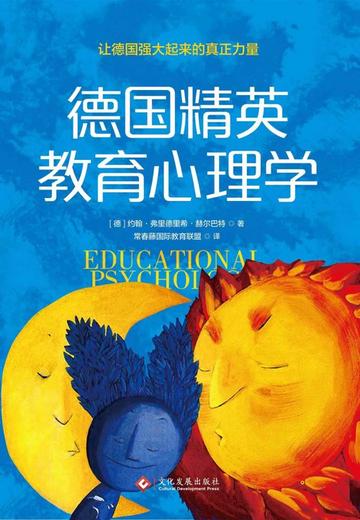
Johann Friedrich Herbart, the author of "German Elite Educational Psychology", was a famous German philosopher and psychologist in the mid-19th century. He attached great importance to the huge impact of psychology on science, especially education. He once proposed the idea of using methods to improve psychological research to correct misunderstandings in philosophy and even the entire scientific field. The core idea of Johann Friedrich Herbart's psychology is the theory of apperception, which absorbed the ideas of British associationism and the concepts of gravity and repulsion in mechanics at that time, and explained the relationship between concepts through a unique perspective.
The theoretical structure diagram of Herbart's pedagogy in educational psychology can be expressed as "purpose - process (method and content) - purpose". Method, content and the purpose running through them constitute a three-dimensional structure in the process. The purpose of education, which studies who to cultivate, is a transcendent and metaphysical thing, and represents the humanistic pole; the educational process, which studies how to cultivate, is an empirical, metaphysical thing, and represents the scientific pole. The specific means and carriers used to achieve the purpose in the process of method and content composition.
Reader comments
Have a smooth journey and read this book by German educator Herbart. The lag in translation sometimes makes people stop and look at the entire sentence or paragraph to understand the meaning, but it is similar to today's educational concepts. It is indeed great that the author could write such educational concepts in the early 19th century. Educators always have a long way to go. As time goes by, at different stages of history and in different countries, there are different education methods. As a member of family education, I do not expect my children to become elites, but hope to become happy ordinary people, and I agree that "learning is a means, and interest is the purpose."
The author Johann Friedrich Herbart was a famous German philosopher and psychologist in the mid-19th century. He attached great importance to the huge influence of psychology on science, especially education. The theoretical structure diagram of education can be expressed as "purpose-process (method and content)-purpose". Method, content and the purpose running through it constitute a three-dimensional structure in the process. The purpose of education, which studies who to cultivate, is a transcendent and metaphysical thing, and represents the humanistic pole; the educational process, which studies how to cultivate, is an empirical, metaphysical thing, and represents the scientific pole. The specific means and carriers used to achieve the purpose in the process of method and content composition. He once proposed the idea of using methods to improve psychological research to correct errors in philosophy and even the entire scientific field. The core idea of Johann Friedrich Herbart's psychology is the theory of apperception, which absorbs the ideas of British associationism and the concepts of gravity and repulsion in mechanics, and explains the relationship between concepts through a unique perspective.
This is an inspiring book. Educators always have a long way to go. As time goes by, at different stages of history and in different countries, there are different education methods. Ignoring the self-proclaimed concept of "elite education" that is repeatedly emphasized in the book, many of the educational concepts in it are very classic, practical and profound. For example, teaching students in accordance with their aptitude, non-forced and free development of personal interests, etc.
And due to differences in time and region, many concepts in the book are slightly outdated. It is better to read this book with the mentality of opening the book and absorbing the essence.
The author Johann Friedrich Herbart was a famous German philosopher and psychologist in the mid-19th century. He attached great importance to the huge influence of psychology on science, especially education. The theoretical structure diagram of education can be expressed as "purpose-process (method and content)-purpose". Method, content and the purpose running through it constitute a three-dimensional structure in the process. The purpose of education, which studies who to cultivate, is a transcendent and metaphysical thing, and represents the humanistic pole; the educational process, which studies how to cultivate, is an empirical, metaphysical thing, and represents the scientific pole. The specific means and carriers used to achieve the purpose in the process of method and content composition. He once proposed the idea of using methods to improve psychological research to correct errors in philosophy and even the entire scientific field. The core idea of Johann Friedrich Herbart's psychology is
This was the first time I heard of Herbart's name when I was preparing for the teaching qualification exam. As the father of modern educational psychology, he integrated the essence he learned from German classical philosophy and psychology into the knowledge and aesthetic education of children. It can be said that he laid a solid foundation for the philosophical foundation of modern education. In addition, the elites focused on in this book Education is not an education for a certain upper social class, but means starting from a child's daily life through training and other methods, and using scientific research on human psychological characteristics and laws to help them gain wisdom. Such a great project was pioneered by Herbart, and I hope that everyone who is interested in education will continue to contribute their talents to this end.
The author Johann Friedrich Herbart was a famous German philosopher and psychologist in the mid-19th century. He attached great importance to the huge influence of psychology on science, especially education. The theoretical structure diagram of education can be expressed as "purpose-process (method and content)-purpose". Method, content and the purpose running through it constitute a three-dimensional structure in the process. The purpose of education, which studies who to cultivate, is a transcendent and metaphysical thing, and represents the humanistic pole; the educational process, which studies how to cultivate, is an empirical, metaphysical thing, and represents the scientific pole. The specific means and carriers used to achieve the purpose in the process of method and content composition. He once proposed the idea of using methods to improve psychological research to correct errors in philosophy and even the entire scientific field. The core idea of Johann Friedrich Herbart's psychology is
The elite educational psychology mentioned in this book is very interesting and gave me a new understanding of education. Herbart's theory of apperception is very unique, and some of the philosophical views in the book also inspired me a lot. However, some concepts are indeed a bit abstract and difficult to read. I particularly dislike people who are not serious about education. Education is a great cause! Overall, this book is worth reading and can make people think about many issues about education.




Have a smooth journey and read this book by German educator Herbart. The lag in translation sometimes makes people stop and look at the entire sentence or paragraph to understand the meaning, but it is similar to today's educational concepts. It is indeed great that the author could write such educational concepts in the early 19th century. Educators always have a long way to go. As time goes by, at different stages of history and in different countries, there are different education methods. As a member of family education, I do not expect my children to become elites, but hope to become happy ordinary people, and I agree that "learning is a means, and interest is the purpose."
The author Johann Friedrich Herbart was a famous German philosopher and psychologist in the mid-19th century. He attached great importance to the huge influence of psychology on science, especially education. The theoretical structure diagram of education can be expressed as "purpose-process (method and content)-purpose". Method, content and the purpose running through it constitute a three-dimensional structure in the process. The purpose of education, which studies who to cultivate, is a transcendent and metaphysical thing, and represents the humanistic pole; the educational process, which studies how to cultivate, is an empirical, metaphysical thing, and represents the scientific pole. The specific means and carriers used to achieve the purpose in the process of method and content composition. He once proposed the idea of using methods to improve psychological research to correct errors in philosophy and even the entire scientific field. The core idea of Johann Friedrich Herbart's psychology is the theory of apperception, which absorbs the ideas of British associationism and the concepts of gravity and repulsion in mechanics, and explains the relationship between concepts through a unique perspective.
This is an inspiring book. Educators always have a long way to go. As time goes by, at different stages of history and in different countries, there are different education methods. Ignoring the self-proclaimed concept of "elite education" that is repeatedly emphasized in the book, many of the educational concepts in it are very classic, practical and profound. For example, teaching students in accordance with their aptitude, non-forced and free development of personal interests, etc. And due to differences in time and region, many concepts in the book are slightly outdated. It is better to read this book with the mentality of opening the book and absorbing the essence.
The author Johann Friedrich Herbart was a famous German philosopher and psychologist in the mid-19th century. He attached great importance to the huge influence of psychology on science, especially education. The theoretical structure diagram of education can be expressed as "purpose-process (method and content)-purpose". Method, content and the purpose running through it constitute a three-dimensional structure in the process. The purpose of education, which studies who to cultivate, is a transcendent and metaphysical thing, and represents the humanistic pole; the educational process, which studies how to cultivate, is an empirical, metaphysical thing, and represents the scientific pole. The specific means and carriers used to achieve the purpose in the process of method and content composition. He once proposed the idea of using methods to improve psychological research to correct errors in philosophy and even the entire scientific field. The core idea of Johann Friedrich Herbart's psychology is
This was the first time I heard of Herbart's name when I was preparing for the teaching qualification exam. As the father of modern educational psychology, he integrated the essence he learned from German classical philosophy and psychology into the knowledge and aesthetic education of children. It can be said that he laid a solid foundation for the philosophical foundation of modern education. In addition, the elites focused on in this book Education is not an education for a certain upper social class, but means starting from a child's daily life through training and other methods, and using scientific research on human psychological characteristics and laws to help them gain wisdom. Such a great project was pioneered by Herbart, and I hope that everyone who is interested in education will continue to contribute their talents to this end.
The author Johann Friedrich Herbart was a famous German philosopher and psychologist in the mid-19th century. He attached great importance to the huge influence of psychology on science, especially education. The theoretical structure diagram of education can be expressed as "purpose-process (method and content)-purpose". Method, content and the purpose running through it constitute a three-dimensional structure in the process. The purpose of education, which studies who to cultivate, is a transcendent and metaphysical thing, and represents the humanistic pole; the educational process, which studies how to cultivate, is an empirical, metaphysical thing, and represents the scientific pole. The specific means and carriers used to achieve the purpose in the process of method and content composition. He once proposed the idea of using methods to improve psychological research to correct errors in philosophy and even the entire scientific field. The core idea of Johann Friedrich Herbart's psychology is
The elite educational psychology mentioned in this book is very interesting and gave me a new understanding of education. Herbart's theory of apperception is very unique, and some of the philosophical views in the book also inspired me a lot. However, some concepts are indeed a bit abstract and difficult to read. I particularly dislike people who are not serious about education. Education is a great cause! Overall, this book is worth reading and can make people think about many issues about education.