
Stats
244Reads
9.4Score
9Chapters
14Listens
78.7kReads · all time
Tags
Synopsis
Reader comments
In booklists 3
Nobel Prize for Literature, Mao Dun Literature Prize, Lu Xun Literature Prize and Other Literary Works
I want to read a book similar to "One Sentence is Worth Ten Thousand Sentences: Collector's Edition".
122.1MViews701Books3dUpdated
A Must-Read for Chinese Language and Literature Majors
Are there any books that can actually help improve your writing and expression skills?
4.8MViews565Books20hUpdated
Are There Any... Foreign Masterpieces... Chinese Masterpieces?
2MViews783Books5dUpdated
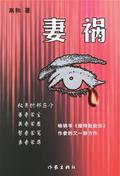
This novel uses Bingzai as the main character and mainly revolves around the people and things around him. Bingzai can only say two sentences, "Dad" and "Are you x?" Throughout the text. There is a ballad in the article that appears at the beginning and end of the article respectively, echoing the two sentences. The novel has a rigorous structure, compact content, ingenious conception, and is thought-provoking. It allows readers to see the isolation of the countryside, feudal superstition, and the regional battles and sacrifices caused by famine, as well as the situation of dogs eating human flesh, and even sacrificing the lives of the older generation for survival. The novel uses a large number of descriptions of scenery to create an atmosphere for the unfolding of the characters' activities, and also inserts some mythological stories to add a mysterious color. From the novel, we can see that Bingzai was born unlucky and allowed others to bully him, but I saw the tenacious vitality in him. This tenacious vitality allowed him to enjoy the treatment of a great immortal during the sacrifice process. The people in the village interpret his words and deeds into different meanings. This exactly reflects the ignorance of the villagers. Everything they do is in vain and will only aggravate conflicts and cause tragedy. The villagers represented by Bingzai were just a microcosm of the society at that time. In the village with poor conditions and little information, many things were very primitive and barbaric. From the perspective of today's society, we can't help but be full of sympathy, and at the same time we are very disgusted with the evils of that era. Therefore, we must cherish our current life and thank those who have contributed to the country in all walks of life.
"As soon as you leave, the clouds in front of you will recede, and the clouds behind you will follow. The vast sea of white clouds will always surround you, not far or near, leaving you with a small island under your feet that you can never walk over, leaving you to float."
I read this book in order to complete the task assigned by the teacher. It's not long, but it's thought-provoking. What made me feel sad throughout the whole story was Bingzai and the old tailor, as if they were the only two beings who could awaken a little bit of humanity in a dark and ignorant society. To be honest, I basically endured nausea and vomiting to read the whole book. Maybe because of my lack of experience and age, I just felt cruel and sad. This shows the importance of cultural enlightenment. I hope we can all get rid of ignorance and ignorance. Only by looking back at the ugliness of feudal superstition in the past can we feel the beauty and brightness of life now.
Bingzai only has his mother and no father to accompany him. The people living in this land have no support; Bingzai can only speak a few words, and the people in this land can only do two things, to please others and hurt others; Bingzai always wears open-crotch pants, and the people in this land do not hide their vulgarity and ignorance at all; in the end, Bingzai's mother died, and the people in this land also left the place where their ancestors had lived for generations. Maybe Bingzai was a microcosm of everyone at that time, or it could also be said to be the author's hope. After all, he still had the most basic humanity, and he survived in the end... Combined with the title of the book, no one responded no matter how Bingzai called him daddy, which symbolizes that the people in this land are not responding to the calls of heaven and earth, but even if there is nothing, even if they have experienced many hardships, Bingzai still survives in the end, and the people of this land should be the same!
Han Shaogong's novel is different. This article combines the characteristics of root-seeking literature and avant-garde literature, with a touch of magic. It vividly demonstrates the poison of feudal superstition and barbaric culture to people. The writing is beautiful and full of artistic conception, and the flexible use of dialect makes the novel more authentic. After reading it, it is endlessly memorable and thought-provoking.
In fact, from a literary perspective, this book is indeed an excellent work! Regardless of the use of character language, the addition of dialects such as "qu, shi, " gives the article a simple and original color. Or the portrayal of the characters in the article, such as the silly Bingzai, the timid Renbao, Bingzai's mother who loves to talk but loves her son as much as her life, Renbao's father who is the only one in the village who has read a book, etc. The author's description of the characters and scenery in the article, coupled with the conflicts of various characters in the village, connect them in series, and easily bring people to that ancient village that worships ghosts and gods and upholds traditional morals. This is probably a reflection of the author's literary skills. Finally, I still have a question: In which region of our country did this kind of village appear? ? ? (Purely personal opinion, don't criticize if you don't like it hahahaha)
When you read this book, you will find that it has always revealed how backward, how feudal and dehumanized the people in this village are. But in fact, when I saw the final arbitration seam and the older generation dying together for the future of the village, a kind of bitterness of fate came to my heart, which reminded me of This is the final ending of the play "Tea House". The new people move to the new generation, and the old people are buried with the old era. While I am still lamenting their disgusting cruelty, backwardness and ignorance, and lamenting the innocent lives that died tragically under the rift between the old and new eras, the last scene is a very classic aesthetics of decline!
I saw the isolation under feudal society, people's ignorance and barbarism. They believe in gods and can kill people and make sacrifices for gods. They can also eat their own kind... "Bing Zai" is a stupid and useless person in people's eyes. When people ate "meat" "righteously", only his mother and he refused to eat. The mother's refusal to eat is out of her own kindness, while the "Bing cub" is out of human nature.
The classic works of root-seeking literature are influenced by Marquez's "One Hundred Years of Solitude" and explore the traditional Chinese culture, which is non-modern, ignorant, national and ancient. Bing Zai symbolizes the national culture criticized by the author, deformed but not dying of old age.
The weird and absurd plot is particularly attractive! In fact, when I first read it, I thought it was simply a literature about suffering, but as I continued to read it, I found that the plots were extremely absurd. The fog of feudal ignorance shrouded the entire village. Looking at these shocking words through the screen, I felt a sense of powerlessness - the sense of powerlessness from a third perspective, knowing that it is all so absurd, but nothing can be done to save it. Secondly, the characters in it are described in detail, such as Bingzai (actually I still can't understand him...), This little old man is so silly and stupid, I don't understand his symbol. What impressed me most was Compal. He was the first villager to come down the mountain and accepted many new things. However, when he returned to the village, he pretended to be advanced. In fact, the darkness and decay in his heart could not be completely eradicated. All in all, highly recommended!!
The language is concise, smooth and natural, and the rhythm is so controlled🐮 Han Shaogong is truly worthy of being a leader in searching for roots alongside Ah Cheng. In view of the lack of humanistic spirit in today's self-media era, and the current situation where postmodern thoughts are flourishing and there is no way out, struggling and even crazy search are still necessary.
It's really okay, eating human flesh, sitting on wooden stakes... Feudal superstition.
The book is very good, it exposes the horror of feudal ideas, but I feel like I didn't learn anything. I also think the author's literary talent is good.
This book is very real and reminds me of some people in my hometown. Bingzai in the book is like an uncle from my hometown. Although he is not very clear-minded, everyone respects him. The author Han Shaogong wrote about life in the mountains very vividly, making me feel like I could see the snakes and birds and feel the isolated atmosphere. He must be a very observant and imaginative man.
It is written in a magical realism style. Whether it is a sacrifice to the god of grain or the death of Bing Zai, it has a fantasy color. The description of the rudeness, barbarism, ignorance and blood of the backward countryside is very vivid. The departure of the village after the defeat is also very tragic. The old man died calmly and the young man left his hometown resolutely. I think it is a contest between the old and new cultures.
It was really well written. I knew the feudal superstition and ignorance of their village from the beginning, but in the end I felt very uncomfortable when I saw such a miserable and desolate village chief. The author is really good at writing, really.
The writing is very powerful, the writing is smooth and interesting, the rhythm is relaxed and moderate, and the length is perfect. Ji Touzhai has not become a paradise for peach blossoms. All kinds of ghosts and gods' logics are like eating Han Shi Powder. I feel a little stupid, but when I think about it carefully, there is a hint of truth. The so-called no one can escape the logic of Han Shi Powder. They were pitiful and pitiful, but they also retained the most primitive warmth. In the end, Bingzai didn't die, which gave me some comfort. What are they fighting for? But in their blood and foundation, they still sing the song of peace and beauty. It is still a song describing the Jinshui River, Yinshui River and Daomi River. There is no description of wars and disasters, and there is no trace of blood.
It's pretty good, I watched it faster the first time. I'll read it a few more times when I have time later. I'm not interested in folk songs or anything like that, but the series of things that happened to Bingzai are worth taking a closer look at. I don't know if there is a prototype for this. [Covering face] Is this from an imaginary era? It seems that the only connection with the outside world is the Yamen.
Unlike the online novel, this novel is real and can make people cry.
The various things in Jitou Village are really shocking. The feudal and backward atmosphere makes people feel depressed and desperate. Compal's arrogance is also very ironic, and the plots of people eating people and dogs eating people are so cruel, vividly showing the darkness of human nature and the cruelty of survival. The tailor's experience is also very helpless and sad. Han Shaogong used this absurd writing method to fully expose the problems of that era and environment.
Root-seeking literature. What is a root? This is probably the place where I was born and raised. Find the roots of the national spirit from traditional culture. There are a lot of environmental descriptions in the book, as well as some dialects. You may not be able to get into it at first, but you will get better with time. There are probably four characters who impressed me deeply: Bingzai, Bingzainiang, Renbao, and Arbitrator. A person is born not favored by God, but seems to be favored by God. A mother who never gives up on her children. One looks like Ah Q. A traditional and conservative person is simple and ignorant.
Let's just talk about the really terrible feudal superstition.
The language is concise and the plot is compact. It is a very special novel.
Wonderful, very good
How should I put it? The literature of examining ugliness and seeking its roots is very rich in color.
I particularly like the story of the tailor rescuing Bing Zai and the story that follows. The tailor takes the initiative and calmly leads everyone to welcome death together. Life is meaningless to them. The author's plain writing style just highlights the sadness of death.
The crackling sound of the fire seemed to transport me to the life of cooking with firewood at home. After reading the content behind it, my thoughts immediately moved out. It was too dark and despicable. The black shadows cast by the fire on the wall were a true reflection of the dark side of the devil in everyone's heart, twisting, deforming, and shrouding this rural and isolated island.
"If you don't break out in silence, you will perish in silence."
Beautiful, very impressive
Representative works of root-seeking literature