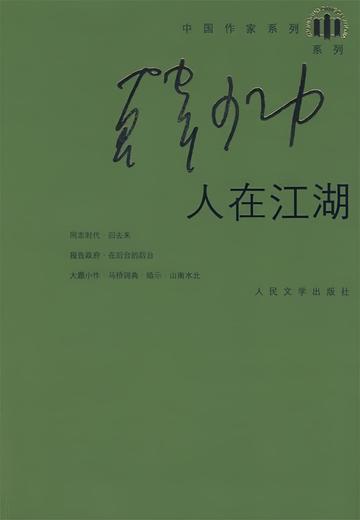
This anthology contains Han Shaogong's main works, accounting for about 70-80% of the total published works. Taking advantage of this publication opportunity, the author revised some of the works.
The situations involved can be roughly divided into three types: one is restorative. Since the late 1970s, publishing censorship standards in mainland China have been gradually relaxed, and authors' autonomy was not very sufficient at the beginning. Sometimes, especially in the early days of the literary thaw, some newspaper editors, out of some scruples, often force authors to make major deletions and changes, and even go so far as to do it directly - not including accidental cuts when there is not enough space. The 70% discount when these works were published was not the author's wish. Today, it seems to be a historical regret and they should be restored to their original appearance if possible. The second is explanatory. The rapid changes in China's real life have brought about frequent changes in public context. Some common terms used ten or twenty years ago, such as "four types of elements", "production team", "commune", "work points" and "family composition", etc., Are now confusing to many people. Common names of certain periods such as "Big Brother" and "Zhenliang" will cause reading difficulties for future generations if they are continued to be retained. In order to facilitate intergenerational communication, some outdated terms have been appropriately changed, or explanatory text has been slightly added while retaining the original text. The third is remedial.
Reader comments
The language of the book "Man in Jianghu" is plain and simple, and the description is very delicate. For example, the characterization of Lao Wan's movements and psychology are vivid and vivid. It reminds me of Lao She's "Camel Xiangzi", which also describes people at the bottom of society and is very real. Moreover, this book also explains some terms used in specific periods, making it easier for us to understand the stories of that era.
The language of the book "Man in Jianghu" is plain and simple, and the description is very delicate. For example, the characterization of Lao Wan's movements and psychology are vivid and vivid. It reminds me of Lao She's "Camel Xiangzi", which also describes people at the bottom of society and is very real. Moreover, this book also explains some terms used in specific periods, making it easier for us to understand the stories of that era.
A novel with a very realistic plot!