Stats
5.8Score
Synopsis
No synopsis yet.
We haven’t got an English blurb for this one. It appears once the source description has been translated.
Reader comments
In booklists 3
Learning Books
It's the kind that has depth and can be seen through.
39.1MViews485Books17hUpdated
Please Show the Ancients the History of China's Modern Wars and Founding of the Country
9.2MViews313Books2moUpdated
Books That Reflect Real History
I want to read a book similar to "A set of books to read through the Three Kingdoms (7 volumes in total)". I want to read history books that reflect real history without excessive artistic processing. Excessive distortion of facts not only makes reading meaningless, but also distorts values.
524.9kViews370Books2dUpdated
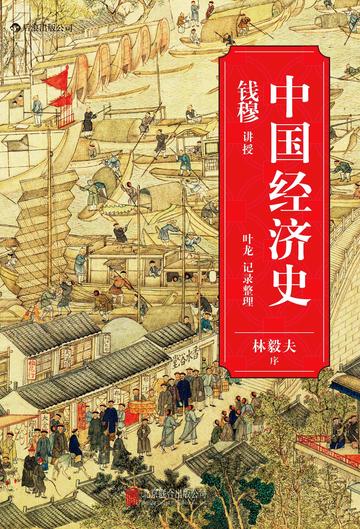
Qian Mu, one of the authors of this book, is a modern Chinese historian and a master of Chinese studies. Together with Lu Simian, Chen Yuan and Chen Yinke, he is known as the "Four Masters of Historiography". Mr. Qian Mu closely links academic research with concern for the survival of the country and the nation, and has devoted infinitely deep feelings and care to traditional Chinese culture. He has dabbled in research on ancient Chinese history, literature, intellectual history, academic history, politics, geography, religion, etc. He has created three major categories: "humanistic evolution", "cultural life" and "coordinated movement", which constitute a complete historical and cultural view with evolutionary significance and value orientation.
"After the Song Dynasty, the Yellow River floods continued for the following reasons: First of all, the true path of the Yellow River was sacrificed for various unrelated reasons. In the Song Dynasty, the Yellow River flowed from the north to the east, from Puyang in Henan Province to Guanxian and Guantao in Hebei Province to the Qing Dynasty in Hebei Province. The river then flows from Wucheng and Dexian in Shandong Province to Wuqiao and Tianjin in Hebei Province and then flows into the sea. It is called the northward flow that leads the water eastward, that is, from Qingfeng, Chaocheng, Qingping, Leling and other counties in Hebei Province to Wudi and enters the sea. It is called the Eastward Flow. Originally, the Northward Flow was the ancient Yellow River route, with smooth water and a wide and deep seaport. However, the Song people were afraid that the Khitans would use the Northward Flow as a bridge to guard the prefectures and counties, so the ministers of Shaosheng tried to advocate the Eastward Flow." Reading the history of economic development carefully, this book tells about the main economic issues including agricultural economy and land distribution, infrastructure and water conservancy projects, industrial and commercial development, currency system reform, social class phenomena, tax system and corvee.
It's a pity that there is no outline of national history by Mr. Qian Mu.
Wonderful, gave me an understanding of ancient Chinese economy
"After the Song Dynasty, the Yellow River floods continued for the following reasons: First of all, the true path of the Yellow River was sacrificed for various unrelated reasons. In the Song Dynasty, the Yellow River flowed from the north to the east, from Puyang in Henan Province to Guanxian and Guantao in Hebei Province to the Qing Dynasty in Hebei Province. The river then flows from Wucheng and Dexian in Shandong Province to Wuqiao and Tianjin in Hebei Province and then flows into the sea. It is called the northward flow that leads the water eastward, that is, from Qingfeng, Chaocheng, Qingping, Leling and other counties in Hebei Province to Wudi and enters the sea. It is called the Eastward Flow. Originally, the Northward Flow was the ancient Yellow River route, with smooth water and a wide and deep seaport. However, the Song people were afraid that the Khitans would use the Northward Flow as a bridge to guard the prefectures and counties, so the ministers of Shaosheng tried to advocate the Eastward Flow." Reading the history of economic development carefully, this book tells about the main economic issues including agricultural economy and land distribution, infrastructure and water conservancy projects, industrial and commercial development, currency system reform, social class phenomena, tax system and corvee.
This book connects China's economic history with politics, society, culture and other aspects, giving me a more comprehensive understanding of history. The content in the book is easy to understand, and Mr. Qian Mu's unique views have benefited me a lot. In particular, it gave me a lot of inspiration about the relationship between the rise and fall of dynasties and economic policies. Recommended to friends who are interested in Chinese history and economy!
I have seen many of the descriptions for the first time, and my understanding of society in the Tang Dynasty is much richer.
This is a detailed and comprehensive historical work that presents readers with the evolution, characteristics and influence of China's economy through an overview and in-depth analysis of China's economic development. This book helps readers understand the historical context and important nodes of China's economic development by sorting out China's ancient economy, modern economy and modern economy. It describes in detail the prosperity of ancient China's agricultural economy and the rise of commercial economy, and demonstrates the uniqueness of ancient China's economic system and commercial activities. At the same time, the book also focuses on the collapse and recovery of China's economy in modern times, as well as the economic transformation and rapid development since reform and opening up. Through the analysis of economic policies, institutional changes, and economic achievements in various historical periods, readers can better understand the characteristics and evolution of the Chinese economy.
A very good book, rich in content, logical and unbiased in argumentation. This book tells the story from ancient times to the Ming and Qing Dynasties. Politics and economics are closely related. From economic history we can see political changes, especially in small peasant societies. The unique point of this book is that Mr. Qian Mu believes that both economics and politics should be viewed from the perspective of cultural tradition. Therefore, this book has both the details of economic history and a macro perspective, allowing people to see and understand Chinese culture from historical works.
A very good book, rich in content, logical and unbiased in argumentation. This book tells the story from ancient times to the Ming and Qing Dynasties. Politics and economics are closely related. From economic history we can see political changes, especially in small peasant societies. The unique point of this book is that Mr. Qian Mu believes that both economics and politics should be viewed from the perspective of cultural tradition. Therefore, this book has both the details of economic history and a macro perspective, allowing people to see and understand Chinese culture from historical works.
Type of agricultural country
How is the economy and society doing?
The system also briefly reviews China's previous economic and taxation development history.