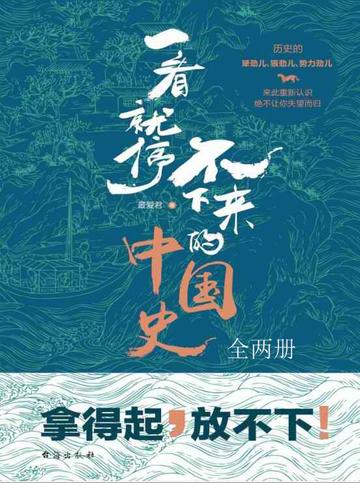
History is not lonely, but an existence full of warmth. This book uses characters as its warp and era as its weft. It uses a delicate writing style to weave a web of historical facts to tell you a different Chinese history. Whether it is the darkness of history, the profound insight into human nature, or the reflection on reality, it can bring you the pleasure of reading. My Favorite Treasure cherishes every person, every thing, and every area narrated, and every step of the way is written with understanding and sympathy. Emperors and generals, literati, lonely heroes, outcasts of the times, everyone is a mirror of the times. Reading history means reading people's hearts, reading the present, and reading the future.
Reader comments
It's a pity that I am uneducated. I can only say that it really broke my previous stereotypes about those historical figures. There are many interesting stories, which allowed me to see the different sides of many historical figures.
Wow, after finishing the review, I realized that not many such good books have been read [laughing and crying] [laughing and crying] [laughing and crying] [laughing and crying] [laughing and crying] It's super exciting. I have to recommend this to Kang Kang, a liberal arts student next to me [laughing and crying] [laughing and crying] [laughing and crying]
This book makes people want to put it down, not only because Chinese history has gathered so many princes, generals, pavilions, pavilions, poems and songs; it is overwhelming. I think what is more important is the author's writing style and writing style; he did not count the people and events in the past five thousand years in chronological order, but eliminated the rough and selected the essence, focusing on some important historical events and characters that can make readers think deeply. They may not be familiar with it, but after reading it, you will definitely be amazed by the twists and turns of the plot and the ending.
Every historical figure comes out one after another, vivid and three-dimensional. We can see Jin Shengtan's madness, Lu You's bitterness, Li Zhi's anger, Gu Hongming's strangeness, Wang Wei's difficulty... Everyone is a mirror of the times. Times are nothing but the integration of human nature. In the dust and smoke of long history, there are always some things that will last forever. This thing is human nature itself. We cannot go beyond history and evaluate others from the current perspective. Maybe from the current perspective, they did not do well enough, but how could we in that era surpass them? The ending said well, "Your behavior is beyond my imagination, so it is suspicious." The judgment is limited by vision. Times create heroes, and heroes change the times or themselves.
Although this book tells the history of China, it is not arranged in chronological order. Instead, it is narrated in terms of literati, emperors, generals, merchants, bizarre historical events, dynasty labels, historical geography, etc. The book unfolds with vivid historical figures and gripping stories, no matter the time, allowing readers to see the greatness of our nation, but also its limitations, the helplessness of a person's fate, and some of the greatness of life. Here you can read the tenderness of the human world, as well as all kinds of evils that are worse than animals; you can read the heroism of emperors, generals, and ministers, but also their unbearableness.
Favorite Jun, the two main creators are both former senior reporters of Southern Metropolis Daily. They have a master's degree in history from Nanjing University and a master's degree in literature (communication major) from Huazhong University of Science and Technology. He has published many historical papers in publications such as "Research on the Anti-Japanese War" (Beijing), "21st Century" (Hong Kong), and "History Monthly" (Taiwan). He has participated in the editing and co-authoring of "Collection of Historical Materials on the Nanjing Massacre" and "The Flood: A Thirty-Year Migration History of Chinese Migrant Workers". This book uses characters as its warp and era as its weft. It uses a delicate writing style to weave a web of historical facts to tell you a different Chinese history. Whether it is the darkness of history, the profound insight into human nature, or the reflection on reality, it can bring you the pleasure of reading.
This is a relatively relaxed and casual book. It is not as rigid and boring as other books describing Chinese history. The language of this book is easy to understand and humorous, making people want to read it. But although the language is casual, the content is not casual. The logic is clear, the emotions are delicate, and it is highly historical. Each short story tells the life of each historical figure. By reading this book, we can understand each vivid historical figure. Among them, my favorite is the one that describes Liu Bang and Xiang Yu. It seems to bring them to the modern world, using modern language to describe their stories so that we can better understand it. It is really a Chinese history book that you can't stop reading once you read it.
This book is very interesting! It is not as boring as ordinary history books, but uses characters and times as clues to tell many interesting stories. The author's delicate writing style makes history come alive. I particularly like the descriptions of emperors, generals, ministers, and men of letters in the book, which allowed me to see their unknown sides. This reminds me of "Those Things in the Ming Dynasty", which tells history in a relaxed and humorous way. Reading history not only helps us understand the past, but also allows us to better understand the present and the future.
It's a pity that I am uneducated. I can only say that it really broke my previous stereotypes about those historical figures. There are many interesting stories, which allowed me to see the different sides of many historical figures. Wow, after finishing the review, I realized that not many such good books have been read [laughing and crying] [laughing and crying] [laughing and crying] [laughing and crying] [laughing and crying] It's super exciting. I have to recommend this to Kang Kang, a liberal arts student next to me [laughing and crying] [laughing and crying] [laughing and crying]
This book makes people want to put it down, not only because Chinese history has gathered so many princes, generals, pavilions, pavilions, poems and songs; it is overwhelming. I think what is more important is the author's writing style and writing style; he did not count the people and events in the past five thousand years in chronological order, but eliminated the rough and selected the essence, focusing on some important historical events and characters that can make readers think deeply. They may not be familiar with it, but after reading it, you will definitely be amazed by the twists and turns of the plot and the ending.
Every historical figure comes out one after another, vivid and three-dimensional. We can see Jin Shengtan's madness, Lu You's bitterness, Li Zhi's anger, Gu Hongming's strangeness, Wang Wei's difficulty... Everyone is a mirror of the times. Times are nothing but the integration of human nature. In the dust and smoke of long history, there are always some things that will last forever. This thing is human nature itself. We cannot go beyond history and evaluate others from the current perspective. Maybe from the current perspective, they did not do well enough, but how could we in that era surpass them? The ending said well, "Your behavior is beyond my imagination, so it is suspicious." The judgment is limited by vision. Times create heroes, and heroes change the times or themselves.
Although this book tells the history of China, it is not arranged in chronological order. Instead, it is narrated in terms of literati, emperors, generals, merchants, bizarre historical events, dynasty labels, historical geography, etc. The book unfolds with vivid historical figures and gripping stories, no matter the time, allowing readers to see the greatness of our nation, but also its limitations, the helplessness of a person's fate, and some of the greatness of life. Here you can read the tenderness of the human world, as well as all kinds of evils that are worse than animals; you can read the heroism of emperors, generals, and ministers, but also their unbearableness.
Favorite Jun, the two main creators are both former senior reporters of Southern Metropolis Daily. They have a master's degree in history from Nanjing University and a master's degree in literature (communication major) from Huazhong University of Science and Technology. He has published many historical papers in publications such as "Research on the Anti-Japanese War" (Beijing), "21st Century" (Hong Kong), and "History Monthly" (Taiwan). He has participated in the editing and co-authoring of "Collection of Historical Materials on the Nanjing Massacre" and "The Flood: A Thirty-Year Migration History of Chinese Migrant Workers". This book uses characters as its warp and era as its weft. It uses a delicate writing style to weave a web of historical facts to tell you a different Chinese history. Whether it is the darkness of history, the profound insight into human nature, or the reflection on reality, it can bring you the pleasure of reading.
This is a relatively relaxed and casual book. It is not as rigid and boring as other books describing Chinese history. The language of this book is easy to understand and humorous, making people want to read it. But although the language is casual, the content is not casual. The logic is clear, the emotions are delicate, and it is highly historical. Each short story tells the life of each historical figure. By reading this book, we can understand each vivid historical figure. Among them, my favorite is the one that describes Liu Bang and Xiang Yu. It seems to bring them to the modern world, using modern language to describe their stories so that we can better understand it. It is really a Chinese history book that you can't stop reading once you read it.
This book is very interesting! It is not as boring as ordinary history books, but uses characters and times as clues to tell many interesting stories. The author's delicate writing style makes history come alive. I particularly like the descriptions of emperors, generals, ministers, and men of letters in the book, which allowed me to see their unknown sides. This reminds me of "Those Things in the Ming Dynasty", which tells history in a relaxed and humorous way. Reading history not only helps us understand the past, but also allows us to better understand the present and the future.
See article for details
Good books worth reading