Stats
9.4Score
26Chapters
Tags
Synopsis
Reader comments
In booklists 2
Northeast Novels of the 1980S
54.8MViews293Books20hUpdated

Only by Changing Your Thinking and Changing Yourself Can You Change Your Destiny
I want to read content similar to "50 Masterpieces of Cognitive Crit and the God-Defending Book of Destiny Change". History, philosophy, parenting, literature, and psychology are all in this book
4.3MViews327Books3dUpdated
It's a good article, but the reason why it's not very popular is probably because it doesn't please the market. After all, people these days read books that are enjoyable to read at a glance.
I've been watching Twelve O'Clock every night for three or four days and finally finished watching it. It was great. It's a pity that the ending is a bit tragic. I should add a chapter to get a good ending.
First, the character image of Duan Fang has been successfully created. Second, the language is tense and the plot is attractive. Third, it is as if the author is the person in the novel, with a sense of reality, time and life.
A good book that profoundly portrays people's thoughts.
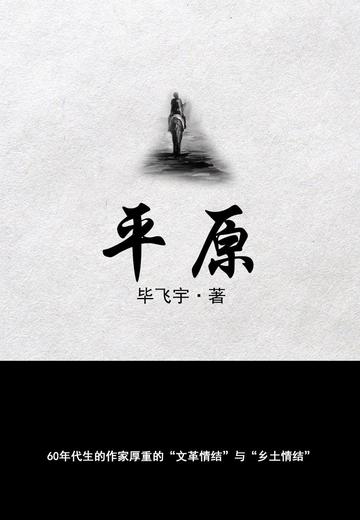
I have benefited a lot from reading this book. This is a novel by a famous writer, which depicts the life and destiny of an ordinary person through delicate writing and unique narrative methods. The novel takes ordinary farmers as the protagonists and shows their struggles and lives in the context of the great times. Shu Ting depicts the inner world and life details of the characters with affectionate writing, allowing readers to deeply experience their emotions. "Plain" is a warm and touching novel that makes people rethink the meaning and value of life through its depiction of the fate of ordinary people.
This is a very realistic novel. You can tell from the sense of age that the author is a person with stories. He tells us what he has heard, seen and experienced before, allowing us to understand the ups and downs of people in the past.
I used to always listen to my father talk about their childhood life
I wrote the story of Wangjiazhuang and the extraordinary people in this ordinary mountain village. The author depicts Wu Manling, the secretary of the educated youth village, the demon king who does whatever it takes to serve as a soldier, Sanya who died for love, and Xinglong, the village doctor... Ordinary people are touched by tender stories. The author uses easy-to-understand language to depict each of the vivid characters. It is very real and has a sense of story. At the same time, the author is good at using language to describe rural characters, details, etc., Which is like a true portrayal of the countryside. The article mostly uses spoken dialect, which increases the artistry of the article.
I don't hope you can understand it, but I also hope you can understand it.
The language seems to be filled with the rustic flavor of the countryside, which is a rural feeling deeply rooted in the fields. Combined with the background of the story, it shows the changes in people's thoughts in the village at that time, the wisdom and ignorance, the noble and the vulgar among different people. Using simple words, the characteristics of the characters of that era are vividly and vividly displayed. From the clothing of the characters to the description of the scenes to the use of words, they all reflect the characteristics of the countryside at that time. It's like watching an old movie from the 1960s and 1970s. Different people choose different paths, and different struggles and surrenders lead to different endings. Desire is like a flame burning in the dusty fields.
Absurd and tragic. People fight against fate throughout their lives, and are eventually swallowed up by fate. The ending seems rushed, but it has a profound meaning. Wu Manling goes crazy and the sow eats her own piglets at the end, creating an absurd and tragic atmosphere. This sense of absurdity and tragedy reflects the helplessness and distortion of human nature in rural life, emphasizing the complexity of social reality and human nature. Wu Manling's madness and the sow's behavior both demonstrate the fragility and unpredictability of human nature. This may imply that under extreme circumstances and pressure, people may lose their reason and self-control, exposing their inner madness and animality. Through the absurd scene at the end, the novel criticizes the issues of power, morality and human nature in rural society. As the village party secretary, Wu Manling was supposed to represent justice and order, but her madness revealed the abuse of power and moral decay. Sows eating their own piglets also reflects the cruelty and helplessness of rural life. The tragedy and absurdity of the ending can also trigger thoughts about fate. Neither humans nor animals can escape the mercy of fate. Accidents and tragedies in life are often unpredictable. The openness of the ending also leaves us room for thinking and imagination.
Brilliant. Rural people and city people are all human beings, the same.
It's a bit like corn, and Wang Lianfang comes out again. The rustic atmosphere of the 1970s, the same meticulous painting techniques, and simple, simple and accurate words outline the atmosphere of that era. I like every character in the author's works. The master looks at the essence of problems, as well as people and things. Emotional logic is the foundation, and the height of the stand is different. In the context of the big era, such as descriptive questions, if written by a master, it feels so natural and real. The logic is clear, based on reality, imagination, language style, and writing are witty and humorous. It is short and concise, no nonsense, no extra space to make up the word count. After reading a good work, you will never forget it and it is worth reading again and again.
The story has exciting twists and turns and is fascinating! Nice!
It is well written, the writing is beautiful and delicate, the language is fluent, and it has a sense of the times. The ending is too abrupt, and it should be continued.
Well! The age of losing humanity
The matter that I have been worrying about Man Ling and Duan Fang finally seemed to be done, but I didn't write it down. I would rather see the follow-up, which is a pity...
It truly and profoundly reflected the scene at that time, and it seems that I will be very emotional in the future. I am also a person who came from that era, and the vivid descriptions resonated hugely in my heart.
It's very interesting. Some chapters are very distinctive. What happened to Wuliang when he ran to the pig farm is a suspense.
Does Wu Manling have rabies?
The author's writing is so good!
I was still shocked when I saw Sanya die. She died so hastily. I thought she would have some interactions with Duan Fang, but she died so tragically. Poor Sanya, it was so painful.
The ending ends abruptly, leaving endless reverie
The description of details in the novel is very successful. At first, I thought that Duan Fang would rise step by step. The content is close to life, and the characters are flesh and blood. In fact, life is like this, everyone is a chess piece.
This book has shadows of the author's other works, but it does not hinder its brilliance. The simple words vividly display the life and people's shadows of that era in front of us.
This book has a strong local flavor, wonderful dialect, distinctive characters, and realistic descriptions of the countryside. It's very exciting. I am from Xinghua myself. I enjoyed reading the local novels. There is a "Wangjiazhuang" in my childhood memories.
Good! Stable! Allow! Ruthless! Deep! Mad! Biao! Satire! Ridicule! Scold! Good!
I read it in one sitting, great book!
People will be driven crazy by life, but there is still a day to live after being crazy. Some people are getting better and better at hiding it - becoming so-called wealthy people. Some people can't explain their existence, so they go crazy, stupid, and stop moving forward...
Super high writing skills