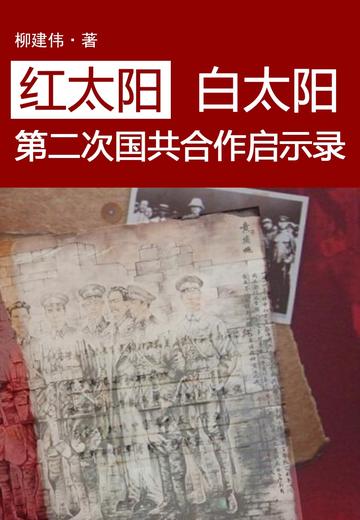
After more than ten secret contacts, the Kuomintang and the Communist Party achieved maximum compromise and cooperation through the Xi'an Incident and the July 7th Incident amidst the roar of gunfire on the Songhu battlefield. In the following years, talks between the two parties stopped and military friction continued. The incident in southern Anhui pushed the cooperative relationship to the edge of rupture; the outbreak of the Pacific War brought the two parties back together again. At the same time, China entered the top four of the anti-fascist alliance, the Kuomintang was aggressive, the Communist Party made the conflicts between the two parties public, and the negotiations were suspended again; the United States failed to mediate, and the two sides had a cold war until Japan surrendered. Eventually, a full-scale civil war broke out. The Communist Party was victorious on the mainland, and the Kuomintang ended up in Taiwan.
This book comprehensively displays the relationship between the Chinese Communist Party and the Communist Party during the eight-year Anti-Japanese War: there are the wonderful strategic battles between Mao Zedong and Chiang Kai-shek, as well as nearly a hundred rounds of verbal battles between Zhou Enlai, Ye Jianying, Lin Biao, Pan Hannian, Zhang Zhizhong, Zhang Qun, and Gu Zhutong; there are also visible and invisible shadows of Roosevelt, Stalin, and the Emperor of Japan. In the midst, you can see the various individual imprints of historical giants, you can hear the strange sounds of war and peace, you can touch the deep creases twisted at major turning points in history, and you can realize the inevitability of historical development, which leads to prosperity but also destruction.
Reader comments
This book is very rich in content. The author uses a large amount of historical data and research to show the complex relationship between the Kuomintang and the Communist Party during the Anti-Japanese War. The characters in the book are vivid, and their strategies and decisions impressed me deeply. The author Liu Jianwei was objective and fair when narrating history, which gave me a more comprehensive understanding of that period of history. I think this is a book worth reading and I recommend it to friends who are interested in history.






This book is very rich in content. The author uses a large amount of historical data and research to show the complex relationship between the Kuomintang and the Communist Party during the Anti-Japanese War. The characters in the book are vivid, and their strategies and decisions impressed me deeply. The author Liu Jianwei was objective and fair when narrating history, which gave me a more comprehensive understanding of that period of history. I think this is a book worth reading and I recommend it to friends who are interested in history.