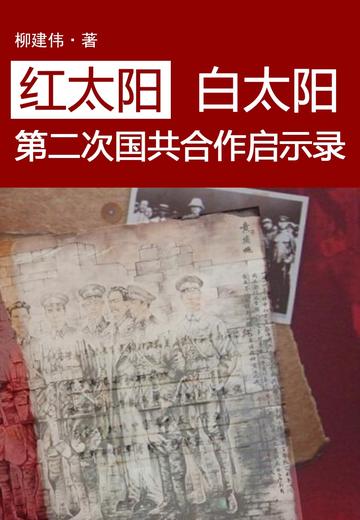
After more than ten rounds of secret contact, the Xi’an Incident and the Marco Polo Bridge Incident led the Kuomintang and the Communist Party to reach the greatest possible compromise and cooperation amid the thunder of artillery at the Battle of Shanghai. In the years that followed, the two parties alternated between talks and standstills, while military clashes continued. The Wannan Incident pushed their cooperation to the brink of collapse. The outbreak of the Pacific War brought the two parties back to the negotiating table, and China joined the ranks of the Four Great Allied Powers in the fight against fascism. As the Kuomintang took an increasingly aggressive stance, the Communist Party made the conflicts between the two parties public, and negotiations broke down once again. Mediation by the United States proved fruitless. The two sides remained locked in a cold war until Japan’s surrender, after which full-scale civil war erupted. The Communist Party won a complete victory on the mainland, while the Kuomintang retreated to Taiwan and held on there.
This book offers a comprehensive account of relations between the Kuomintang and the Communist Party during the eight-year War of Resistance against Japan. It features the brilliant strategic contests between Mao Zedong and Chiang Kai-shek, as well as nearly a hundred rounds of heated debate involving Zhou Enlai, Ye Jianying, Lin Biao, Pan Hannian, Zhang Zhizhong, Zhang Qun, Gu Zhutong, and many others. The shadows of Roosevelt, Stalin, and the Japanese emperor also loom over the story, in both visible and invisible ways. Here, we can see the distinctive marks left by historical giants, hear the strange shifts between war and peace, touch the deep creases formed at major turning points in history, and recognize the inevitable course of historical development: those who follow its current prosper, while those who resist it perish.



This book is very rich in content. The author uses a large amount of historical data and research to show the complex relationship between the Kuomintang and the Communist Party during the Anti-Japanese War. The characters in the book are vivid, and their strategies and decisions impressed me deeply. The author Liu Jianwei was objective and fair when narrating history, which gave me a more comprehensive understanding of that period of history. I think this is a book worth reading and I recommend it to friends who are interested in history.