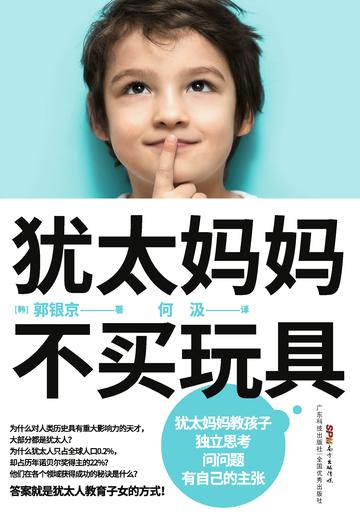
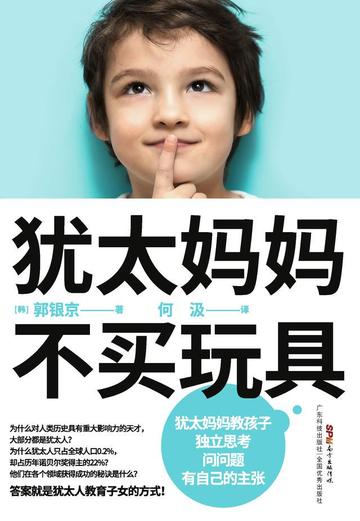
No one is born a perfect parent. Family education is a path that children and parents take together. Only by finding the most suitable education method can your children grow up happily and successfully. This book provides a comprehensive introduction to how Jews cultivate outstanding children through family education. Jews believe that parents' education affects more than 50% of their children's lives. Especially by the age of five, brain development will reach about 75%. Therefore, before the age of five, parental upbringing has a profound impact on children.
It's not that Jewish parents don't buy toys at all, but they are not limited to buying expensive toys, because all kinds of trivial things around them can be used or made into toys with imagination. The book introduces the theories and methods of Jewish education in detail. There are no obscure theories. All the core of Jewish education are integrated into the stories of personal experience. It is easy to understand and can help Chinese parents who are working hard on the road of raising children to find the education method that suits their children.
Reader comments
It's a bit of a pity that I found out too late that my child is older, but I still finished reading it and shared it with my family.
Education is child-centered, allowing children to think, ask questions, awaken themselves and realize themselves.
The parenting methods mentioned in this book are very interesting. The author uses his own personal experience to introduce Jewish education methods. I especially like the book's inspiring content on how to make toys out of things around you. However, I don't really like the behavior of some American mothers in the book, who are a bit indifferent to their children. Overall, this book is well worth reading and can make us think about how to find the right education method for our children.

It's a bit of a pity that I found out too late that my child is older, but I still finished reading it and shared it with my family.
Education is child-centered, allowing children to think, ask questions, awaken themselves and realize themselves.
The parenting methods mentioned in this book are very interesting. The author uses his own personal experience to introduce Jewish education methods. I especially like the book's inspiring content on how to make toys out of things around you. However, I don't really like the behavior of some American mothers in the book, who are a bit indifferent to their children. Overall, this book is well worth reading and can make us think about how to find the right education method for our children.
A better educational direction.