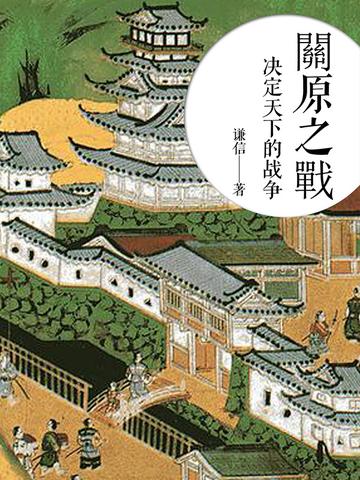
In the third year of Keicho (1598), Toyotomi Hideyoshi died of illness and was succeeded by his youngest son Toyotomi Hideyori. The leader of the five elders, Tokugawa Ieyasu, took the opportunity to secretly form a secret alliance with a daimyo and divide the territory at will. The following year, Maeda Toshiie, the most powerful of the five elders, died of illness. The relationship between the Toyotomi family retainers headed by Ishida Mitsunari and Tokugawa Ieyasu deteriorated rapidly. In the fifth year of Keicho (1600), Tokugawa Ieyasu launched an army to conquer Uesugi Kagekatsu due to the "Naoe War" filed by Naoe Kanetsugu, an important minister of the Uesugi family. Ishida Mitsunari of the Toyotomi family took this as Tokugawa Ieyasu's violation of the ban on private war, and immediately launched an army north to attack Ieyasu. Tokugawa Ieyasu handed over the Uesugi war to his second son, and personally led the army to fight against the Toyotomi generals who supported him. On September 15, the fifth year of Keicho (October 21, 1600), the main forces of the two armies finally fought at Sekigahara in the Mino area. In the end, the war was decided within one day when the Western Army general Hideaki Kobayakawa rebelled. Tokugawa Ieyasu gained control and established the shogunate three years later. However, important figures in Osaka Castle, Toyotomi Hideyori, Yodono and others, as well as the imperial court, did not make much intervention in this war. Both sides mobilized more than 100,000 troops in the Battle of Sekigahara. It was the largest civil war in Japan since the Onin Rebellion. It was also known as the "war that decided the world" (天下分け目の戦い). Both sides accused the other of being Toyotomi's disloyal minister. In this battle, Tokugawa Ieyasu cleverly exploited the weakness of the Western army's disunity to win over the enemy generals and quickly won victory, laying the foundation for the Tokugawa clan's rule.
Reader comments
The writing style of this book is very vivid, and the plot is tense and exciting, making me feel like I am on the battlefield of the Battle of Sekigahara. I particularly like the description of the battle of wits between Ieyasu and Mitsunari in the book, which is very exciting. Moreover, the author's writing style is also good. The text is concise, clear and easy to understand. I highly recommend you to read it.
Pretty good, fairly neutral. He didn't deliberately praise or belittle anyone. Worth a look.

The writing style of this book is very vivid, and the plot is tense and exciting, making me feel like I am on the battlefield of the Battle of Sekigahara. I particularly like the description of the battle of wits between Ieyasu and Mitsunari in the book, which is very exciting. Moreover, the author's writing style is also good. The text is concise, clear and easy to understand. I highly recommend you to read it.
Pretty good, fairly neutral. He didn't deliberately praise or belittle anyone. Worth a look.