Stats
Synopsis
No synopsis yet.
We haven’t got an English blurb for this one. It appears once the source description has been translated.
Reader comments
In booklists 10
Literary Masterpiece, (ㆁωㆁ)
Worth Reading Literary Works
Keep it for the record and look at it again when you have time.
Request Books That Are Beneficial to Study and Life
Learning: Books and guidance books about middle and high school and extracurricular life. Life: Books about language expression, shaping a good psychology, increasing experience, shaping image and cultivating temperament. Thank you to the book recommenders.
I Am Looking for Books to Improve Myself, Whether It Is About Knowledge or How to Deal with People.
I want to read a book like "Rich People Think Differently from You".
Does Anyone Like Literary Classics as Much as I Do?
I recommend twenty-three literary masterpieces to you
Beautifully Written Prose
Literature Books, I Want Literature Books! ! !
Family members, I want to read literature books, books that can improve my writing skills or increase my knowledge. Beg on your knees!
Must-Have Books for Kings of Scrolls
Is There Any Kind of Well-Written Prose or Poetry?
The kind that can make you wow, beautiful, very good, ah ah, I'm short of words, that's what I mean
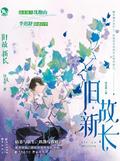
The perseverance to fight against the secular world and the disease finally led to a long life together. Although the disease took away Mr. Wang, it did not take away two hearts that cherish each other and love each other. It is already more precious than secular fast food friendship (love).
"I held Guoxiang's hand and sent him on his last journey in life. In an instant, heaven and man were separated, and life and death were separated. In this world, I bid farewell to Wang Guoxiang." The author recalled his last moments with his friends and even his lover with sincere emotions and nostalgia, and with strong emotions. In the last years, watching his lover become thinner and weaker and suffering from illness every day, the author must also have suffered tremendous psychological pain. However, the words he wrote were so plain, as if his lover was still by his side, and the two of them told each other's last stories together.
"At 5:20, his heart finally stopped. I held Guoxiang's hand and sent him through the last journey of his life." That is a crack in the sky that even Nuwa's refining of stones cannot repair. Mr. Bai is really good at writing. His words are meaningful and meaningful after reading them. I like this article very much, and my ideas have grown from small to large. First, I suddenly look back at the cook in my memory and feel the enlightenment of culture. Then I write about Teacher Li Yayun's enlightenment about her desire to write about culture. Then she writes about her life-or-death love for her mother, and finally it sublimates into her love and sorrow for the whole of China. Very organized, I like it very much. The narrative is very systematic, and my own insights are interspersed in it.
I only read this short article in memory of Wang Guoxiangjun. The writing is beautiful and the language is not procrastinating. He uses restrained language to describe the feelings of his best friend or beloved, and expresses Mr. Bai's grief for the passing of Mr. Wang. Man is determined to defeat God, but man still cannot defeat the destiny of God. I think Mr. Bai lives in the city of Santa Barbara and spends several years carefully picking up camellias instead of replanting them. It must be because this place is full of traces of Mr. Wang, and rescuing almost withered flowers also vaguely symbolizes rescuing Mr. Wang. This can also comfort me. It's a shame they didn't always go hand in hand with each other. I hope there are more beautiful things in this world.
Reminds me of a couple in the 1980s
I didn't expect to finish reading it in one day. I really like Bai Xianyong's writing. It's really well written. He uses plain language to describe his sincere feelings, which made me shed tears without even realizing it. The beauty of Kun Opera has obviously influenced Mr. Bai Xianyong. In other words, art is inherently connected and blended. The words unfold like paintings, and the joy, anger, sorrow and joy move like dramas. What follows are many interviews about literature and AIDS. Mr. Bai Xianyong is a typical literati, a Confucian scholar, and the people of that generation are so similar. When the water is full, it overflows, and emotions leak out from the words, so the reader also sheds two tears.
Before reading it, I always thought it was a work commemorating Wang Guoxiang. But actually this essay is divided into three parts. They write about emotions, literature and general concerns in the world respectively. I personally prefer the second part, which is the part about literature. This article is the pinnacle of loving prose. The emotional expression and the use of language in the book really make people shed tears after reading it. The book is not an angry accusation against the injustice of fate, but gentle and contemptuous, but it brings you an unforgettable sense of pain. Mr. Bai Xianyong is very powerful in the control and use of language. With his unique gentle and timeless writing style, he commemorates the friendship that failed to end satisfactorily. "A tree is like this, how can a human being be tolerated?" For Wang Guoxiang's illness, Mr. Bai Xianyong did his best to seek medical treatment between Taiwan and mainland China. He found countless doctors and obtained countless prescriptions, including traditional Chinese medicine and Western medicine. He tried countless times, but in the end he lamented that "manpower is no match for destiny, and no one can break the limit of life." Between life and death, human beings are too small. The long river stretches between the living and the dead. The eternal separation between heaven and man is the deepest curse for a pair of lovers, just like the crack in the sky that even Nuwa's refining of stones cannot make up for.
Listen to the thunder in the silent place
The prose begins with a garden. The author writes that he and his friend Wang Guoxiang rebuilt the garden at home. The two planted trees and flowers, so that all the camellias bloomed in the originally messy garden. "My garden is finally full of spring." This is the joy of life, a beautiful metaphor. Then, in a twist of fate, a tree begins to wither. Wang Guoxiang fell ill and his condition worsened. Even though the author accompanied him to fight against the disease, he "lost completely" in the end. Through a few words, a sad picture was formed in my mind, and I seemed to be able to see the adjustment of the tree. The realistic picture is far better than all the sensationalism.
Mr. Bai's sincere love for his close friends and his never-ending pursuit of literature have vividly described his life experiences in the form of literature.
If you have friends like this, what regrets will there be in this life? The book fondly recalls the 38 years he spent with Wang Guoxiang. The 38 years were bittersweet with ups and downs, but beautiful to recall. They met at the age of 17 and have always supported each other. Together they planted saplings of hope in the United States, pursued their ideals together, and resisted the torture of illness together. Until the end, Bai Xianyong accompanied Wang Guoxiang through his last birthday and witnessed his last journey. Such a profound friendship is really touching.
The writer has a very profound cultural background, which can be reflected in his understanding of Chinese culture, his acquaintances and the content of his writing. I personally like this book very much. The writing is beautiful and can deeply shock my soul. Finally, it has a more comprehensive description of the popularity of HIV, the status of AIDS and the care of AIDS patients. It allowed me to understand the origin, development, type and prevention of such a disease, as well as the efforts made by the authorities and the public to this end. As I read, I understood that period of history. Recommended reading!
There are experiences, companionship, and feelings. This is something many people have dreamed of pursuing, but it is too precious. I have also dreamed of having such a person with me. It's just too difficult.
Hidden lamented in an article that in the past two decades, Taiwanese people have become accustomed to living a life of abundance and have completely forgotten the poor days of material scarcity. Now Taiwan's new generation of people, the e-generation, may not even understand the true meaning of the word "overcoming difficulties." To be honest, if I hadn't read Hidden's article recently, the author wouldn't have seen the word "overcoming difficulties" in newspapers and magazines in Taiwan for a long time. Taiwanese people may have really forgotten those years of overcoming difficulties.
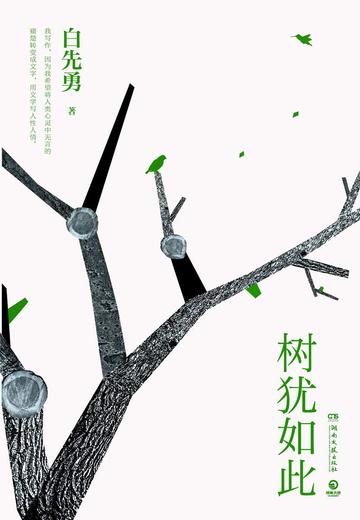
Trees are like this, how can people be embarrassed?
"In the gap, reflecting the clear blue sky and long white clouds, it is a crack in the sky that even Nuwa's refining of stones cannot make up for." "I write because I hope to translate into words the silent pain in the human heart."
The book has three chapters: the author's thoughts about people, memories, comments, and voices... There are memories of the past, mourning for close friends and relatives, dedication to contemporary literature, exploration and promotion of declining cultures, and humanistic care for AIDS patients... These three parts jointly point to a core proposition - love. It comes from nature, is part of human nature, and grows abundantly in reality. The author's language is fresh, concise, pure and clear, and his eloquent words quietly cleanse people's hearts. While he is expressing love, he is also evoking "love". The writer's personality and humanity can be seen everywhere in the words, and even more so, the unconscious responsibility and consciousness.
"Literature may not help a country's industrial or commercial development, but literature is useful. It is a kind of emotional education. If you want to be a complete person, literary education is very important. It can cultivate your sense of beauty, your view of life, and your understanding of people. It makes the greatest contribution in this regard and cannot be replaced by anything else." Therefore, literature will never die.
It is deeply touching. When recalling the life with Wang Guoxiang, every word is the fascination with flowers, trees and trees, and the nostalgia for life; when talking about Kun Opera and telling the experience, it is the love for Kun Opera; when carefully analyzing and commenting on literary works, it is the admiration for literature and art; when promoting science about AIDS, it is the care for the general public. I had heard about his sexual orientation a long time ago, and I was originally curious about it. I wanted to read his books and pictures someday. Recently, I happened to read this book and felt ashamed. I listened to the book while I was painting. What moved me most was not the memory of the first article, but the article about literature. Such a serious attitude and many natural talks about his experience in founding the magazine made me realize his love and pursuit of literature, which corresponded to my love for painting at that moment.
Love, love for my best friend Wang Guoxiang, love for Kun Opera, and care for the general public.
On a spring day, I sat on an armchair in the garden, sipping tea and reading the newspaper, accompanied by hundreds of flowers, enjoying the momentary prosperity of the world for the time being. The only fly in the ointment is that when you look up, you always see a blank space in the west corner of the garden, between the two remaining Italian cypress trees. In the gap, you can see the clear blue sky and long white clouds, which is a crack in the sky that even Nuwa's refined stone cannot make up for.
"Tree Like This" tells the story of the author's emotion about the impermanence of the world in the face of birth, old age, illness and death, and the many joys and sorrows of life, and explores the meaning that literature brings to our lives. This book contains many aspects of content, including the author's memories of his old friends, his own account of the past, his feelings about life and its difficulties, and his aftertaste of history, etc., Giving readers different feelings and understanding of people's moods and attitudes towards life in different situations.
What touched me most deeply in the first paragraph was the last sentence, "Long leisurely white clouds". It was a crack in the sky that even Nuwa's refining of stones could not make up for.
I finished reading this book at 00:10 on December 21, 2025. To be honest, I read it intermittently for a long time. I first read it because I saw the story about him and his best friend Wang Guoxiang. The sentence about the crack in the sky that even Nuwa's refining of stones can't mend is still fresh in my memory. After reading that chapter, I always felt sad, how could God fix it like this. . . Recently I saw an article written by Professor Zhang Heqing in memory of his best friend Liu Zhouzhou. The sentence "No one will have feelings for a handful of soil until he builds one with his own hands" is also very good TVT. I also like the later chapters, especially some explanations about Kunqu Opera. I actually went to the B site to read "The Palace of Eternal Life", which was very interesting. There is also the sentence in the chapter reviewing the novel "Those provincials always hope that those hastily built wooden houses are just a temporary place to stay, and they will make do with it and get through it. I didn't expect that everyone will live there for more than ten or twenty years." Really TVT, the last part about AIDS is also very touching, I hope there will be no discrimination [crying]
I once read Teacher Bai Xianyong's novel collection "Taipei People", which is a very classic and representative work. The various descriptions gave me a very "affectionate" and warm feeling. Reading this collection of his essays, some of the feelings are still the same. Teacher Bai Xianyong's emotions are too sincere. Whether he writes about his friends or talks about his insights into literature, he is extremely sincere. He wants to use this sincerity to encourage everyone to understand literature and pay attention to AIDS and care for AIDS patients, so he has great love. I really like the part about "literature is immortal". I think it is precisely because of such authors and many serious readers that literature can truly be immortal.
This is the first time I have read Mr. Bai Xianyong's book. I personally think his emotions are very well written. The article contains his notes, and you can learn about the stories between him and his friends and his thoughts on life. His emotions are sincere and worth chewing over and over again.
We longed for a golden future in life, but we were completely unaware of the dangers of our future destiny.
The author's writing style is really good, and the emotions and moods are expressed very well, making people moved and touched. Most readers recommend books about Kun Opera and introduce AIDS.
Tears, really beautiful
You buried your bones in the mud under the spring, but I sent them to the world with a head full of snow.