Stats
9.1Score
14Chapters
Tags
Synopsis
Reader comments
In booklists 2


Western Medieval Slavery, Lordships,
13.2MViews173Books22hUpdated
Looking for a Study List for OC People
I would like to read a book similar to "Jungian Psychology". Are there any OC references or books to study? I prefer Jungian psychology/personality typology. Others can also be recommended. Religion, writing skills, mysticism, psychology, and design can all be recommended.
11.5MViews543Books2dUpdated
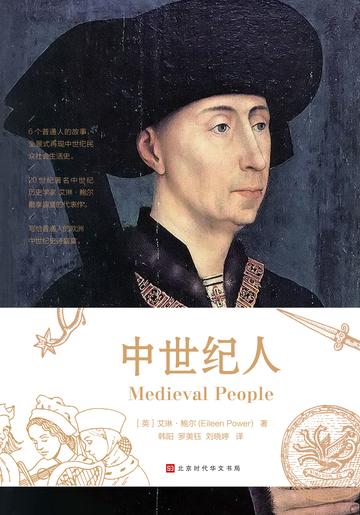
The European Middle Ages, far away in time and space, are sleeping silently in historical documents. The author's "archaeological" excavation of historical materials and written descriptions have awakened the dry historical "specimens" one by one. Its time and space scenes are beating with the pulse of history, and they seem to be illusory and tangible; the rich details of their lives are full of freshness and seem to be real. Bringing the Middle Ages before my eyes, seeing ancient people living their lives again, in this way, reading history becomes a movie-watching experience. The text not only records history, but also provides me with endless imagination. Like writing, it is lifelike, like reading, it is immersive.
History is not just about big events, but also about ordinary people who worked hard. This book describes life in the Middle Ages from the perspective of ordinary people. You can see how French farmers, Venetian merchants, convent nuns, English wool merchants and cloth merchants arranged their work and life. There is also a book written by a husband to his wife, teaching her step by step how to run a household, manage servants, arrange banquets and entertainment activities, etc. If anyone writes medieval fiction, this book is worth a read.
The author of this book said, "Sometimes, the narrative of social history is too abstract, vague and criticized. Whether it is for leaders or students, social history lacks characters with distinctive personalities and is far less fascinating than political history." Because of this, the author decided to use a description of characters from the ordinary class to reflect the situation of people in the Middle Ages through the lives of ordinary people, and to see the big from the small and the subtle. In addition, the author's character creation is also very successful. He also consulted historical materials to ensure that it is consistent with history. Those who like the history of that period can read it.
Taking the perspective of ordinary people, integrating relevant historical materials, and telling it in the form of written stories, it is just like reading a novel. It is not boring at all. Recommended! ! There are just some typos and words that the translator has messed up in it, which affects the perception, but otherwise it's okay!
The Middle Ages is a historical period that is considered the bridge between ancient times and modern times. During this period, European society experienced many important changes, including religious, political, economic, and cultural changes. The lifestyle of medieval people was influenced by the social, economic and religious conditions of the time. In this book, the author introduces in detail the daily lives of six ordinary people during the medieval period, allowing us to understand the real life scenes of medieval people.
The chapters of this book include real letters from mobile phones, diary records, and even original account books and wills. It is Bauer's attempt to restore the appearance of all living beings in the Middle Ages. The Middle Ages was built on the ruins of Rome. The slow pace of life and the blurring of the distinction between people's secular and sacred lives at that time can't help but make people lament the huge differences in people's living styles under the changes of the times. Especially the restoration of peasant life and monastery life during the period of Charlemagne not only makes people lament the earth-shaking changes that social transformation has brought to ordinary people's lives.
This book is one of Eileen Ball's famous masterpieces. The author describes the lives of six different ordinary people in the medieval setting through account books, diaries, letters, records, wills and other documents, allowing us to understand all aspects of medieval life. The book uses vivid and detailed descriptions to bring people into medieval life. Opening this book is like being dragged by mosquitoes and traveling to the distant and mysterious Middle Ages. It can be read as a historical work, and people benefit a lot.
It's a very professional book. I couldn't read it more than halfway through. But this does not mean that this is a bad book, but it is a bit boring for a layman like me. But if you are a professional student or a professional engaged in related work, if you can't lose, you will definitely gain a lot. After all, the author's various descriptions and content are quite good. I quite like the author's writing style.
This book reminded me of my own friends and family who, like the ordinary people in the book, were struggling in their own lives. The detailed description of medieval life in the book made me feel like I traveled through time and space and saw their life scenes. History is not only about big figures, but also about every one of us ordinary people. This book makes me appreciate my current life more and also gives me a deeper understanding of history.
The description is quite good, and it is good as a material. The stance and values are different from those of modern people, so I will automatically ignore it...
The preface is very abstract, full of the central idea that the "Roman Lord" is noble and was despised by barbaric outsiders. The main text is quite interesting, with history and folk customs, and the harmonious combination of human nature and literature.