Stats
Synopsis
No synopsis yet.
We haven’t got an English blurb for this one. It appears once the source description has been translated.
Reader comments
In booklists 12
Books That Students Should Read, In-Volume Essentials
Mathematics, Chinese, English, chemistry, physics, biology, geography, history, ancient poetry...
Study Books
Are there any books that are helpful for studying? Please recommend! ! ! ! ! !
I Want to Study (Internal Volume), Please Recommend a Book
Learning Books
If you are tired of reading romance, just read it to learn. Everything is OK. Focus on learning! ! !
Learning Books
Looking for Some High-Quality Books Where You Can Learn Knowledge
I want to read a book similar to "The Pyramid Principle". There is no limit to the content. Reading it can broaden your horizons, increase your knowledge, and learn something.
The Person Who Has Survived from the Republic of China to the Present Is the Leader of the Financial Group
I am familiar with every country. Pretending to be a slap in the face is too losy. I mainly focus on leisure.
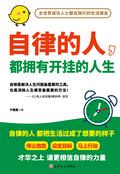

A Book on Self-Discipline and Learning Methods
A book on self-discipline and learning methods
Good Books on Mathematics
I just want some fun stuff! Thank you all
Books Suitable for Student Parties
I want to read a book similar to "Lychees from Chang'an". Are there any books that have a plot and good writing, suitable for students (females), not too childish, and not romantic (not the four major classics)
Learning Books
I want to read a book similar to "Stumping You Without Negotiation: A Complete Collection of the Coldest and Unpopular Knowledge". There is no requirement for books. They can be liberal arts books, science books, computer science books, or books on a certain subject, including miscellaneous professional books.
Teng Bookshelflearn
Study all kinds of strange books, open the bookshelf, leave me alone
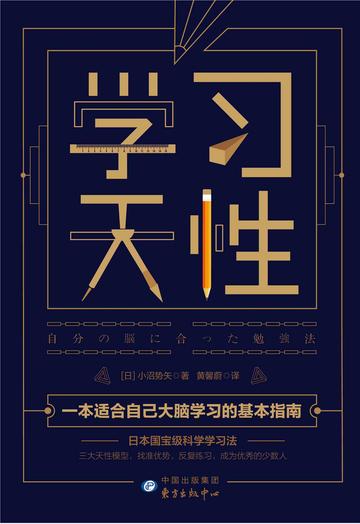
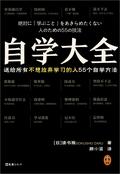
This book is quite good. It explains the definition of memory, how to improve memory, and many practical learning skills to help readers discover problems, propose plans, and solve problems. For those who want to improve themselves, this book is very good and worth recommending!
I had always been number one in the city before, and everything I studied was easy for me. Later, I moved to a city with better educational resources. The difficulty of the questions here was several times higher, there were many talented people gathered, and the teachers' teaching methods were also different from what I was used to. Gradually I was outclassed, I became less and less confident, and my grades got worse and worse. I have asked teachers and classmates for advice on their learning methods, and I have been trying different learning methods, but none of them have obvious results. I gradually began to feel inferior, thinking that I was not smart enough, and shed a lot of tears over this. Later, I learned the learning methods recommended by Wanwei and achieved some results. I gradually understood that the learning effect is largely determined by the learning method. Some people use the right learning methods. Even if they only study for one hour, it is worth three hours of hard work. I read this book, and although I haven't practiced it yet, I have a deeper understanding and understanding of learning methods. The book is really good! Finally, I hope that I will become more and more confident, become better and better, and be admitted to the ideal high school and university!
Sure enough, the books related to learning are applicable across the country. Previously, I felt that they were not suitable for China when I read Japanese books about social etiquette and communication. The learning methods mentioned in this book are very good, and I finally understood why I always failed to learn. It turned out to be that I used the wrong method [eating melon]. After I figured it out, I would probably get twice the result with half the effort!
After reading this, I worked hard and got admitted to Tsinghua University.
I just started reading on my mobile phone and came across this book. It is really heart-warming and very useful.
This book is very good and made me regain my confidence. Although the method varies from person to person. But I think it's still very useful.
Learning methods are very important, timetable, facial features, creativity, good sleep and strong hippocampus, review, different learning factors of the three major learners (listening, vision, touch), planning time and yourself, notes, post-it notes for inspiration
Highly recommended. It is really well written and very comprehensive. In fact, this one is enough for learning books, but it is the most comprehensive among many learning books I have read. It is also very considerate and considers all aspects.
The core point of this book is: learning methods vary from person to person, and everyone needs to explore and practice a learning method that suits them best to maximize learning efficiency. I am very grateful to the author. In today's "learning method craze" phenomenon, the author can let readers not blindly "plagiarize", but find a method that suits them. This made me deeply realize the simple truth that "no leaf in the world is the same"
Understand that everyone's learning method is different from person to person. It is ineffective for you to imitate blindly. The method that suits you is the best way. How to improve learning methods and use them rationally.
Very nice, I have summarized a learning method that is mainly suitable for visual types and supplemented by tactile types. Little friends can pick it up by themselves.
I believe that with the inspiration of this book, I will definitely be able to pass the first choice exam. Although I have never tried it since I was a child, but since reading this book, I feel that people should always try... I always thought it was my own problem, but I didn't expect that there was a problem with the method. I have lived in the denial and suspicion of others since I was a child, but this time, I decided to try
I can recommend it a little bit
I have been confused about correcting learning methods and entering the learning state. Today I finally gained something. Thanks to the author for his detailed explanation and guidance. I was very surprised to meet it today. Thank you very much [Like][Like][Like] It's a pity that I didn't meet him before the college entrance examination, so those sleepless nights were wasted by false efforts and confused by useless studies. Fortunately, we finally met when I was a freshman. They gave me great guidance and encouragement during my chaotic college life. Thank you very much for meeting [Love]
Learning methods are divided into: visual, auditory and tactile. Because I failed the exam, by chance, I found this book to study and enhance my learning ability. Worth learning for everyone, recommended!
Brain science is an important subject that has only emerged in recent decades. Japanese scholar Seiya Onuma is a leader in this subject. He divides the human brain into three major types, covering a wide range of topics, including brain structure and function, the working principles of nerve cells and synapses, perception and cognitive processes, emotions and memory, etc. By examining the neuroscience of the brain, this book aims to uncover the fundamentals of human thought, emotion, and behavior. For those interested in brain science, this book is a valuable resource to help them better understand their own and other people's behavior, and to explore the mysterious world of the brain.
I think people who need to take the postgraduate entrance examination, the editing examination, and the public examination certificate can read this book. The book has a total of 5 chapters. Chapter 1 analyzes why good learning methods are not suitable for everyone from the perspective of brain science. It is recommended that you skip it directly. Chapter 2 is to help you find a learning method that suits your brain. It is recommended to read the last four sections directly, take a test to determine whether you have a visual, auditory or tactile brain, and then look at the learning methods suitable for different types of brains. Chapters 3-5 are the three stages of learning. For some learning techniques at different stages, you can look at the catalog to look at the parts you are interested in. Personally, I feel that these learning techniques are of average practicality and few people can follow them. The only thing that was useful to me was the review notes in the last chapter.
It is very useful for me who is confused in the third grade of junior high school. It talks about what learning methods we can use to learn instead of blindly learning, and then also talks about how we can maximize our efficiency according to ourselves when studying. Anyway, I think it is very good. This is a treasure book! [Blowing kiss] I listened to most of this book. I listened to it for about three hours. This is the first time I have listened to a book in one go. I think it is really effective. Everyone, please go check it out [I understand]
It was probably the powerful guidepost I encountered when I was about to take the wrong road: "Look, the right road is not so rugged and difficult. You have to give it a try. You can do it." I have always known that I am not a genius, but a stupid bird that can only fly through hard work. My escape from reality made me waste my time. In fact, the cruelty of reality has always been there, and escaping is just a thin layer of sticky rice paper in front of this layer of cruelty. From the next second onwards, we must step on the right path and run for the light.
After reading this book, I found that my previous learning methods were very similar to this one, but now I am a patient with procrastination + laziness. I am very ashamed. My studies are getting worse and worse, I am stubborn, I refuse to change despite repeated admonitions, and I always live in the past (because my grades were very good in the past)
As an expert in the field of Japanese brain science, the author of this book has been exploring brain training and thinking improvement. As one of the most complex structures in our body, the brain has always been the subject of research by experts in many fields. This book combines the world's latest research results and viewpoints on the development of brain potential with cases, and explains the relationship between our brain structure and learning in five parts. The author goes from the shallower to the deeper, from the surface to the inside, and continues to deepen. The detailed content provides us with a practical "tool book".
For example, setting aside buffer time in the plan, or recalling and reviewing are all things I realized during my study. After reading them, I understood them thoroughly. There are many more that are very useful. It's really hard to get into a learning state at first, but once you get in, you don't want to quit. This feels really good. Concentrating on studying and studying effectively makes you get twice the result with half the effort. The more vivid and realistic our future memories are, the stronger our desire to accomplish our goals will be. I really feel this feeling, full of energy. Reviewing for exams strengthens these synapses by simulating real exam scenarios as realistically as possible. This way we won't be nervous during the exam. I looked up a similar problem when I gave a speech last time. It is really difficult to resolve the tension. When speaking independently in front of an audience, I am really nervous and there is nothing I can do about it. If you read this book carefully, it is really useful and great. I recommend it.
Practice is more important. The best action is now. Set goals according to your own situation, study hard, and do what you need to do when you need to do it.
It took me more than 3 hours to read this book. Although I haven't implemented it yet, I feel it helped me a lot and woke me up. Although I am only a junior high school student, many of the methods in it are also very applicable to me. Next, I will use the methods mentioned in the book to practice. Finally, thank you.
The author is an expert in the field of Japanese brain science and has devoted his life to studying the structure of the brain. He has put forward many theories and new insights about the brain. This book tells us how to find a learning method that suits us, maintain learning efficiency with twice the result with half the effort, save our time to the greatest extent, and help us move quickly and steadily on the road to success. This is a book that integrates professionalism and daily life, and is well worth reading.
Very good, the method is explained in detail
This book is very good, but I don't understand it deeply enough. My learning foundation is very poor and I still don't know what to do.
Brain science is an important subject that has only emerged in recent decades. Japanese scholar Seiya Onuma is a leader in this subject. He divides the human brain into three major types, covering a wide range of topics, including brain structure and function, the working principles of nerve cells and synapses, perception and cognitive processes, emotions and memory, etc. By examining the neuroscience of the brain, this book aims to uncover the fundamentals of human thought, emotion, and behavior. For those interested in brain science, this book is a valuable resource to help them better understand their own and other people's behavior, and to explore the mysterious world of the brain.
Authoritative experts in the field of brain science in Japan have been committed to exploring brain training and thinking improvement, and have written the research results in this book. As one of the most complex structures in our body, the brain has always been the subject of research by experts in many fields. This book combines the world's latest research results and viewpoints on the development of brain potential with cases, and explains the relationship between our brain structure and learning in five parts. The author goes from the shallower to the deeper, from the surface to the inside, and continues to deepen. The detailed content provides us with a practical "tool book".
It's great, it's like a teacher teaching you how to study. I think those who can learn and apply it, and those who have not read this book in vain, are great.