Stats
Tags
Synopsis
Reader comments
In booklists 144
Explore more →
Metaphysics, I Ching

9.9, 9.8 Treasure Book
High-end book waste area, novices are allowed to enter
Recommend a Good Book for Middle-Aged and Elderly People!
"The Troubled Life of Mountain Village Youth" is a good book with realistic themes, which is very suitable for older people to read.
A Book Where You Can Learn Real Skills
Any book will do
What Books Do People over 50 Want to Read?
Older people can't scan a health code during the epidemic, and they even appeared on CCTV news. Could it be that this group is really that embarrassing? Do they play online? Read the headlines? Read novels? What kind of novels do they like to read?
Tomato's Top Ten Novels
I want to read a book similar to "The End of Ten Days".
Life Requires Eloquence. Is There Any Book About Learning Eloquence and High Emotional Intelligence in Answering Questions?
I would like to read a book similar to "Tricks to Reply and Develop Good Eloquence".
Books That Students Should Read, In-Volume Essentials
Mathematics, Chinese, English, chemistry, physics, biology, geography, history, ancient poetry...
Taofa, Maoshan, Longhu Mountain
The Only 9.9-Rated Novel in Tomato
I want to read a book similar to "The End of Ten Days".
Authentic Taoist Novels (No System), Be Normal and Don't Become a God

Books Suitable Only for Middle-Aged and Elderly People
I want to read a book similar to "Nine Points of Fool".
Masterpiece! ! ! a Chinese and Foreign Classic Book! ! !
All Storytelling Told by Shan Tianfang
Metaphysics, Feng Shui, Bagua, Super Detailed and Easy-To-Understand Articles, All Informative
I want to read something similar to "Record of a Change of Destiny".
Tie Paper, Drive Away Corpses, Qimen, Dunjia
Supernatural and suspense novels about ancient professions
Psychology! ! I Really Like It, Please Read It! Girls Like Psychology
I want to read a book like "Murphy's Law: Learn a little bit of psychology every day". Please recommend some psychological articles. I really like them. I hope to recommend some psychological books. I really like to read them. Please, guys! ! !
A Profound Book That Can Help Me Grow My Brain
Logically rigorous, not mindless sweet stories, with deep foreshadowing, and a grand world view, this kind of
I Read Secretly During the Holidays and Became Obsessed with My Classmates' Books.
I would like to read a book similar to "How to Read a Book".
9.9 a Masterpiece, Super Beautiful
Taoist Introductory Books
I want to read a book similar to "The Analects of Confucius".
Buddhism, Taoism, Confucianism
Are there any novels about Buddhism, Taoism, and Confucianism that are so short of books!!?!?!?
9.9 High Score Masterpiece! ! ! !
I want to read a book similar to "Section 9".
Why Not Read Classics?
Recommend some good books that are meaningful, influential and well-written.
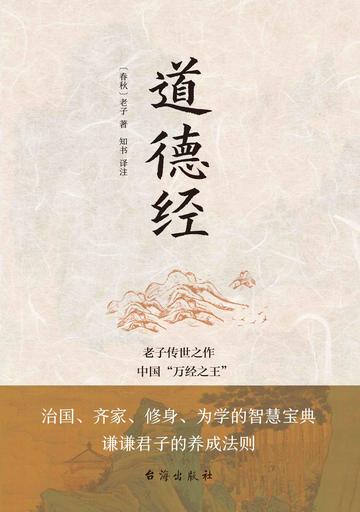
Only saints can do the Tao Te Ching. In this complicated world, people have too many selfish thoughts. A saint can be as tolerant of all things as the earth, without any desire for reward, and as broad-minded as the sea, accommodating all rivers. A saint is indifferent to fame and wealth, and has no distinction between you, me and others. He worries about the world's worries first and rejoices after the world's happiness. It is the most perfect, the most beautiful and the most wise. Although, each of us has independent thoughts and characters without restraint, and fights for our own interests. But it is undeniable that there must be some saints in this world who can save the people and the country at the most critical moments, and even sacrifice their lives when necessary to protect the tranquility of the country. A saint must not only have the right knowledge, right views, benevolence, and morality, but also have a heart that is concerned about the world's worries.
The Tao Te Ching is a classic that can be understood in a lifetime, a classic that Chinese people must read, a truly wonderful and unparalleled classic👍👍😊
I have read it three times and it is indeed translated very well. Classics require us to ponder over and over again to appreciate the truth behind them.
As the saying goes: "One yin and one yang are called Tao." The Tao can be (one yang), the Tao is not (one yin), and the Tao is always the Tao (called the Tao). The name is Ke (one Yang), the name is Fei (one Yin), and the name is Chang (called Tao). ... Yin and Yang are one and inseparable. Dao is OK, some people think that Dao is like this, Dao is not, some people think that Dao is not like this, this is the most common Dao in the world. Some people think that someone's reputation is excellent, good, consistent with appearance, consistent with reputation, and bad. Some people think that someone is bad, bad, inconsistent with appearance, inconsistent with reputation. This is the most common evaluation of someone, which is inseparable and non-contradictory. This is the way!
This book is still applicable in modern times. It has lasted for thousands of years. Its meaning can only be understood. The reason why it has not declined is because its way is to teach people. If there are people who teach it, it will not fade. It shows that his thoughts are correct and guides everyone to live a peaceful and happy life.
This book interprets the nature of nature from multiple perspectives. With his profound knowledge and his unique understanding of the natural world, Laozi observes the world from different perspectives. In five thousand words, he fully explains the vastness of the universe and the prosperity of its categories. He is not only the originator of Taoism, but also provides ideological insights and sources for all walks of life to reach the top level. . .
The philosophy is profound, the dialectics is mysterious, the description of heaven, earth, all things, humanities and society is comprehensive and boundless, with endless aftertaste, long aftertaste, physical and mental pleasure, sudden realization, and frightening...
I have a weak foundation in classical Chinese. I chewed on words and read carefully, but I felt that I could only understand a little bit. However, it really made me enlightened, my perspective on things changed, and I became more and more interested in Taoist thought.
A very good theory, with extremely high ideality, and represents a high sense of justice in the philosophical world. I think the most ingenious thing is that Laozi's thought can be used as a first-person cognitive world or a third-person criticism of the world. It is both capable of recognizing all things and teaching the world. An unknown old man, with no fame and no profit, has such a profound description of the ways of heaven and all things. I hope this will be true in the future, and follow the will of Laozi's ideas.
The first famous book I read on Tomato, so commemorative! I have conquered the Tao Te Ching! ╰(*´`*)╯
The overall reversal of values makes us forget that we are all in an era of collective disqualification without knowing it. Without clarity, one thinks that good deeds done will pave the way for evil sooner or later, such as the political philosopher F. A. Hayek. Hayek's famous saying: "The road to hell is paved with good intentions. If you don't open your eyes to see the world clearly, people will neither be good nor evil. It is not mixed with what people call the Tao heart, but is mixed with what people call hypocrisy. The heart of the Tao is the heart of the Tao; the heart of the Tao that loses its integrity is the human heart. The heart is connected to the Tao, and then it can distinguish right from wrong. Reading the Tao Te Ching lets us know what the "Tao" is, and then we can act according to the Tao, eliminate the false and retain the true, eliminate the evil and retain the good.
I really like the first half of Chapter 42. Tao generates one, which generates two, two generates three, and three generates all things. All things bear yin and embrace yang, and the energy is in harmony. Heaven and earth derive all things, and all things carry yin and hold yang, forming a balanced way. The way of the way is called harmony. Back to nature, calm and inactive, yet everywhere. There are so many changes, I have benefited a lot after finishing the article, it's amazing in seconds!
The Tao cannot be expressed in words, but it can be understood. Lao Tzu has a wise insight into everything, and explains Tao and virtue from the aspects of self-cultivation, governance, and conduct in the world. The content is full and informative, the language is concise, and the reading is endlessly memorable and full of philosophy!
This book shouldn't have non-five-star reviews. Even if it does, it should be a translation problem. After reading it a hundred times, the meaning will become apparent. You can first read it with the annotations, then read it again based on your own understanding, and then read it comprehensively. This kind of gain will not be less. A book worth considering word by word, every time you copy a sentence and think about it carefully, you will feel wiser.
It's very beautiful, but I just can't understand it, but the truth is very profound and it can teach people how to behave and do things.
This is a treasure of Chinese culture, and five stars are the basic After I read it, I shared my thoughts and feelings with my friends, but they couldn't listen at all and thought I was pretending. I also thought they were too superficial. I think everyone should know something about such a powerful book, and don't learn these things that are useless. After all, it is a cultural treasure, which can improve the thinking and spiritual level very much! Highly recommended to watch again and again
Lao Tzu's "Tao Te Ching" is worth reading over and over again. The missing star is not because I think the book is not good, but because I think everyone's annotations on the Tao Te Ching will be different. You need to read extensively the comments of many annotations. Overall, this is a work written by Ben Hui and future generations. It is one of the foundations of Chinese culture and is worth reading.
The core of "Tao Te Ching" is "Tao follows nature". People are often obsessed with "doing", but Lao Tzu reminds us of the wisdom of "doing nothing" - not doing nothing, but not acting rashly and complying with the original laws of things. The water is soft, but it can penetrate rocks; wherever the river and the sea are, it will eventually become the king of a hundred valleys. This tells us: Real strength often appears in a meek and humble manner. In life, we always want to control more, but we often feel tired. Lao Tzu said, "The less you gain, the more you confuse." Let go of excessive desires and obsessions, and you will have a clear mind. "Know what you are content with, you won't be humiliated, know how to stop, you won't end." Only by knowing how to stop can you go far. The deepest realization is: the Tao is not far away, but in our daily breathing and walking. When we no longer fight against life and learn to adapt and flow like water, we can touch eternity in the ordinary. Doing nothing without doing anything is not negativity, but the deepest reconciliation with the world.
The great wisdom of the ancient sages is still worthy of deep understanding after more than a thousand years. I have been having some mental problems recently. When I came back and read Chapter 27, I felt much better. The explanation is good, but you cannot completely agree with it. You should also have your own insights. The same paragraph has different meanings for different aspects.
This book is generally good, but some translations don't feel very good. For example, "getting rid of one's will" is interpreted as weakening one's will. I think it would be better to say "lowering one's desires". He also said that Lao Tzu is against benevolence, righteousness and wisdom. Does this mean that Lao Tzu is too narrow-minded? Tao is inclusive of everything. I am against covering up benevolence and righteousness and doing hypocritical and cunning things. This does not mean abandoning benevolence, righteousness and wisdom. There are also sages who abandon wisdom and do not love their talents. I will suppress them with nameless simplicity. . . All I can say is that you must contact yourself and have your own understanding and thinking. Don't trust everything in books.
Lao Tzu's Tao Te Ching is really great, but the book reviews in it are too different from what I understand. Maybe it's because I'm not mature enough, but I still think that this is Lao Tzu's brilliance. Seeing what's in his heart is the correct answer.
Important things are said three times. Confucianism, Buddhism and Taoism (non-religious) are must-reads, must-reads, must-reads!
There are some discrepancies between volumes A and B of the silk script. I hope it can be updated to show people that traditional Chinese studies have endured for a long time and are worth watching and studying.
After reading it, I learned a lot of things and saw a lot of things. Worth reading
A good book for educating people, worth reading carefully.
The writing is beautiful and has endless aftertaste; it is thought-provoking and a warning to the world; the interpretation is far-reaching and the quotes are plentiful.
The Tao Te Ching should be interpreted comprehensively with the Yi Jing. Although it deviates from the translation, thank you very much! My understanding is still shallow in some areas, so let's continue to understand! It's really a good book that you can learn too much in a lifetime!
Times are different and opinions are different. Take what is available and use what is available. The wisdom of the saint, the treasure of the country, and the soul of the nation.
My understanding is limited and I can't help but say this... Well... The whole book written by the author (Laozi) talks about "Tao". The first chapter says "Tao can be Tao, but it is not Tao" and also talks about "the beginning of the nameless heaven and earth, the named mother of all things" echoing "Tao gives rise to one..." "Being and non-being create each other,..." "Therefore, it is beneficial to have,..." Etc... The author talks about Wu (sometimes it needs to be understood as "Tao" in the article) and existence (sometimes it needs to be understood) "One") itself is one and two sides... The author also said, "Heaven and earth are not benevolent,..." But it seems not enough to understand unkindness as no partiality. In fact, there is not even "no partiality", because heaven and earth are not human (the author is actually talking about "Tao")... The author also said, "The best is like water,..." I don't think it is necessary to say that water nourishes, but it is more like saying "one". The author also said that "Tao follows nature" (the fundamental endorsement of inaction), so he advocates natural inaction, such as "sages are not benevolent", "governing a big country is like cooking small delicacies", "a small country has few people", "doing nothing but doing everything"... Oh~ By the way, the author said "to the extreme of emptiness,..." To observe "nothing", and "there are so many things,..." To see the appearance of all things, and to observe "being"... The author himself said, "I don't know its name. The strong name is called Dao, and the strong character is called Da"... Due to limited space, I will only talk about that much. As for the rest, you have to read it yourself... So when you read this comment, were you doing nothing? Ha! Deliberately trying to deceive you becomes a kind of "impertinence"... 2026.6.24
It is broad and powerful, with far-reaching artistic conception, which is of great benefit to people.