Stats
9.4Score
14Chapters
Tags
Synopsis
Reader comments
In booklists 4
A Must-Read for Chinese Language and Literature Majors
Are there any books that can actually help improve your writing and expression skills?
4.8MViews565Books2dUpdated
Are There Any... Foreign Masterpieces... Chinese Masterpieces?
2MViews783Books6dUpdated




The Whole Country Was Shocked! the Man Adopted the Loli Sisters to Help Him...
I want to read a book like "Become a Teacher and Adopt Two Little Lolita".
1.1MViews67Books7dUpdated


Looking for an In-Depth Book
The IQ is required to be online. Don't write nonsense or make fun of it. It should be in-depth. If it's about traditional culture, even better.
285.3kViews442Books13hUpdated
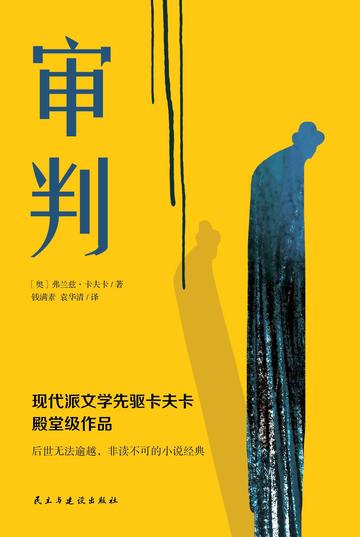
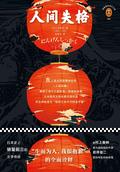
The trial actually revolves around an eternal theme in Kafka's works. In this novel, K's life is disrupted by a sudden accusation. This is Kafka's fear of uncertainty in life. At first K didn't care at all, because he felt that a baseless accusation could not do anything to him, but the fact was that the Austro-Hungarian Empire's chaotic judicial system was as chaotic as a quagmire, and would not easily let go of anyone who made a mistake. Although K later tried his best to solve the case, he was told that it was almost impossible to be acquitted. The fairness of the entire legal system was trampled by the fat-bellied judges. Even a bank assistant like K could not escape the verdict. This kind of sentence is a kind of pain that social life brings to everyone, but in fact there are some human factors behind them. And in the end, Kafka's K is like a man who is about to die. He accepts his own trial, as if he is saying to this absurd fact and the countless and invisible black hands behind it: Come, judge me and grant me death, you despicable executioners! Even after several struggles, K still could not escape his bad luck. This is a common tragedy for ordinary people in this era.
I can't read this book at my level. But I feel that the description of the scene is particularly picturesque. The content about the decadence and darkness of the system is also in line with the historical background of the Austro-Hungarian Empire.
An absurd world, an absurd fate, and a soul that is gradually becoming numb...
Even until his death, K did not know what crime he had committed. The conversation with the priest at the end was very profound and difficult to understand.
Wrapped up by the torrent of absurd reality towards the end of self-destruction, no matter whether you are guilty or not, no matter whether things are reasonable or not, your personal destiny is in the hands of an unreachable high-ranking person.
The blurry lights in the distance are self-liberation or final despair. The benevolent sees benevolence, the wise see wisdom.
This book reminded me of the experiences of some of my friends. Sometimes we, like the protagonist K, fall into unprovoked predicaments. The description of human nature and society in the book is very real and makes me think more about life. It tells us that when facing difficulties, we must stay calm and persist in looking for the truth. I recommend everyone to read this book, I believe you will find a lot of resonance and inspiration.
Can anyone explain it?
There will always be unexpected gains from reading classics
I actually really want to read a board book.
I think it's very nice
I finished reading it in one afternoon. But I still can't understand it, it feels like everyone is acting. Everyone knows about K, except his husband!