Stats
5.8Score
Synopsis
No synopsis yet.
We haven’t got an English blurb for this one. It appears once the source description has been translated.
Reader comments
In booklists 6
Looking for 9.7, 9.8, 9.9 High Scores, Shuangjie Sweet Article
141.2MViews354Books6dUpdated
Nobel Prize for Literature, Mao Dun Literature Prize, Lu Xun Literature Prize and Other Literary Works
I want to read a book similar to "One Sentence is Worth Ten Thousand Sentences: Collector's Edition".
122.1MViews701Books3dUpdated
Masterpiece! ! ! a Chinese and Foreign Classic Book! ! !
94.6MViews930Books21hUpdated
Literary Masterpiece, (ㆁωㆁ)
84.9MViews748Books1dUpdated
Literary Masterpieces, Good-Looking Literary Novels
16MViews419Books6dUpdated
Middle-Aged People Like to Read This Book, but Young People Should Read It!
I want to read a book similar to "Dream of the Golden Chamber". People only know some truths when they reach a certain age. However, there are also some unanswered questions. After reading Dream of the Golden Chamber (the nickname given by Tomato is The Story of the Climb of a Bank Executive), maybe you will understand some things...
908.5kViews647Books10hUpdated
The writing style of this novel is very Tibetan style, and it is one of the few novels that I have read word for word. In the ending, the objective facts are also expressed very rigorously, without changing because of the yearning for beautiful things. Yes, according to the situation at that time, it was impossible for the emperor to clear his name, nor allow him to return to Tibet, nor let him roam around the world alive and kicking. After all, politics is cruel and does not allow any mistakes. Although living in seclusion in the mountains and forests is beautiful, it is only a plot that only appears in novels. The only hope is that as the people of Qinghai say, the soul can live forever with the person he cares about in the underwater palace of Fairy Bay in Qinghai Lake!
When I was young, I read Tsangyang Gyatso's poems. The sentence "I will never let you down, I will never let you down" is full of sadness and helplessness. This is a biography of his life with beautiful language. The first half describes Tsangyang Gyatso's hometown and his kind parents, as well as his childhood and first love. Everything is so beautiful and pure. Tsangyang Gyatso was a poet and a politician. Perhaps it was not his wish to move from freedom to court. However, the moment he was selected as the reincarnated Living Buddha, he had no choice but to do so. He was involved in the ups and downs of the Kangxi Dynasty. In the competition between various forces, he was sunk into Qinghai Lake. He is spiritual. If he could just sing and write poems freely, I think he and his beloved would definitely become a couple of gods and immortals. However, things are unpredictable, and his short life of twenty-three years is tragic.
Reminds me of a book I once read called "Living Up to the Tathagata, Living to Your Majesty". They are all very good Buddhist character novels.
Well written. It is very attractive. I read it non-stop. I was deeply attracted by Cangyang Gyatso. I lamented that there was such a handsome young man in the world. He could write poems, he was talented, he was compassionate, and he pityed the working people. He is honest and sincere. It's a pity that the author's description of love is not attractive. Tsangyang Gyatso probably did not die in Qinghai Lake when he was 24 years old. No one dared to kill him. The Mongolian soldiers also had faith. At that time, they said Tsangyang Gyatso was a fake Dalai Lama. Who dares to say that this statement is correct. So he was probably let go quietly at that time, on the condition that he could not say that he was the sixth Dalai Lama and could no longer write poems. Therefore, in the 40 years from the age of 24 to 64, no poems appeared.
Because a person or a palace falls in love with a city, the sacred Tibet is filled with more mysterious colors. Tsangyang Gyatso, a man and Buddha who combined little love and great love, contradiction and transparency, selfishness and selflessness, regret and relief... Fell into the mortal world in his life. He has the innocence of a child; he has the arrogance and unrestrainedness of a teenager; he has the thoughts and considerations of middle age; he has the futility of everything in old age. He pursues family, love, friendship and Buddhist love; he pursues freedom and wantonness but also pursues being locked in the palace wall; he pursues poetry and distance as well as saving all sentient beings. It's the same sentence, "I can live in peace and harmony in this world, I will live up to the Tathagata and I will live up to you." It expresses the entanglement of a lifetime.
When I was young, I read Tsangyang Gyatso's poems. The sentence "I will never let you down, I will never let you down" is full of sadness and helplessness. This is a biography of his life with beautiful language. The first half describes Tsangyang Gyatso's hometown and his kind parents, as well as his childhood and first love. Everything is so beautiful and pure. Tsangyang Gyatso was a poet and a politician. Perhaps it was not his wish to move from freedom to court. However, the moment he was selected as the reincarnated Living Buddha, he had no choice but to do so. He was involved in the ups and downs of the Kangxi Dynasty. In the competition between various forces, he was sunk into Qinghai Lake. He is spiritual. If he could just sing and write poems freely, I think he and his beloved would definitely become a couple of gods and immortals. However, things are unpredictable, and his short life of twenty-three years is tragic.
I read it intermittently for three days. Every time I read that Tsangyang Gyatso was bound by power and sacrificed his love and freedom, I needed to take a break to calm down the sadness in my heart. Knowing that Tsangyang Gyatso was in high school, the Chinese class teacher told me about his love poem "That Life". I have a bad memory and immediately remembered it - in that life, I traveled around mountains and rivers and pagodas, not to cultivate the afterlife, but just to meet you on the way. It was really beautiful. But I didn't expect that these were misrepresented works of "Tsangyang Gyatso". Including what I know, "Seeing and Not Seeing" and "Ask the Buddha" were not written by Tsangyang Gyatso, and the reasons given by the author (wrong form, wrong content) are also very sufficient.
Not to mention Buddha Tsangyang Gyatso, who dares to taste the sweet fruit of love; All he pursues is a life like ordinary people.
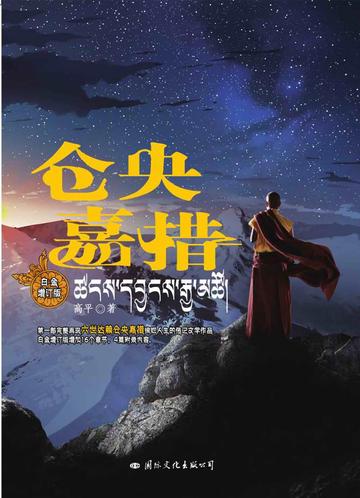
Gao Ping's "Tsangyang Gyatso" introduces the tragic life of Tsangyang Gyatso, a short and extraordinary poet. The whole book looks like the author's biography of Tsangyang Gyatso, but it also looks like a novel. The author wrote this book based on historical authenticity, trying to show the truth of the story as much as possible, and many of the deeds in it have also been verified. In order to write "Tsangyang Gyatso", the author deliberately went to Tibet for several months to experience the customs and cultural characteristics there, so that what he wrote was more realistic and allowed people to feel the Tibetan culture and beliefs. Generally speaking, the author wrote this book based on truth. If you want to know more about Tsangyang Gyatso, you can read it.
Tsangyang Gyatso - a man of unparalleled magnificence and an untimely death, a talented man whose current situation was breathtakingly beautiful. He lived for only twenty years, but left far more wealth to mankind. In the history of Chinese culture, Tsangyang Gyatso also represents the glory of an era and is a relatively influential figure. His short life also attracts people to explore. From the book, we can see the brilliant life of Tsangyang Gyatso, his experience, and his creations are breathtaking.
Peel off the veil of history, touch a living soul, and understand Tsangyang Gyatso objectively. I was deeply shocked after reading it. He is such a smart, interesting, and transparent person! I really hope that the reincarnation of the soul boy is real, so that he can come back to the world to be the most beautiful lover!
Tsangyang Gyatso is an eternal legend, a poet worthy of respect, a very humane Buddha, a wise man who pursues a free ordinary life!
It gives people a very close look at Tsangyang Gyatso, who seems mysterious, but is actually just a talented man who pursues freedom and a normal life!
When I was young, I read Tsangyang Gyatso's poems. The sentence "I will never let you down, I will never let you down" is full of sadness and helplessness. This is a biography of his life with beautiful language. The first half describes Tsangyang Gyatso's hometown and his kind parents, as well as his childhood and first love. Everything is so beautiful and pure. Tsangyang Gyatso was a poet and a politician. Perhaps it was not his wish to move from freedom to court. However, the moment he was selected as the reincarnated Living Buddha, he had no choice but to do so. He was involved in the ups and downs of the Kangxi Dynasty. In the competition between various forces, he was sunk into Qinghai Lake. He is spiritual. If he could just sing and write poems freely, I think he and his beloved would definitely become a couple of gods and immortals. However, things are unpredictable, and his short life of twenty-three years is tragic.
In this book, the author writes in great detail the life of a great poet who only lived 24 years old. People can't help but feel pity and pity for the young man who was reduced to a political pawn and longed for freedom. After reading it for the second time, I feel that the revised version has been cut out a lot compared to the previous version.
The author Gao Ping carefully introduced Cangyang Jiayang to people with extremely powerful and magnificent writing style. He was lifted up by fate to a height that did not belong to him, and acted out a script that was not decided by him. The turbulent politics of the times and the conflict of personal destiny were deeply amplified in him. The desire for freedom and the yearning for love were deeply imprinted on him. But he himself was unable to make a choice. He is indeed a great poet. In the contradiction between anxious fate and free soul, he uses extremely delicate national poetry to reveal his inner voice. It is such a shame that a noble soul died at such a brilliant age.
Through the author's objective and detailed description starting from human nature, readers are presented with a vivid Tsangyang Gyatso who dares to love and hate, who dares to face his own heart, who dares to challenge the king's power but has to compromise. Each chapter is like a picture scroll displayed in front of my eyes, which made me read it again and gain a deeper understanding of the great poet Tsangyang Gyatso who is deeply loved by the Tibetan herders.
Anyone who has read Tsangyang Gyatso's poems will, without exception, fall deeply in love with this talented genius. This book should be a biography with a high degree of restoration of the real Tsangyang Gyatso in history. The story is close to historical facts and the writing is gentle and delicate. It reappears the tragedy of Tsangyang Gyatso's "beautiful, powerful and tragic" life in front of readers, and they will not be able to calm down for a long time after reading it. Let's use the model of Tsangyang Gyatso's poetry to express a few words: Has anyone seen Tsangyang Gyatso? It could be you, it could be me. Those poems that have been circulated for hundreds of years are the chants of our pious yearning for him.
Tsangyang Gyatso was a poet who died young. Although his life was very short, the popular poems he left behind continue to spread in people's mouths, books and hearts. His hometown is in Tibetan area, and the author spent nearly fifty years going to his hometown to collect information about his life. This novel presents the life of Tsangyang Gyatso to readers, allowing us to understand him, his poetry, and the culture of the Tibetan people.
Because of a poem, I got to know Cangyang Gyatso, and I searched around him everywhere. I am very grateful to the author. After reading this book, I like him even more. From then on, when I look at Qinghai Lake, I see more than just a lake. .
Thanks to the author, with his poetic and spiritual language, and his respectful and sincere intentions, he allowed me to see a soul that was torn apart by longing and reality, personality and constraints, and finally destroyed, a soul with warmth and color, poetry and sadness that sang and wept blood. After reading it, I looked up, hiding the pain of empathy, and cherishing my current life even more.
Tsangyang Gyatso, a legendary figure, had a short and extraordinary life. The author's description is very attractive. Many popular sentences about Tibet and Buddhism are interspersed with it. It is vivid and simple, close to life, and brings the talented, extraordinary, contradictory and noble characters to life on the page. People always want to read it as soon as possible. It is a very good book.
A poet writes about a poet. Reading the poem-like language can't help but make people feel like a poem. Finally, I understand a little bit about the life of Tsangyang Gyatso, a well-known young and poignant poet. After reading it, the sadness lingers in my heart. Many pictures emerge constantly. I slowly enjoy the passage of time. The long-lasting life story is more real and beautiful than the reality.
This book takes Tsangyang Gyatso's life as the main line, which gave me a deeper understanding of his story. Tashi Tenzin in the book is a kind and tenacious man, and his experience moved me very much. The storyline is real and touching, especially the portrayal of the characters' personalities and experiences, which is very delicate. I think this is a book worth reading and I recommend it to you!
With elegant words and vivid descriptions, a vivid Tsangyang Gyatso appears on the page, and you are attracted by it at first glance. Poetic, a language unique to Tibet, beautiful and thought-provoking language, a vivid and vigorous life's struggle and helplessness against constraints, touching poetry, innocent people passively involved in the whirlpool of political battles, and the sadness and indignation of being abandoned, which linger for a long time... He was unfortunate but lucky. In his short life, he found a soul mate with family, love and friendship. The poet Tsangyang Gyatso was a pure person, a person with boundless love, a person who pursued freedom and ordinary life... After reading the book, I don't know how to express or resolve this overwhelming emotion. Thanks to the author Gao Ping, this book inspired me to read Gao Ping's poems.
When you get to know a person, you get to know a piece of history. I am also a person with a Tibetan complex. I have been to the Yellow House and like Tsangyang Gyatso's poems. Thank you, Teacher Gao Ping.
The author's wonderful description of the life of Tsangyang Gyatso's poetic Buddha deeply moved him. Tsangyang Gyatso created a noble soul in just twenty-four years.
I have read many books introducing Tsangyang Gyatso, but none of them are as systematic as this one. It is very good.
This is the first time I write a review after reading a book. Reading this work with awe, the vivid image of Tsangyang Gyatso is carved in my mind. Poor and admirable, seemingly a trick of fate, but he became a great poet! Thanks to the author for his wonderful writing, which brings readers into the world of Tsangyang Gyatso. I hope more friends will pay attention to this book and you will not be disappointed!
Writing a novel with a poetic touch makes people feel comfortable reading it. Tsangyang Gyatso's life was like a shooting star, although it was short-lived, it burst out with dazzling light