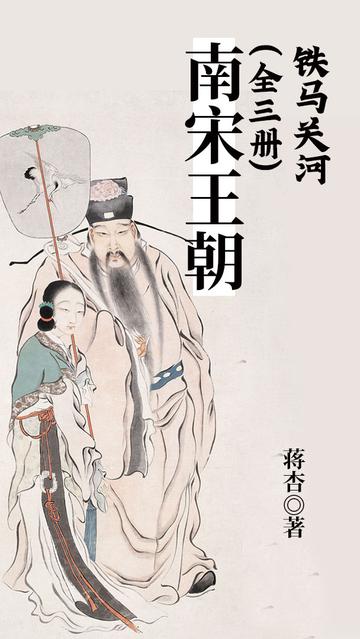
The three-part historical novel The Southern Song Dynasty is a wide-ranging, panoramic portrayal of the Southern Song in novel form. The Southern Song is a dynasty well worth reflecting on. On the one hand, its lands had fallen and its territory was diminished; faced with powerful enemies, it paid tribute year after year and bowed its head in submission. On the other hand, academies flourished, culture thrived, and the whole country was alive with music and revelry. The Southern Song produced many outstanding figures. Among its scholars were Zhu Xi, Lu Jiuyuan, Lü Zuqian, Lu You, Chen Liang, and Xin Qiji; among its generals were Wu Lin, Yue Fei, Liu Qi, Bi Zaoyu, Meng Gong, and Yu Jie. Yet despite its abundance of talent, the Southern Song's national fortunes remained perpetually precarious.
Iron Horses Along the Passes recounts events from the sixth to the eleventh year of the Shaoxing era (1136–1141). By the sixth year of Shaoxing, the Southern Song had largely established itself in the south of the Yangtze River. Its rule was mostly secure, and its border defenses were growing stable. The empire's decision-makers faced a choice: build up strength and recover lost territory, or disband troops, dismiss generals, abandon the fight, and sue for peace. Passionate patriots such as Zhang Jun, Zhao Ding, Yue Fei, and Han Shizhong chose the former, while Emperor Zhao Gou chose the latter. Thus began the struggle between war and peace. As the debate deepened, seeking peace turned into begging for peace, and then into pleading for peace. The court's unrelenting pleas for peace smothered the nation's fighting spirit. Iron Horses Along the Passes bears witness to the extinguishing of that spirit in the Southern Song dynasty.