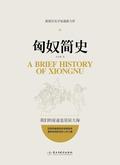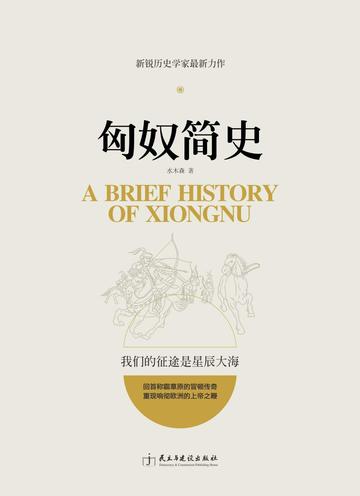
The sign of a strong nation is not its population, but its strong national character. Only a nation with a strong character can be called a strong nation. Such a nation can not only change itself, but also change the world.
The Xiongnu are an ancient nation that existed as early as the Shang and Zhou dynasties, and they had wars with the Chinese people in the Central Plains from time to time. The Qin and Han Dynasties were the heyday of the Xiongnu. They established a powerful empire, which stretched from Wuhuan and the western boundary of the Xianbei Mountains in the Greater Khingan Mountains in the east, to the vast areas of Central Asia in the west, to the Northwest Asia region outside the Mongolian Plateau in the north, and to the Great Wall in the south. The territory was larger than the Qin and Han Empire in the south. The two powerful empires are adjacent to each other, and the game is inevitable. The relationship between them has become the theme of the foreign relations of both sides. The two sides have gone from armed confrontation to "peaceful" coexistence to the final life-and-death showdown, which lasted for hundreds of years and was magnificent and thrilling. The Xiongnu, who were at an absolute disadvantage in terms of manpower and material resources, were finally defeated. Some of them moved south, integrated with other ethnic groups in China, and became an integral part of the Chinese nation. Others moved west and gradually grew stronger. They instilled their strong national style wherever they went, changing the national structure and geopolitical pattern of Central Asia, West Asia and the European continent. They had a profound impact on the development of world history and left a strong mark in the development of world history.
Reader comments
The only shortcoming is that there should be a road map of the Huns' settlement and westward migration for hundreds of years, as well as a modern comparison of the ancestors of various countries in the Western Regions, such as which country the Ostrogoths are the ancestors of today.
Where did the descendants of the Huns disperse later? After the final attack by the Mongols, where are the descendants of the Huns now? Hungary, as well as other countries and regions, have the blood of the Huns. It is a pity that these are not introduced in detail. I hope this issue can be considered in the second edition.
The Xiongnu were a nomadic people who lived on the ancient Mongolian Plateau and emerged in the foothills of the Yinshan Mountains in present-day Inner Mongolia. The word "Xiongnu" first appeared in the two books "Yi Zhou Shu" and "Warring States Policy". In "Historical Records", Sima Qian not only called the Chinese people the descendants of the Yan and Huang people, but also described the Qin people, Chu people, Wu people, Yue people, Shu people, southwestern Yi, Xiongnu, and ancient Korea as the descendants of the Yan and Huang people. Wang Guowei made a systematic summary of the evolution of the names of the Xiongnu in "The Study of Guifang, Kunyi, and Maohuan". He believed that Guifang, Hunyi, and Maohuan in the Shang Dynasty, Xiongnu in the Zhou Dynasty, Rong and Di in the Spring and Autumn Period, and Hu in the Warring States Period were all the so-called Xiongnu in later generations. But what exactly are the Huns? The book may give us the answer.
Very wonderfully written! Both historical and readable! Thanks to the author! !
Many dynasties in Chinese history were inextricably linked with the Huns in the northern grasslands. Whether in war or peace, both sides had a lot of influence on each other's culture, politics, economy, and society. Based on the examination of a large amount of historical evidence, this book records in detail the development history of the Xiongnu from its rise, prosperity to decline, and makes detailed records of the Xiongnu's social culture, political economy. The author's humorous tone makes this history book a more enjoyable reading experience than a novel, making it impossible to put down.
The content of this book is really exciting! It introduces the history of the Xiongnu in detail. I especially like the plot about the wars and games between the Xiongnu and the Central Plains during the Qin and Han Dynasties. It is very thrilling. The author Shuimusen is very knowledgeable and vividly described the rise and fall of the Xiongnu, which gave me a deeper understanding of this ancient nation. This is a great book worth reading!
The Xiongnu have a small population but a really tough character; they have been inseparable from our Chinese people since the Shang and Zhou Dynasties; the two are familiar and yet strange; after all, the nomadic people scorn the resettlement, harmony and stability under the farming culture, while we, on the other hand, are bloodthirsty and cruel. The acts of burning, killing and looting will also be condemned; but if they can really adopt an objective and fair attitude, they are brave and good at fighting, not afraid of hard work; they can even sometimes be harmonious and seek common ground while reserving differences; it can be said that the Huns played a key role in the empires of the entire Eurasian continent. History of the Huns is a must-read.
The author writes in great detail. Although some places are omitted, the historical context of the Xiongnu is generally very clear. Although the Xiongnu disappeared in the long river of history, he had a profound impact on China's subsequent history, culture, and thought. The sentence "The Xiongnu is not destroyed, why do we call home?" Has inspired so many people's pride. This book is very helpful to those who like this period of history, and it is worth reading carefully!
It provides a very comprehensive explanation of the history of many unknown ethnic minority Xiongnu, but it does not fully explain the beginning and process of the Han-Hungarian wars (except for the Han-Hungarian war during the period of Emperor Wu of the Han Dynasty). I look forward to more comprehensive books being released.
Everyone is familiar with the Xiongnu. In movies, TV series and some novels, this is a nation that has never stopped fighting with the Central Plains dynasty. They are rude and savage, drinking blood from their hair, like a pack of wolves that are eager to harass, and it is impossible to prevent them. This "A Brief History of the Huns" gives us a deeper understanding of this nation, their values, and their way of survival. They have also established a glorious empire, and their territory is no less powerful than that of the Han Dynasty, which has a very profound impact on the foundation of the entire world. As the author said, such a nation with a strong character can not only change itself, but also the world.
In line with the way of writing a brief history. The author's writing style is sophisticated, his writing is fluent, and he is basically not sloppy. The style of writing history has changed in many ways. The final summary can be said to be basically objective and fair. It can be used as a reference reading to a certain extent.
The writing style is good and the details are appropriate.
It's well written and has added a lot of historical knowledge.
A very good book that gave me a new understanding of the history of the Huns.
The Xiongnu were a nomadic people who lived on the ancient Mongolian Plateau and emerged in the foothills of the Yinshan Mountains in present-day Inner Mongolia. The word "Xiongnu" first appeared in the two books "Yi Zhou Shu" and "Warring States Policy". In "Historical Records", Sima Qian not only called the Chinese people the descendants of the Yan and Huang people, but also described the Qin people, Chu people, Wu people, Yue people, Shu people, southwestern Yi, Xiongnu, and ancient Korea as the descendants of the Yan and Huang people. Wang Guowei made a systematic summary of the evolution of the names of the Xiongnu in "The Study of Guifang, Kunyi, and Maohuan". He believed that Guifang, Hunyi, and Maohuan in the Shang Dynasty, Xiongnu in the Zhou Dynasty, Rong and Di in the Spring and Autumn Period, and Hu in the Warring States Period were all the so-called Xiongnu in later generations. But what exactly are the Huns? The book may give us the answer.
The ancient border nomads had no boundaries and no fixed abode. They were fighting, killing and looting. They constantly invaded the borders of the Han Dynasty in the Central Plains and aroused the resentment of the Han emperor. At the emperor's command, General Huo Qubing gave chase and killed the ferocious slaves, throwing off their armor. In the end, they could not resist the powerful Han attack in the Central Plains and fled in all directions. Some of them sought refuge with the Han in the Central Plains and some fled to the West.
The writing style of "A Brief History of the Huns" is relatively smooth and the logic is relatively clear. It introduces the origin, development and decline of the Huns in detail. This book introduces the origins and production methods of the Huns, including nomadic life, animal husbandry, and foreign trade. Through this book, readers can learn about the historical and cultural characteristics of one of the important nations in East Asian history, as well as its legal and moral etiquette norms, so that they can have a more rational understanding of Chinese history and the relationship between various ethnic groups. Those who are interested can read it.
It turns out that although the nomadic tribes in northern my country have different names in different periods, they are basically Huns.
I have always thought that the Huns were the ancestors of the Mongols. After reading this book, I have learned a lesson. They were exterminated in the Middle Ages and created great miracles for the nomadic people.
It's very exciting. If you are interested in the history of the Huns, you can read it.
Clear organization and objective and fair evaluation. It has both the rigor of a history book and vivid descriptions in literature.
Great, it not only objectively describes history, but also has a very readable story.
This book is super beautiful
Good book, worth reading
The history of a nation
Understanding the enemy is also a way to make progress
History proves that the threat from China is always in the north.
The summary is very good. In the end, agricultural civilization defeated nomadic civilization.
A brief history of the Xiongnu gives a brief overview of the Chinese nation.
The Xiongnu have a thunderous name and are almost household names in China, but they are also a mysterious nation, because now this once powerful nation no longer exists! After reading this book, I have a general understanding of this nation, and I also have a sigh. As the only ancient civilization that has been handed down to this day, the Chinese nation is really not easy!
The only shortcoming is that there should be a road map of the Huns' settlement and westward migration for hundreds of years, as well as a modern comparison of the ancestors of various countries in the Western Regions, such as which country the Ostrogoths are the ancestors of today.
Where did the descendants of the Huns disperse later? After the final attack by the Mongols, where are the descendants of the Huns now? Hungary, as well as other countries and regions, have the blood of the Huns. It is a pity that these are not introduced in detail. I hope this issue can be considered in the second edition.
The Xiongnu were a nomadic people who lived on the ancient Mongolian Plateau and emerged in the foothills of the Yinshan Mountains in present-day Inner Mongolia. The word "Xiongnu" first appeared in the two books "Yi Zhou Shu" and "Warring States Policy". In "Historical Records", Sima Qian not only called the Chinese people the descendants of the Yan and Huang people, but also described the Qin people, Chu people, Wu people, Yue people, Shu people, southwestern Yi, Xiongnu, and ancient Korea as the descendants of the Yan and Huang people. Wang Guowei made a systematic summary of the evolution of the names of the Xiongnu in "The Study of Guifang, Kunyi, and Maohuan". He believed that Guifang, Hunyi, and Maohuan in the Shang Dynasty, Xiongnu in the Zhou Dynasty, Rong and Di in the Spring and Autumn Period, and Hu in the Warring States Period were all the so-called Xiongnu in later generations. But what exactly are the Huns? The book may give us the answer.
Very wonderfully written! Both historical and readable! Thanks to the author! !
Many dynasties in Chinese history were inextricably linked with the Huns in the northern grasslands. Whether in war or peace, both sides had a lot of influence on each other's culture, politics, economy, and society. Based on the examination of a large amount of historical evidence, this book records in detail the development history of the Xiongnu from its rise, prosperity to decline, and makes detailed records of the Xiongnu's social culture, political economy. The author's humorous tone makes this history book a more enjoyable reading experience than a novel, making it impossible to put down.
The content of this book is really exciting! It introduces the history of the Xiongnu in detail. I especially like the plot about the wars and games between the Xiongnu and the Central Plains during the Qin and Han Dynasties. It is very thrilling. The author Shuimusen is very knowledgeable and vividly described the rise and fall of the Xiongnu, which gave me a deeper understanding of this ancient nation. This is a great book worth reading!
The Xiongnu have a small population but a really tough character; they have been inseparable from our Chinese people since the Shang and Zhou Dynasties; the two are familiar and yet strange; after all, the nomadic people scorn the resettlement, harmony and stability under the farming culture, while we, on the other hand, are bloodthirsty and cruel. The acts of burning, killing and looting will also be condemned; but if they can really adopt an objective and fair attitude, they are brave and good at fighting, not afraid of hard work; they can even sometimes be harmonious and seek common ground while reserving differences; it can be said that the Huns played a key role in the empires of the entire Eurasian continent. History of the Huns is a must-read.
The author writes in great detail. Although some places are omitted, the historical context of the Xiongnu is generally very clear. Although the Xiongnu disappeared in the long river of history, he had a profound impact on China's subsequent history, culture, and thought. The sentence "The Xiongnu is not destroyed, why do we call home?" Has inspired so many people's pride. This book is very helpful to those who like this period of history, and it is worth reading carefully!
It provides a very comprehensive explanation of the history of many unknown ethnic minority Xiongnu, but it does not fully explain the beginning and process of the Han-Hungarian wars (except for the Han-Hungarian war during the period of Emperor Wu of the Han Dynasty). I look forward to more comprehensive books being released.
Everyone is familiar with the Xiongnu. In movies, TV series and some novels, this is a nation that has never stopped fighting with the Central Plains dynasty. They are rude and savage, drinking blood from their hair, like a pack of wolves that are eager to harass, and it is impossible to prevent them. This "A Brief History of the Huns" gives us a deeper understanding of this nation, their values, and their way of survival. They have also established a glorious empire, and their territory is no less powerful than that of the Han Dynasty, which has a very profound impact on the foundation of the entire world. As the author said, such a nation with a strong character can not only change itself, but also the world.
In line with the way of writing a brief history. The author's writing style is sophisticated, his writing is fluent, and he is basically not sloppy. The style of writing history has changed in many ways. The final summary can be said to be basically objective and fair. It can be used as a reference reading to a certain extent.
The writing style is good and the details are appropriate.
It's well written and has added a lot of historical knowledge.
A very good book that gave me a new understanding of the history of the Huns.
The Xiongnu were a nomadic people who lived on the ancient Mongolian Plateau and emerged in the foothills of the Yinshan Mountains in present-day Inner Mongolia. The word "Xiongnu" first appeared in the two books "Yi Zhou Shu" and "Warring States Policy". In "Historical Records", Sima Qian not only called the Chinese people the descendants of the Yan and Huang people, but also described the Qin people, Chu people, Wu people, Yue people, Shu people, southwestern Yi, Xiongnu, and ancient Korea as the descendants of the Yan and Huang people. Wang Guowei made a systematic summary of the evolution of the names of the Xiongnu in "The Study of Guifang, Kunyi, and Maohuan". He believed that Guifang, Hunyi, and Maohuan in the Shang Dynasty, Xiongnu in the Zhou Dynasty, Rong and Di in the Spring and Autumn Period, and Hu in the Warring States Period were all the so-called Xiongnu in later generations. But what exactly are the Huns? The book may give us the answer.
The ancient border nomads had no boundaries and no fixed abode. They were fighting, killing and looting. They constantly invaded the borders of the Han Dynasty in the Central Plains and aroused the resentment of the Han emperor. At the emperor's command, General Huo Qubing gave chase and killed the ferocious slaves, throwing off their armor. In the end, they could not resist the powerful Han attack in the Central Plains and fled in all directions. Some of them sought refuge with the Han in the Central Plains and some fled to the West.
The writing style of "A Brief History of the Huns" is relatively smooth and the logic is relatively clear. It introduces the origin, development and decline of the Huns in detail. This book introduces the origins and production methods of the Huns, including nomadic life, animal husbandry, and foreign trade. Through this book, readers can learn about the historical and cultural characteristics of one of the important nations in East Asian history, as well as its legal and moral etiquette norms, so that they can have a more rational understanding of Chinese history and the relationship between various ethnic groups. Those who are interested can read it.
It turns out that although the nomadic tribes in northern my country have different names in different periods, they are basically Huns.
I have always thought that the Huns were the ancestors of the Mongols. After reading this book, I have learned a lesson. They were exterminated in the Middle Ages and created great miracles for the nomadic people.
It's very exciting. If you are interested in the history of the Huns, you can read it.
Clear organization and objective and fair evaluation. It has both the rigor of a history book and vivid descriptions in literature.
Great, it not only objectively describes history, but also has a very readable story.
This book is super beautiful
Good book, worth reading
The history of a nation
Understanding the enemy is also a way to make progress
History proves that the threat from China is always in the north.
The summary is very good. In the end, agricultural civilization defeated nomadic civilization.
A brief history of the Xiongnu gives a brief overview of the Chinese nation.
The Xiongnu have a thunderous name and are almost household names in China, but they are also a mysterious nation, because now this once powerful nation no longer exists! After reading this book, I have a general understanding of this nation, and I also have a sigh. As the only ancient civilization that has been handed down to this day, the Chinese nation is really not easy!