Stats
5.8Score
Synopsis
No synopsis yet.
We haven’t got an English blurb for this one. It appears once the source description has been translated.
We haven’t got an English blurb for this one. It appears once the source description has been translated.
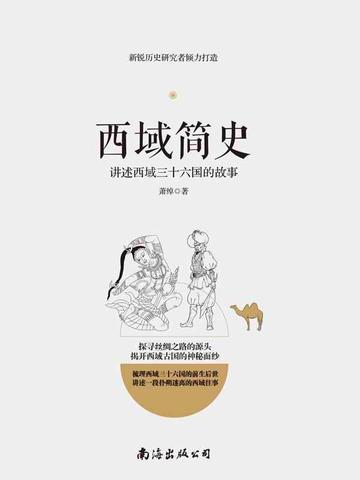
When I mention the "Western Regions", I think of colorful clothing styles, foreign men and women who are good at singing and dancing, flying goddesses in Dunhuang murals, etc. This book is an introduction to the past and present lives of the thirty-six countries in the Western Regions since the Han Dynasty. The writing is humorous and the plot is clear and tightly structured. However, it is a pity that there is almost no description of the grand scenes of the Silk Road. Moreover, some of the stories are too legendary. I don't know whether the research on historical data is consistent with historical facts, or whether many of the stories are just based on some local rumors and the author's imagination.
The Western Regions is the general name for the area west of Yumen Pass and Yang Pass since the Han Dynasty. Under the influence of the Silk Road, the Western Regions specifically refers to most of Xinjiang in present-day China and parts of Central Asia under the jurisdiction of the Han and Tang dynasties. It is located in the center of the Eurasian continent and is an important part of the Silk Road and a corridor connecting China and the West. The Western Regions belonged to the Han Dynasty from the time of Emperor Wu of the Han Dynasty Liu Che, and there were thirty-six kingdoms in the beginning. This book mainly describes the customs and historical stories of the thirty-six countries in the Western Regions when the Han Dynasty opened the Silk Road during the Han Dynasty.
The Western Regions, that uninhabited land mixed with smoke and yellow sand; since the Han and Tang Dynasties, Zhang Qian went to the Western Regions as an envoy, and Ban Chao guarded the border; and the rise of the Silk Road in the Tang Dynasty, and so on. This book has briefly written about it. It can be said to be a summary of the legends of the Western Regions. I think the Shule Kingdom in the book is very attractive. To the human eye, this land with peculiar customs and customs is also the first place among the thirty-six countries in the Western Regions to accept Buddhist culture. The description of the country appears many times in the book, and the description of Ban Chao is also repeated later. It can be seen that although the title is a brief history of the Western Regions, it is simple but the content is not simple.
This is a concise read on the history of the Western Region. Through rhetorical techniques such as metaphor and parallelism, the author vividly outlines the historical background and cultural development of the Western Regions. This book outlines the historical evolution, political turmoil, cultural exchanges and other important events and figures in the Western Region. Through concise narration and the connection of facts, the author presents the integration and development of multiculturalism in the Western Regions. During the reading process, readers can learn about the historical evolution and cultural characteristics of the Western Regions, and at the same time, they can also think about the impact of cultural exchanges on the historical process and human development.
It was the first time I read a book about the Western Regions. "A Brief History of the Western Regions" taught me a lot about the history of the Western Regions. The Western Regions is the general name for the area west of Yumen Pass and Yang Pass since the Han Dynasty. Under the influence of the Silk Road, the Western Regions specifically refers to most of Xinjiang in present-day China and parts of Central Asia under the jurisdiction of the Han and Tang dynasties. It is located in the center of the Eurasian continent and is an important part of the Silk Road and a corridor connecting China and the West. This book uses popular and smooth words to sort out the past and future lives of the thirty-six countries in the Western Regions, and tells a series of complicated and confusing past events in the Western Regions. The once prosperous Loulan civilization disappeared quietly like a mystery; in the exquisite ancient country on the desert oasis, the folk stories circulated are vivid and legendary; the generations of grievances between the Han Dynasty, the Xiongnu and the countries in the Western Regions are thrilling; the great achievements of Zhang Qian, Ban Chao and Ban Yong in managing the Western Regions are admirable. There are rich products here, including the world-famous sweat-blooded horse, grapes and pomegranates that were only spread to the Central Plains during the Han Dynasty... For readers who like the history of the Western Regions, this is a good book worth reading.
This is a concise read on the history of the Western Region. Through rhetorical techniques such as metaphor and parallelism, the author vividly outlines the historical background and cultural development of the Western Regions. This book outlines the historical evolution, political turmoil, cultural exchanges and other important events and figures in the Western Region. Through concise narration and the connection of facts, the author presents the integration and development of multiculturalism in the Western Regions. During the reading process, readers can learn about the historical evolution and cultural characteristics of the Western Regions, and at the same time, they can also think about the impact of cultural exchanges on the historical process and human development.
A very recommended book. After reading this book, I have a general understanding of the past and present of the thirty-six kingdoms in the Western Regions, and a relatively clear understanding of the Xiongnu Empire. The best carrier of human inheritance is books. A person's greatest wealth is reading and education. This is not only the improvement of one's own academic qualifications and temperament, but also the best wealth left to children. The Yudian Kingdom has actually existed for more than 1,000 years. Although it is not as large as a dynasty like the Central Plains, it really has its own unique way of survival.
This is the first time I read a book about the Western Regions. It is very short and can be easily finished. However, the book does not describe the grand scene of the Silk Road at that time.
I especially like the description of the Loulan civilization in the book. "The once prosperous Loulan civilization disappeared mysteriously and quietly." This sentence made me full of curiosity about Loulan. There are also sweaty horses. I wish I could have one! This book allowed me to see a different Western Region. I recommend you to read it.
Very practical and a very good book for understanding the Western Regions. The Western Regions is the general name for the area west of Yumen Pass and Yang Pass since the Han Dynasty. Under the influence of the Silk Road, the Western Regions specifically refers to most of Xinjiang in present-day China and parts of Central Asia under the jurisdiction of the Han and Tang dynasties. It is the corridor connecting China and the West. These ancient countries have a mysterious and legendary history. The once prosperous Loulan civilization disappeared quietly and mysteriously. This book unveils the mysterious veil of the Western Regions for us. Very nice.
This book systematically introduces the origin and development of the Thirty-six Kingdoms of the Western Regions. Since Zhang Qian's passage to the Western Regions, the Han Dynasty began to pay attention to the distant Western Regions, and gradually established institutions such as the Western Regions Protectorate to manage the vast land in the Western Regions, forming the Silk Road, which directly promoted the exchange and mutual development of Eastern and Western civilizations. In addition, the Western Region is a small country with few people and numerous city-states, which are quite reminiscent of ancient tribes.
The text is humorous and the plot is clear and easy to understand.
Double salary card at the end of the year
Detailed and fluently written
The long river of history is vast... People, nations, and countries will all be a drop in the ocean...
This book is good, worth reading, and rich in content.
Worth reading! Learn about the history of the Western Regions and experience Chinese civilization!
A good book on the history of the Western Regions during the Han Dynasty
A relatively objective explanation of the past and present of the 36 countries in the Western Regions.
The author, let me ask you a question to see if you know: Does the Daughter's Kingdom in Journey to the West have a prototype in real history?