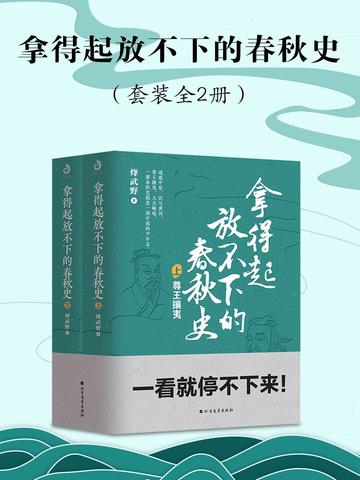
This book tells the story of the troubled times of more than three hundred years in the Spring and Autumn Period from multiple dimensions: politics, military, geography, economy, and culture. It overturns the explanations of some major historical events and reinterprets the historical truth.
The first volume tells the story of the early Spring and Autumn Period. The story clues are mainly based on the Five Hegemons of the Spring and Autumn Period. The time span starts from 771 BC when Quan Rong captured Haojing, the capital of the Western Zhou Dynasty, and ends with the death of King Chuzhuang in 591 BC.
Reader comments
Although this book sounds very down-to-earth and has a random name, it is written based on real history. The author, Feng Wuye, focuses on the study of pre-Qin history. He is familiar with every historical event in the Spring and Autumn and Warring States periods. He spent two years searching the Jiangsu Provincial Library and Museum to consult hundreds of authoritative historical materials. You can rest assured of the historical authenticity of the article. History is about inheritance. The book overturns the explanations of some major historical events and reinterprets the historical truth. The author's writing style is also witty and humorous. He compares governing the country to running a company, turns cruel wars into teams to fight monsters, connects ancient fighting methods to modern weapons, etc. He narrates the development of history and the changes of dynasties in the most fun and straightforward sentences that are closest to reality. As the subtitle says, "A history of the Spring and Autumn Period is a history of Chinese youth." This book tells the story of more than three hundred years of troubled times in the Spring and Autumn Period from multiple dimensions: politics, military, geography, economy, and culture. Looking back on that historical period now, it is indeed like the rebellion of adolescents.
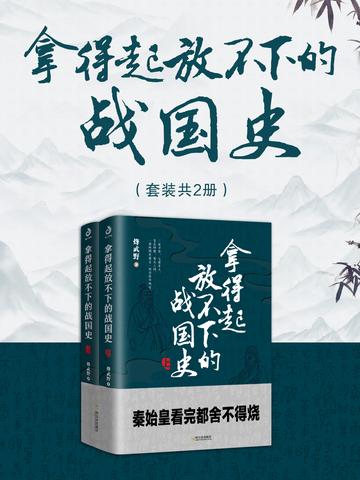
This set of books is divided into two volumes. It tells the story of the troubled times of more than three hundred years in the Spring and Autumn Period from multiple dimensions: politics, military, geography, economy, and culture. It overturns the explanations of some major historical events and reinterprets the historical truth. The first volume tells the story of the early Spring and Autumn Period. The story clues are mainly based on the Five Hegemons of the Spring and Autumn Period. The time span starts from 771 BC when the Dog Rong attacked Haojing, the capital of the Western Zhou Dynasty, and ends with the death of King Chuzhuang in 591 BC. The second volume tells the story of the later Spring and Autumn Period, which spans from the death of King Chuzhuang in 591 to the division of the Jin Dynasty among the three families in 453. The author describes the history of the Spring and Autumn Period in an easy-to-understand and humorous tone. He opens up to us the Zhou Dynasty, an ancient civilization second only to Xia and Shang. This extremely wonderful and splendid history of Chinese civilization has been unfolded to the world. Let people today trace their origins, explore the past and think about the present, and make people recall and have thousands of thoughts.
Sima Qian said: "Thirty-six kings were killed, fifty-two were destroyed, and countless princes ran away and could not protect their country." This book uses the five hegemons of the Spring and Autumn Period, Duke Huan of Qi, Duke Xiang of Song, Duke Wen of Jin, Duke Mu of Qin, and King Zhuang of Chu, as the main clues to clarify this period of history in which the emperor of Zhou lost his authority and the powerful vassal states fought for hegemony and fought against each other to become the hegemon. It displays this troubled and troubled world from various aspects such as military, political, cultural, and economic aspects, and deeply analyzes the root causes behind the "chaos".
Although it sounds very down-to-earth, it is a rigorous historical book based on real history. The author, Feng Wuye, focuses on the study of pre-Qin history. He is familiar with every historical event in the Spring and Autumn and Warring States periods. He spent two years searching the Jiangsu Provincial Library and Museum to consult hundreds of authoritative historical materials. You can rest assured of the historical authenticity of the article. History is about inheritance. The book overturns the explanations of some major historical events and reinterprets the historical truth. The author's writing style is also witty and humorous. He compares governing the country to running a company, turns cruel wars into teams to fight monsters, connects ancient fighting methods to modern weapons, etc. He narrates the development of history and the changes of dynasties in the most fun and straightforward sentences that are closest to reality. As the subtitle says, "A history of the Spring and Autumn Period is a history of Chinese youth." This book tells the story of more than three hundred years of troubled times in the Spring and Autumn Period from multiple dimensions: politics, military, geography, economy, and culture. Looking back on that historical period now, it is indeed like the rebellion of adolescents.
The author is committed to explaining history in a more vivid and vivid way, which makes it really easy to read. After reading the last chapter, I suddenly felt that the whole book was sublimated. Perhaps everyone who loves history has a pure heart to help the inheritance of the nation. May Chinese civilization last forever!
Not bad, the first choice for beginners!
Just like what the book says about "two kings standing side by side", it reminds me of a relative of mine. Two brothers in his family had a huge quarrel over the family property. The book also mentioned that King Zhou Ping went all the way east to Luoyi, which reminded me of a friend of mine who also left his hometown to work hard outside in order to make a living. I think this book not only tells history, but also allows me to see its shadow in real life.
This book let me know: In 539 BC, a grand welcome dinner was being held in the palace of Xinjiang, Jin State. The person being welcomed was Yan Ying, the ambassador of Qi State, who also had a more famous name - Yan Zi. As a famous senior intellectual in Qi State, Yan Zi assisted three generations of Qi kings. The most powerful thing is that he later gave Confucius a beating, which made Confucius unable to survive in Qi and left.
The story is vivid and interesting, has historical evidence, and can add a lot of insights.
This book records the history of the Spring and Autumn Period in detail. Different from the rigor and seriousness of orthodox history books, this book is rigorous but also witty and humorous, making people laugh from time to time while gaining knowledge. As the title of the book says, it is truly a book that makes people pick it up but cannot put it down. It makes people often addicted to it. Reading it lasts a whole morning, or even a day passes. A truly interesting and factual history book. Recommended for everyone to read.
The language is humorous, easy to understand, and informative.
Minglong's thoughts on reading: This sentence in the article summarizes it very well: If the Spring and Autumn Period is the period of youth, then the Warring States Period is the period of youth. Youth marks that they have shed their childishness and begun to enter a highly competitive society. Since youth's energy is infinite, they can always show their infinite desire for the future and can challenge countless difficulties.
The stars are dotted, illuminating the long river of history.
Although this book sounds very down-to-earth and has a random name, it is written based on real history. The author, Feng Wuye, focuses on the study of pre-Qin history. He is familiar with every historical event in the Spring and Autumn and Warring States periods. He spent two years searching the Jiangsu Provincial Library and Museum to consult hundreds of authoritative historical materials. You can rest assured of the historical authenticity of the article. History is about inheritance. The book overturns the explanations of some major historical events and reinterprets the historical truth. The author's writing style is also witty and humorous. He compares governing the country to running a company, turns cruel wars into teams to fight monsters, connects ancient fighting methods to modern weapons, etc. He narrates the development of history and the changes of dynasties in the most fun and straightforward sentences that are closest to reality. As the subtitle says, "A history of the Spring and Autumn Period is a history of Chinese youth." This book tells the story of more than three hundred years of troubled times in the Spring and Autumn Period from multiple dimensions: politics, military, geography, economy, and culture. Looking back on that historical period now, it is indeed like the rebellion of adolescents.
This set of books is divided into two volumes. It tells the story of the troubled times of more than three hundred years in the Spring and Autumn Period from multiple dimensions: politics, military, geography, economy, and culture. It overturns the explanations of some major historical events and reinterprets the historical truth. The first volume tells the story of the early Spring and Autumn Period. The story clues are mainly based on the Five Hegemons of the Spring and Autumn Period. The time span starts from 771 BC when the Dog Rong attacked Haojing, the capital of the Western Zhou Dynasty, and ends with the death of King Chuzhuang in 591 BC. The second volume tells the story of the later Spring and Autumn Period, which spans from the death of King Chuzhuang in 591 to the division of the Jin Dynasty among the three families in 453. The author describes the history of the Spring and Autumn Period in an easy-to-understand and humorous tone. He opens up to us the Zhou Dynasty, an ancient civilization second only to Xia and Shang. This extremely wonderful and splendid history of Chinese civilization has been unfolded to the world. Let people today trace their origins, explore the past and think about the present, and make people recall and have thousands of thoughts.
Sima Qian said: "Thirty-six kings were killed, fifty-two were destroyed, and countless princes ran away and could not protect their country." This book uses the five hegemons of the Spring and Autumn Period, Duke Huan of Qi, Duke Xiang of Song, Duke Wen of Jin, Duke Mu of Qin, and King Zhuang of Chu, as the main clues to clarify this period of history in which the emperor of Zhou lost his authority and the powerful vassal states fought for hegemony and fought against each other to become the hegemon. It displays this troubled and troubled world from various aspects such as military, political, cultural, and economic aspects, and deeply analyzes the root causes behind the "chaos".
Although it sounds very down-to-earth, it is a rigorous historical book based on real history. The author, Feng Wuye, focuses on the study of pre-Qin history. He is familiar with every historical event in the Spring and Autumn and Warring States periods. He spent two years searching the Jiangsu Provincial Library and Museum to consult hundreds of authoritative historical materials. You can rest assured of the historical authenticity of the article. History is about inheritance. The book overturns the explanations of some major historical events and reinterprets the historical truth. The author's writing style is also witty and humorous. He compares governing the country to running a company, turns cruel wars into teams to fight monsters, connects ancient fighting methods to modern weapons, etc. He narrates the development of history and the changes of dynasties in the most fun and straightforward sentences that are closest to reality. As the subtitle says, "A history of the Spring and Autumn Period is a history of Chinese youth." This book tells the story of more than three hundred years of troubled times in the Spring and Autumn Period from multiple dimensions: politics, military, geography, economy, and culture. Looking back on that historical period now, it is indeed like the rebellion of adolescents.
The author is committed to explaining history in a more vivid and vivid way, which makes it really easy to read. After reading the last chapter, I suddenly felt that the whole book was sublimated. Perhaps everyone who loves history has a pure heart to help the inheritance of the nation. May Chinese civilization last forever!
Not bad, the first choice for beginners!
Just like what the book says about "two kings standing side by side", it reminds me of a relative of mine. Two brothers in his family had a huge quarrel over the family property. The book also mentioned that King Zhou Ping went all the way east to Luoyi, which reminded me of a friend of mine who also left his hometown to work hard outside in order to make a living. I think this book not only tells history, but also allows me to see its shadow in real life.
This book let me know: In 539 BC, a grand welcome dinner was being held in the palace of Xinjiang, Jin State. The person being welcomed was Yan Ying, the ambassador of Qi State, who also had a more famous name - Yan Zi. As a famous senior intellectual in Qi State, Yan Zi assisted three generations of Qi kings. The most powerful thing is that he later gave Confucius a beating, which made Confucius unable to survive in Qi and left. The story is vivid and interesting, has historical evidence, and can add a lot of insights.
This book records the history of the Spring and Autumn Period in detail. Different from the rigor and seriousness of orthodox history books, this book is rigorous but also witty and humorous, making people laugh from time to time while gaining knowledge. As the title of the book says, it is truly a book that makes people pick it up but cannot put it down. It makes people often addicted to it. Reading it lasts a whole morning, or even a day passes. A truly interesting and factual history book. Recommended for everyone to read.
The language is humorous, easy to understand, and informative.
Minglong's thoughts on reading: This sentence in the article summarizes it very well: If the Spring and Autumn Period is the period of youth, then the Warring States Period is the period of youth. Youth marks that they have shed their childishness and begun to enter a highly competitive society. Since youth's energy is infinite, they can always show their infinite desire for the future and can challenge countless difficulties.
The stars are dotted, illuminating the long river of history.