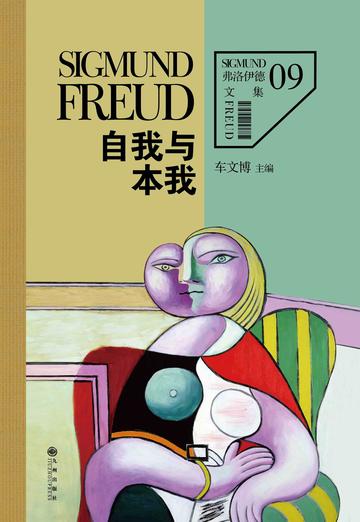
This set of "Collected Works of Freud" (12 volumes) is China's first and only classic translation of Freud's literary essence. It was edited by Che Wenbo, the first person to study Freud in China, a recognized authority on Freud in the academic world, and a famous psychologist. It has been rigorously translated and revised many times by more than 40 experts and professors across the country. It can be called the most authoritative and complete version of Freud's psychological works on both sides of the Taiwan Straits.
This volume contains four parts. "Beyond the Pleasure Principle" revised Freud's early instinct theory, proposing for the first time that people have death instincts and life instincts, and regarded the struggle of these two opposite and coexisting forces as the determiner of the entire life movement process. "Group Psychology and the Analysis of the Self" systematically discusses the theory that "the essence of a group lies in the libidinal connection of its own existence". "Self and Id" talks about consciousness, preconsciousness, and subconsciousness, and explains the process of differentiation of the ego from the id and the superego from the ego. "Suppression, Symptoms and Anxiety" is Freud's main work that revised and supplemented the theory of the relationship between repression, anxiety and psychological defense mechanisms.
Reader comments
The id is the center and basic source of human "psychological energy", and its core is the inner drive of sexual desire. The ego is sometimes a kind of dynamic energy that lacks organization, and it needs to be released or transferred to achieve dynamic balance. It cannot tolerate the tension caused by unsatisfied physiological needs and requires that this need be met at any time to eliminate tension, so it abides by the pleasure principle. However, if we act according to the principle of pursuing happiness and avoiding suffering, it will inevitably cause a huge conflict between people's inner needs and external social norms. The ego cannot deal with the objective external world. It needs a "spokesperson" to "negotiate" with the external world, which is the self.
This work can be said to be Freud's most authoritative and complete collection of psychology. It contains Freud's early theoretical thoughts, which is the instinct theory. He proposed for the first time that people have two instincts, life and death. These two forces exist and compete at the same time, and are the determiners of the existence of individual life. In the part about self and id, the consciousness, preconscious, and subconscious are discussed, and the hierarchical differentiation process of self from id, ego, and finally superego is analyzed. There is also the most controversial proposition of Freud, which is the discussion of the sources of repression and anxiety. It is a must-read for those who study spiritual science.
Psychologist Sigmund Freud believed that everyone has three "Is", namely ego, id and superego. The narrative focus of this book is Freud's theory of the ego and the id. The self is the conscious and rational part of the individual, responsible for making realistic adjustments and decisions to meet individual needs. The id is the source of an individual's original desires and impulses. It is not restricted by morality and reality and pursues the satisfaction of basic biological and emotional needs. Through specific cases and explanations, the book deeply explores the interactions and conflicts between the self and the id, as well as their impact on individual mental health and behavior.
As an important representative of the Western psychoanalytic school, Freud's theory of human nature is widely spread around the world. This book extracts four representative papers from Freud, which cover Freud's instinct theory, group psychology, triple self-view, and analysis of psychological diseases such as depression and anxiety. Through these analyses, we can see the roots and solutions to the psychological problems that we and many of our contemporaries are currently facing. More than a hundred years later, Freud remains timeless.
This book gave me a deeper understanding of Freud's theories. I especially liked his analysis of self and id, which made me think more about my inner world. Some of the cases in the book are also very interesting, making the theory more vivid and understandable. I think this book is not only a psychological book for me as a recent graduate, but also a tool for self-exploration. I recommend it to you!

The id is the center and basic source of human "psychological energy", and its core is the inner drive of sexual desire. The ego is sometimes a kind of dynamic energy that lacks organization, and it needs to be released or transferred to achieve dynamic balance. It cannot tolerate the tension caused by unsatisfied physiological needs and requires that this need be met at any time to eliminate tension, so it abides by the pleasure principle. However, if we act according to the principle of pursuing happiness and avoiding suffering, it will inevitably cause a huge conflict between people's inner needs and external social norms. The ego cannot deal with the objective external world. It needs a "spokesperson" to "negotiate" with the external world, which is the self.
This work can be said to be Freud's most authoritative and complete collection of psychology. It contains Freud's early theoretical thoughts, which is the instinct theory. He proposed for the first time that people have two instincts, life and death. These two forces exist and compete at the same time, and are the determiners of the existence of individual life. In the part about self and id, the consciousness, preconscious, and subconscious are discussed, and the hierarchical differentiation process of self from id, ego, and finally superego is analyzed. There is also the most controversial proposition of Freud, which is the discussion of the sources of repression and anxiety. It is a must-read for those who study spiritual science.
Psychologist Sigmund Freud believed that everyone has three "Is", namely ego, id and superego. The narrative focus of this book is Freud's theory of the ego and the id. The self is the conscious and rational part of the individual, responsible for making realistic adjustments and decisions to meet individual needs. The id is the source of an individual's original desires and impulses. It is not restricted by morality and reality and pursues the satisfaction of basic biological and emotional needs. Through specific cases and explanations, the book deeply explores the interactions and conflicts between the self and the id, as well as their impact on individual mental health and behavior.
As an important representative of the Western psychoanalytic school, Freud's theory of human nature is widely spread around the world. This book extracts four representative papers from Freud, which cover Freud's instinct theory, group psychology, triple self-view, and analysis of psychological diseases such as depression and anxiety. Through these analyses, we can see the roots and solutions to the psychological problems that we and many of our contemporaries are currently facing. More than a hundred years later, Freud remains timeless.
This book gave me a deeper understanding of Freud's theories. I especially liked his analysis of self and id, which made me think more about my inner world. Some of the cases in the book are also very interesting, making the theory more vivid and understandable. I think this book is not only a psychological book for me as a recent graduate, but also a tool for self-exploration. I recommend it to you!
Self-centered, id-based, and super-ego-oriented.