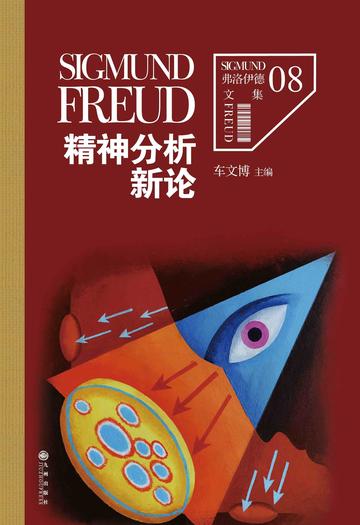
This set of "Collected Works of Freud" (12 volumes) is China's first and only classic translation of Freud's literary essence. It was edited by Che Wenbo, the first person to study Freud in China, a recognized authority on Freud in the academic world, and a famous psychologist. It has been rigorously translated and revised many times by more than 40 experts and professors across the country. It can be called the most authoritative and complete version of Freud's psychological works on both sides of the Taiwan Straits.
This volume contains four parts. "New Essays on Psychoanalysis" originates from Freud's lectures given in 1932 and is the result of 15 years of research practice and reflection since the publication of "Introduction to Psychoanalysis". "Five Lectures on Psychoanalysis" is composed of five speeches delivered by Freud in 1909 for the 20th anniversary of Clark University in the United States. It begins with a description of Freud's cooperation with Breuer in the study of hysteria. Through a large number of clinical practice and observation examples, it relatively systematically introduces the formation and development process of important ideas and concepts of psychoanalysis on catharsis, repression, dreams, errors, sexual desire and transference. The article "History of the Psychoanalytic Movement" is a historical summary of the emergence, development and split of psychoanalysis. It is not only a guide to introduce the basic principles of psychoanalysis to readers, but also a comprehensive and incisive summary of Freud's psychoanalytic theory for which he struggled all his life.
Reader comments
The new theory is not an innovation or insightful thinking about Freud's theory; it is about grasping Freud's therapeutic philosophy between the lines of the original text, and it is about re-translating and revising Freud's charm; especially the practical aspects of psychoanalysis, such as catharsis, dream interpretation and conversation, are all his development and creation, and are also the focus and exploration of the psychoanalytic school represented by Freud in the Chinese academic community today. By deepening the personality structure and exploring the source and nature of anxiety, Chinese people urgently need such a mental health course.
This book focuses on recent developments and perspectives on Freud's psychoanalytic theory and therapeutic methods. It is one of the important milestones in Freud's thought and has had a profound impact on the fields of psychology and psychiatry. In this book, Freud explores a range of topics, including the unconscious, dream interpretation, sexual desire and psychosexual development, child psychology, neuroses, and mental illness. He proposed a series of theoretical concepts, such as the conflict between consciousness and unconsciousness, ego and superego, defense mechanisms, etc., And explained in detail the application of these concepts in psychoanalytic treatment.
The author of this book, Sigmund Freud, is the most famous Austrian psychiatrist, the founder of the school of psychoanalysis, and one of the most influential thinkers in the 20th century. His theory of subconscious psychology, psychoanalytic treatment methods and techniques, as well as his exploration of the depths of the human soul, opened up a new field for world psychological research and left a deep impression on the entire world. This book is a guide to introduce readers to the basic principles of psychoanalysis, and is also a summary of the author's own psychoanalytic theory throughout his life.
Psychoanalysis believes that to be a human being, first of all, he is a living organism. The fundamental driving force of all human activities must be biological instinctive impulses, and the core impulse among instinctive impulses is the reproductive instinct, that is, the impulse of sexual instinct or sexual desire instinct. Under the suppression of social laws, morality, civilization, and public opinion, people are forced to suppress sexual instincts into the subconscious, preventing them from entering the level of human consciousness, and venting them in a form permitted by society.
"New Treatise on Psychoanalysis" is Freud's important work, which is the further development and improvement of psychoanalytic theory. In this book, Freud systematically elaborated and improved the psychoanalytic theory and put forward some new perspectives and hypotheses. He believes that there is a subconscious mind behind human behavior and thinking, and that the subconscious mind is formed by human experience and inner conflicts. Freud also proposed a series of important concepts such as ego, superego, id, and defense mechanisms. He believes that these concepts can help us better understand the motivations and reasons behind human behavior and thoughts, and can be used to treat various psychological problems.
This book is really good! Freud's theory is very interesting, especially his analysis of dreams and discussion of personality structure, which gave me a deeper understanding of my inner world. Moreover, some of the clinical cases in the book are also very vivid, making me seem to be able to see how Freud helped those patients solve their psychological problems. However, some of the content in it is indeed a bit esoteric and I have to digest it slowly. Overall, this is a great book worth reading!

The new theory is not an innovation or insightful thinking about Freud's theory; it is about grasping Freud's therapeutic philosophy between the lines of the original text, and it is about re-translating and revising Freud's charm; especially the practical aspects of psychoanalysis, such as catharsis, dream interpretation and conversation, are all his development and creation, and are also the focus and exploration of the psychoanalytic school represented by Freud in the Chinese academic community today. By deepening the personality structure and exploring the source and nature of anxiety, Chinese people urgently need such a mental health course.
This book focuses on recent developments and perspectives on Freud's psychoanalytic theory and therapeutic methods. It is one of the important milestones in Freud's thought and has had a profound impact on the fields of psychology and psychiatry. In this book, Freud explores a range of topics, including the unconscious, dream interpretation, sexual desire and psychosexual development, child psychology, neuroses, and mental illness. He proposed a series of theoretical concepts, such as the conflict between consciousness and unconsciousness, ego and superego, defense mechanisms, etc., And explained in detail the application of these concepts in psychoanalytic treatment.
The author of this book, Sigmund Freud, is the most famous Austrian psychiatrist, the founder of the school of psychoanalysis, and one of the most influential thinkers in the 20th century. His theory of subconscious psychology, psychoanalytic treatment methods and techniques, as well as his exploration of the depths of the human soul, opened up a new field for world psychological research and left a deep impression on the entire world. This book is a guide to introduce readers to the basic principles of psychoanalysis, and is also a summary of the author's own psychoanalytic theory throughout his life.
Psychoanalysis believes that to be a human being, first of all, he is a living organism. The fundamental driving force of all human activities must be biological instinctive impulses, and the core impulse among instinctive impulses is the reproductive instinct, that is, the impulse of sexual instinct or sexual desire instinct. Under the suppression of social laws, morality, civilization, and public opinion, people are forced to suppress sexual instincts into the subconscious, preventing them from entering the level of human consciousness, and venting them in a form permitted by society.
"New Treatise on Psychoanalysis" is Freud's important work, which is the further development and improvement of psychoanalytic theory. In this book, Freud systematically elaborated and improved the psychoanalytic theory and put forward some new perspectives and hypotheses. He believes that there is a subconscious mind behind human behavior and thinking, and that the subconscious mind is formed by human experience and inner conflicts. Freud also proposed a series of important concepts such as ego, superego, id, and defense mechanisms. He believes that these concepts can help us better understand the motivations and reasons behind human behavior and thoughts, and can be used to treat various psychological problems.
This book is really good! Freud's theory is very interesting, especially his analysis of dreams and discussion of personality structure, which gave me a deeper understanding of my inner world. Moreover, some of the clinical cases in the book are also very vivid, making me seem to be able to see how Freud helped those patients solve their psychological problems. However, some of the content in it is indeed a bit esoteric and I have to digest it slowly. Overall, this is a great book worth reading!
Benefited a lot, worth having
A very good psychology book