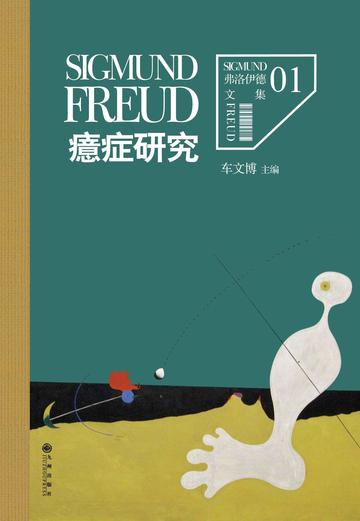
This set of "Collected Works of Freud" (12 volumes) is China's first and only classic translation of Freud's literary essence. It was edited by Che Wenbo, the first person to study Freud in China, a recognized authority on Freud in the academic world, and a famous psychologist. It has been rigorously translated and revised many times by more than 40 experts and professors across the country. It can be called the most authoritative and complete version of Freud's psychological works on both sides of the Taiwan Straits.
This volume includes "Introduction" and "A Brief Biography of Freud" written by Che Wenbo, the editor-in-chief of the Chinese version, and "Research on Hysteria" co-authored by Freud and Joseph Breuer. "Introduction" and "Brief Biography of Freud" are the essence of Chinese editor Che Wenbo's research on Freud and can help readers better understand Freud and psychoanalytic theory. "Studies on Hysteria" was first published in Germany in 1895. The book provided a detailed analysis and explanation of the symptoms and causes of hysteria, and began to propose the trauma theory of hysteria, which marked the foundation and official starting point of its psychoanalytic theory. "It can be exaggerated to say that if we open any book of Western literary criticism, we can find Freud's name or see his shadow."
Reader comments
"The trauma theory of hysteria (trauma theory of hysteria) believes that everyone contains some psychological energy that must find a way out. When they encounter conflicts, they will lead to pathological symptoms." Freud emphasized that when anyone thinks, subconscious and natural motivations have a greater influence than reason and rationality. When we use reason to suppress emotions and desires so that these desires cannot be resolved, they will become beasts that cannot be vented, leading to hysteria.
Freud is a big celebrity in today's society, and his name often appears in various psychological and literary works. There are many works about Freud, and this book is one of the complete biographies compiled by Freud research experts from the two sides of the Taiwan Strait and three places. Needless to say, it is authoritative and quality. By reading this book, we can have a more comprehensive understanding of Freud's life and discover the origins of the psychoanalytic school from his immortal masterpiece (or "The Interpretation of Dreams").
Freudianism is an "old, big, and difficult" subject. In our country, for decades after the founding of New China, Freudianism has been a "forbidden zone" that people rarely mention or even dare to ask about. We believe that Freudianism is not a scientific truth and is not worthy of people's infatuated belief; but it is not pure nonsense and can be simply dismissed. Because Freudianism does have certain reasonable elements, that is, some specific truth, which is worth learning from and absorbing. Therefore, we should adhere to the guidance of dialectical materialism and historical materialism, and oppose laissez-faire that is completely positive, and nihilism that is completely negative or abstractly positive, and concretely negative. Instead, we should adopt a scientific attitude of seeking truth from facts and analyze and comment in two parts. It is China's first and only classic translation of Freud's literary essence. We have translated all Freud's representative works with emphasis in the standard edition, and also translated psychological metaphysics works without emphasis but related to Freud's three theoretical pillars of psychoanalysis: subconscious theory, sexual desire theory, and dream theory, and seven basic theories (subconscious theory, personality structure theory, instinct theory, sexual desire theory, dream interpretation theory, anxiety and self-defense mechanism theory, and sociocultural theory).
This book is very inspiring! Teacher Che Wenbo's "Introduction" and "A Brief Biography of Freud" gave me a deeper understanding of Freud's theory. Especially the analysis of hysteria in the book reminded me of my own emotional changes just after giving birth. It turns out that these may be related to psychological factors. This book made me think more about my own and my children's mental health.
Freud was one of the founders of modern psychology, and his theories had a profound impact on the development of psychology and psychiatry. Through the interpretation of Freud's theories and cases, the author allows readers to understand the characteristics and manifestations of hysteria as a psychological disorder, and also introduces Freud's treatment methods and ideas. The case analysis and theoretical explanations in the book demonstrate Freud's research results and unique insights into psychological issues. The book also raises questions about psychology and disease treatment. Through the explanation of Freud's theory and practice, the author allows readers to think about the nature of psychological problems and treatment methods. He offers some practical suggestions and techniques to guide readers to reflect on their own understanding of and treatment of mental health. By reading this book, we can better understand and apply psychological knowledge, and it also provides us with inspiration for thinking about psychological issues.
It's not divided into chapters. You have to turn many pages to see the main text.
Progress: Standard edition of the complete psychological works of Sigmund Freud 1/12.
Papers written more than a hundred years ago are not outdated at all.
Worth having, I watched it several times and benefited a lot
Watched it again

"The trauma theory of hysteria (trauma theory of hysteria) believes that everyone contains some psychological energy that must find a way out. When they encounter conflicts, they will lead to pathological symptoms." Freud emphasized that when anyone thinks, subconscious and natural motivations have a greater influence than reason and rationality. When we use reason to suppress emotions and desires so that these desires cannot be resolved, they will become beasts that cannot be vented, leading to hysteria.
Freud is a big celebrity in today's society, and his name often appears in various psychological and literary works. There are many works about Freud, and this book is one of the complete biographies compiled by Freud research experts from the two sides of the Taiwan Strait and three places. Needless to say, it is authoritative and quality. By reading this book, we can have a more comprehensive understanding of Freud's life and discover the origins of the psychoanalytic school from his immortal masterpiece (or "The Interpretation of Dreams").
Freudianism is an "old, big, and difficult" subject. In our country, for decades after the founding of New China, Freudianism has been a "forbidden zone" that people rarely mention or even dare to ask about. We believe that Freudianism is not a scientific truth and is not worthy of people's infatuated belief; but it is not pure nonsense and can be simply dismissed. Because Freudianism does have certain reasonable elements, that is, some specific truth, which is worth learning from and absorbing. Therefore, we should adhere to the guidance of dialectical materialism and historical materialism, and oppose laissez-faire that is completely positive, and nihilism that is completely negative or abstractly positive, and concretely negative. Instead, we should adopt a scientific attitude of seeking truth from facts and analyze and comment in two parts. It is China's first and only classic translation of Freud's literary essence. We have translated all Freud's representative works with emphasis in the standard edition, and also translated psychological metaphysics works without emphasis but related to Freud's three theoretical pillars of psychoanalysis: subconscious theory, sexual desire theory, and dream theory, and seven basic theories (subconscious theory, personality structure theory, instinct theory, sexual desire theory, dream interpretation theory, anxiety and self-defense mechanism theory, and sociocultural theory).
This book is very inspiring! Teacher Che Wenbo's "Introduction" and "A Brief Biography of Freud" gave me a deeper understanding of Freud's theory. Especially the analysis of hysteria in the book reminded me of my own emotional changes just after giving birth. It turns out that these may be related to psychological factors. This book made me think more about my own and my children's mental health.
Freud was one of the founders of modern psychology, and his theories had a profound impact on the development of psychology and psychiatry. Through the interpretation of Freud's theories and cases, the author allows readers to understand the characteristics and manifestations of hysteria as a psychological disorder, and also introduces Freud's treatment methods and ideas. The case analysis and theoretical explanations in the book demonstrate Freud's research results and unique insights into psychological issues. The book also raises questions about psychology and disease treatment. Through the explanation of Freud's theory and practice, the author allows readers to think about the nature of psychological problems and treatment methods. He offers some practical suggestions and techniques to guide readers to reflect on their own understanding of and treatment of mental health. By reading this book, we can better understand and apply psychological knowledge, and it also provides us with inspiration for thinking about psychological issues.
It's not divided into chapters. You have to turn many pages to see the main text.
Progress: Standard edition of the complete psychological works of Sigmund Freud 1/12.
Papers written more than a hundred years ago are not outdated at all.
Worth having, I watched it several times and benefited a lot Watched it again