The Book of Changes is a collection of knowledge used by ancient people to understand nature and social development. It is a concentrated expression of ancient Chinese culture and scientific thought.
Each hexagram in the "Book of Changes" is a complete chapter. The hexagram name is the theme, the hexagram paintings are symbols of nature, the hexagram words are the main text, and the line words are supplementary words. Each part is logically coherent, with pictures and texts matching each other, and explained with examples. The themes include exploring natural existence, describing social management, discussing cultural development, etc.
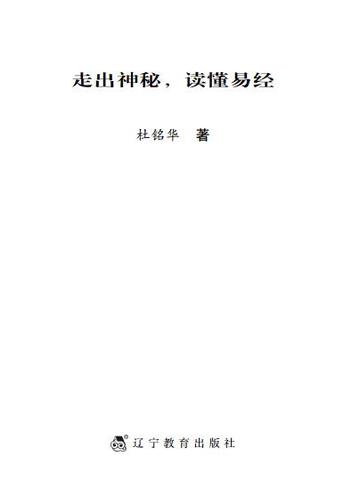
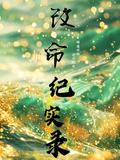
"Out of the Mystery: Understanding the I Ching" uses word meaning interpretation and sentence-by-sentence interpretation to read a "Book of Changes" in which science and culture have the same origin, progress and wisdom coexist, there is no mystery and magic, and the book returns to people's natural life.
Reader comments
The Book of Changes is an ancient Chinese classic that contains many aspects of philosophy, divination and culture. To get out of the mystery and understand the I Ching, you must first understand the basic concepts of the I Ching: the I Ching includes the eight trigrams, the sixty-four hexagrams, and related divination methods. Reading the original text of the I Ching directly can help you understand the thoughts and philosophical ideas contained in it. The text of the I Ching is usually composed of short and profound assertions, and the meaning contained in each assertion is explored through careful understanding. The I Ching is a very profound and broad subject, worthy of a lifetime of study.
The "Book of Changes" is based on the sixty-four hexagrams. Through the changes and analysis of the hexagrams, it explores the principles and principles of nature, life and society. The book focuses on introducing the meaning of the Bagua and the sixty-four hexagrams, mastering basic concepts such as Yin and Yang and the Five Elements, studying the changes and interpretations of the hexagrams, and understanding the relationship and meaning between the hexagrams. In addition to learning divination, we can also explore the philosophical ideas in the "Book of Changes" and use the concepts of change, the balance of yin and yang, and the unity of nature and man to guide life and society.
The Book of Changes is known as "the first of all the classics". It is said that the Book of Changes was written by Jichang, King Wen of Zhou Dynasty, based on the Eight Diagrams. It is a divination work written by the ancients to predict future development and changes. It is a book that demonstrates and describes the laws of the operation of things based on the dualism of yin and yang. It classifies the properties of all things in the world and the theory of heavenly stems and earthly branches and the five elements. In addition to the fact that the I Ching can predict the future, we should also pay attention to the philosophical wisdom contained in the I Ching. Do not use the hidden dragon, see the dragon in the field, work all day long, or jump in the abyss, the flying dragon in the sky, and the dragon has regrets. In fact, it corresponds to a process of ups and downs in our lives.
Read the I Ching and gain more wisdom. Recommended reading. This is the crystallization of our Chinese literature and also tells a lot of wisdom. It is the integration of knowledge by ancient people to understand nature and social development. It is also a concentrated expression of ancient Chinese culture and scientific thought. We can learn more from the explanations in this book because its language is easy to understand and vivid, and the topics mentioned include exploring natural existence, describing social management, discussing cultural development, etc.
I particularly like the interpretation of various hexagrams in the book, which I find very interesting. This reminds me of "The Analects", which also tells profound truths through simple dialogues. I think this book, like The Analects of Confucius, is a classic worth reading again and again. By the way, I also like the historical figures mentioned in the book. Their stories are very inspiring. If you are interested in the "Book of Changes", you must read this book!
In people's eyes, "I Ching" is a profound and mysterious book with magical links. This book takes readers into a different world of the "Book of Changes" and returns to the most original appearance of the "Book of Changes" in human natural life. This book translates word for word and interprets sentence by sentence to read a scientific, progressive and wise "Book of Changes". This book makes the "Book of Changes" easy to understand and introduces the core ideas of the "Book of Changes" in a simple and easy-to-understand manner. The regulations are also very systematic.
This book is easy to understand and very good
Very good and easy to understand
Easy to understand and easy to understand
The writing is delicate and easy to understand.
The forty-three and forty-four hexagrams are missing in the middle.
Easy to understand. Deep in and out. System regulations.
The Book of Changes is an ancient Chinese classic that contains many aspects of philosophy, divination and culture. To get out of the mystery and understand the I Ching, you must first understand the basic concepts of the I Ching: the I Ching includes the eight trigrams, the sixty-four hexagrams, and related divination methods. Reading the original text of the I Ching directly can help you understand the thoughts and philosophical ideas contained in it. The text of the I Ching is usually composed of short and profound assertions, and the meaning contained in each assertion is explored through careful understanding. The I Ching is a very profound and broad subject, worthy of a lifetime of study.
The "Book of Changes" is based on the sixty-four hexagrams. Through the changes and analysis of the hexagrams, it explores the principles and principles of nature, life and society. The book focuses on introducing the meaning of the Bagua and the sixty-four hexagrams, mastering basic concepts such as Yin and Yang and the Five Elements, studying the changes and interpretations of the hexagrams, and understanding the relationship and meaning between the hexagrams. In addition to learning divination, we can also explore the philosophical ideas in the "Book of Changes" and use the concepts of change, the balance of yin and yang, and the unity of nature and man to guide life and society.
The Book of Changes is known as "the first of all the classics". It is said that the Book of Changes was written by Jichang, King Wen of Zhou Dynasty, based on the Eight Diagrams. It is a divination work written by the ancients to predict future development and changes. It is a book that demonstrates and describes the laws of the operation of things based on the dualism of yin and yang. It classifies the properties of all things in the world and the theory of heavenly stems and earthly branches and the five elements. In addition to the fact that the I Ching can predict the future, we should also pay attention to the philosophical wisdom contained in the I Ching. Do not use the hidden dragon, see the dragon in the field, work all day long, or jump in the abyss, the flying dragon in the sky, and the dragon has regrets. In fact, it corresponds to a process of ups and downs in our lives.
Read the I Ching and gain more wisdom. Recommended reading. This is the crystallization of our Chinese literature and also tells a lot of wisdom. It is the integration of knowledge by ancient people to understand nature and social development. It is also a concentrated expression of ancient Chinese culture and scientific thought. We can learn more from the explanations in this book because its language is easy to understand and vivid, and the topics mentioned include exploring natural existence, describing social management, discussing cultural development, etc.
I particularly like the interpretation of various hexagrams in the book, which I find very interesting. This reminds me of "The Analects", which also tells profound truths through simple dialogues. I think this book, like The Analects of Confucius, is a classic worth reading again and again. By the way, I also like the historical figures mentioned in the book. Their stories are very inspiring. If you are interested in the "Book of Changes", you must read this book!
In people's eyes, "I Ching" is a profound and mysterious book with magical links. This book takes readers into a different world of the "Book of Changes" and returns to the most original appearance of the "Book of Changes" in human natural life. This book translates word for word and interprets sentence by sentence to read a scientific, progressive and wise "Book of Changes". This book makes the "Book of Changes" easy to understand and introduces the core ideas of the "Book of Changes" in a simple and easy-to-understand manner. The regulations are also very systematic.
This book is easy to understand and very good
Very good and easy to understand
Easy to understand and easy to understand
The writing is delicate and easy to understand.
The forty-three and forty-four hexagrams are missing in the middle.
Easy to understand. Deep in and out. System regulations.