Stats
5.8Score
Synopsis
No synopsis yet.
We haven’t got an English blurb for this one. It appears once the source description has been translated.
We haven’t got an English blurb for this one. It appears once the source description has been translated.








A pretty good introductory book. It narrates the causes and decline of several remaining powerful countries in their heyday. The views are bland and mainstream.
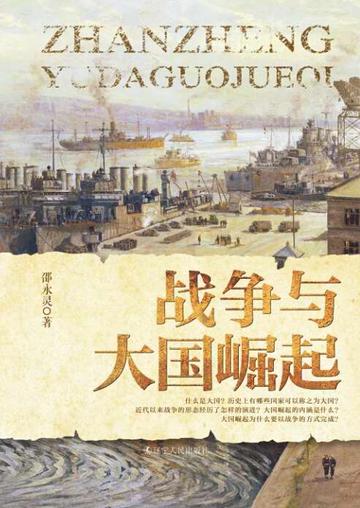
The origin of war is often due to the plunder of resources. The defeated country and the victorious country complement each other and divide certain resources. There will always be countries that will reap the dividends of the war and accelerate their own expansion and development. The main part of the book analyzes the interaction between war and the rise of great powers. It focuses on the role of war in promoting the rise of countries, as well as the impact of the rise of great powers on the pattern and form of war. Through detailed research on historical cases and real-life situations, the author reveals the strategic challenges faced by great powers in their rise, the pursuit of military superiority, and the issues of competition and conflict with other great powers.
This book provides a clear overview of the rise of various major powers since entering modern times, focusing on wars. It gives us a deeper understanding of what big countries are, the process of their rise, and the huge role that war plays in them. This book can be seen from the cause and effect of wars and the changes in regional patterns and world order. War is a catalyst for human evolution, but it is also the final condensed expression of politics, economy, national beliefs, and national will. The road to peace is long.
It provides a clear overview of the rise of various major powers since entering modern times, focusing on describing wars. It gives us a deeper understanding of what big countries are, the process of their rise, and the huge role that war plays in them. This book can be seen from the cause and effect of wars and the changes in regional patterns and world order. War is a catalyst for human evolution, but it is also the final condensed expression of politics, economy, national beliefs, and national will. The road to peace is long.
The rise of great powers always seems to be related to war. The Eighty Years' War enabled the rise of the Netherlands, the Northern War enabled the rise of Russia, the First World War enabled the rise of the United States, and the Second World War enabled the rise of the Soviet Union. This book explains the rise and fall of some countries that are still influential today. But in the 21st century, it is a new path. This era has determined that the rise of a powerful country can no longer be achieved through war. China's rejuvenation must also follow this path. It must rise without causing disaster. This is the rise of a civilization.
The origin of war is often due to the plunder of resources. The defeated country and the victorious country complement each other and divide certain resources. There will always be countries that will reap the dividends of the war and accelerate their own expansion and development. The main part of the book analyzes the interaction between war and the rise of great powers. It focuses on the role of war in promoting the rise of countries, as well as the impact of the rise of great powers on the pattern and form of war. Through detailed research on historical cases and real-life situations, the author reveals the strategic challenges faced by great powers in their rise, the pursuit of military superiority, and the issues of competition and conflict with other great powers.
When a great power rises, it will inevitably challenge the authority of existing powers, and a war will inevitably occur between the two countries. This is the famous Thucydides Trap. Looking around the world, this pattern seems to be running all the time. From the Greco-Roman wars, to the medieval Anglo-Spanish naval battle, to the Cold War between the United States and the Soviet Union, all confirm this view. However, war means endless sacrifices and blood, and it means that human life and dignity become worthless under the conflict of national interests. We hate war, but we will never be weak because of fear. China's rise will be peaceful, with people's interests first.
Before reading the content, I thought of the United States and the Soviet Union from the rise of great powers; and the author's vision is broader, from the rise of the Netherlands and Spain in the Age of Discovery to the rise of Britain after the Industrial Revolution; with a historical span of nearly a thousand years, the author gives the great powers in this book a The concept of the underworld is a political entity that can maintain self-reliance in an era of fierce competition and the law of the jungle, and even perform colonial activities; and every war will always give birth to the corresponding strength of a great power. From a political perspective, this is the result of the redistribution of interests and the game between countries. After reading this book, I have a new understanding of the rise and maintenance of rule of great powers in different time and space dimensions.
Before reading the content, I thought of the United States and the Soviet Union from the rise of great powers; and the author's vision is broader, from the rise of the Netherlands and Spain in the Age of Discovery to the rise of Britain after the Industrial Revolution; with a historical span of nearly a thousand years, the author gives the great powers in this book a The concept of the underworld is a political entity that can maintain self-reliance in an era of fierce competition and the law of the jungle, and even perform colonial activities; and every war will always give birth to the corresponding strength of a great power. From a political perspective, this is the result of the redistribution of interests and the game between countries. After reading this book, I have a new understanding of the rise and maintenance of rule of great powers in different time and space dimensions.
The rise of great powers always seems to be related to war. The Eighty Years' War enabled the rise of the Netherlands, the Northern War enabled the rise of Russia, the First World War enabled the rise of the United States, and the Second World War enabled the rise of the Soviet Union. This book explains the rise and fall of some countries that are still influential today. But in the 21st century, it is a new path. This era has determined that the rise of a powerful country can no longer be achieved through war. China's rejuvenation must also follow this path. It must rise without causing disaster. This is the rise of a civilization.
This book is pretty good