Stats
5.8Score
Synopsis
No synopsis yet.
We haven’t got an English blurb for this one. It appears once the source description has been translated.
We haven’t got an English blurb for this one. It appears once the source description has been translated.
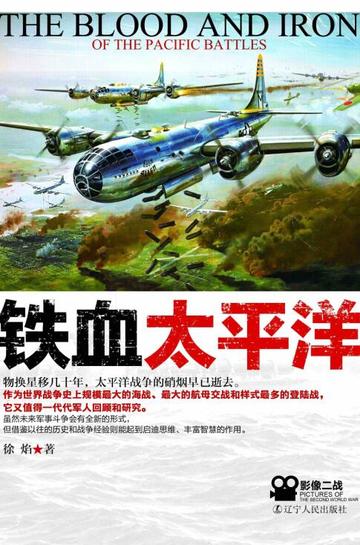
Before World War II, the Chinese called Japan and the United States "banana imperialism" and "Jinyuan imperialism" respectively. Japan hypocritically shouts "Coexistence and Co-prosperity in Greater East Asia", but in its heart it considers itself as a Western Caucasian superior to Asians. However, its yellow skin cannot be changed, just like a "banana" with yellow skin and white heart. The emerging Japanese bandits invaded and plundered neighboring Korea and China, and also wanted to seize Southeast Asia controlled by the United States and Britain. This inevitably triggered the Pacific War with the United States and Japan as the protagonists. The author uses concise language, detailed information, and careful writing style to tell us all this.
The whole book focuses on facts and is well-founded. The general ideas are summarized very clearly. The combination of text and pictures is very visual and engaging. The author uses a professional and objective historical perspective to evaluate the iron-blooded battle between the United States and Japan in the Pacific from the perspective of military strategy and development, and restores the objective and true history. This is a good popular historical science book, suitable for people like me who want to have a brief understanding of history. History is history, facts are facts, keep history in mind and don't forget the national humiliation!
When Japan went to war against the United States and Britain, it paid great attention to military intelligence, but lacked research on the social and humanistic psychology of Europe and the United States. After the Meiji Restoration, Japan emphasized "Westernization", which was mainly limited to learning technology and management systems. In particular, those army officers who admired the arrogance of "Bushido" had limited their understanding of the United States to Hollywood movies before the war, and believed that it was a country that was scattered and had no collective spirit. The Japanese Navy has a broader vision than the Army. It believes that the United States is advanced but still only observes industrial capabilities. Isoroku Yamamoto, who has served as the naval attache of the Japanese Embassy in the United States for nearly three years, said that he visited the US fleet and felt that although its technical level was high, the sailors were cheerful and undisciplined and had a weak will to fight.
This book is objective and fair, and restores the Pacific War of World War II. It is clearly organized and explains the contest between the United States and Japan on the Pacific battlefield from a true historical and military perspective. "Iron-Blooded Pacific" is written fluently, and the historical events are smoothly sorted out with a strong sense of immersion. While telling the history, it also reflects the author's thinking on the war. It is also equipped with rich historical pictures, which helps readers understand all aspects of the war. It is a very high-quality historical work and can be read by friends who like the history of war.
The competition surrounding maritime power and maritime interests has been an important part of world history since modern times and is also one of the focuses of competition between various major powers. With the evolution of history and changes in various related factors, ocean competition has different characteristics in different historical periods. This book uses easy-to-understand language and pictures to give us a clear, clear and detailed explanation of the historical events in which China, the United States, and Japan competed for rights at sea in modern times.
The book emphasizes the crucial role that science and technology and economic strength play in war. During the reading process, you can deeply feel that the author was very careful when writing, and his thinking is very clear. His words are clear, his views are clear, and he is well-founded, making it easy to read without being obscure. More importantly, the biggest advantage of this book is that it compares the economic basic strength of the country before, during and after the war. The numerical values mentioned in the book are very convincing, and the pictures and texts can also make readers understand more intuitively. I recommend it as a good book!
This is a historical war-themed novel. This book outlines the thrilling battles on the Pacific battlefield during World War II in a wonderful way, showing the bravery and sacrifice of the soldiers. In this book, the author expands the impact of the war to all aspects behind the war. He describes the pain and destruction that war brings to people, and its impact on family, friendship, and love. Through these delicate descriptions, readers can gain a deeper understanding of the impact of war on individuals and society.
It is a history of humiliation and bloodshed. The international situation of that year should be interpreted without the color of hatred. The transformation of enemies and friends in the war is ever-changing. The great powers clashed to get what they needed. Remember that at that time, we were at the mercy of others. The war culture during World War II is described with pictures and texts. Every country is trying to absorb the last bit of value in the Pacific. Trade is also an extension of war, taking advantage of plunder. A nation that lived a good life ended due to excessive expansion, but the pain it brought to the world cannot be repaired. Humility is an excellent strategy at all times, and the lessons of our ancestors are still in our ears.
The objective and impartial narration in the book gave me a new understanding of the Pacific War. Through the records in the book, I saw the bloody fighting of the war, and the changes in the world structure during World War II, which were clearly cruel. Evaluating war from a unique perspective allows us to see war scenes from different angles, and we can't help but think about how they are like this from a military perspective. Events from different perspectives show different contents. When you know another version and look at it together, you will feel like you are suddenly enlightened.
Historical content related to the Pacific War. Before World War II, the Chinese once called the United States and Japan "banana imperialism" and "Jinyuan imperialism" respectively. The former's wealth in the world mainly relies on controlling international economic and trade to make money, while the latter's recent rise mainly relies on plundering by force. The emerging Japanese bandits invaded and plundered neighboring South Korea and China, and also wanted to seize Southeast Asia controlled by the United States and Britain. This inevitably triggered the Pacific War with the United States and Japan as the protagonists.
His works about historical wars are based on the war in the Pacific. This is a very important war history in history. The author uses an objective perspective to describe the military strategy and development of the time, commenting on this amazing war between the United States and Japan in the Pacific, and combing the context of the entire war event very clearly. And present it to readers based on historical facts. This is a very exciting work describing the history of modern war.
The brief review is quite good, the content is concise and easy to understand, the narrative is clear, and I feel very good
A classic World War II you'll never tire of watching
A very enlightening book.
Being objective and fair gave me a new understanding of the Pacific War against Japan.
Can be read for pleasure.
The writing is good, relatively objective and true, but looking at the mobile phone makes my eyes tired.
Clear organization, smooth writing, and a strong sense of reality.