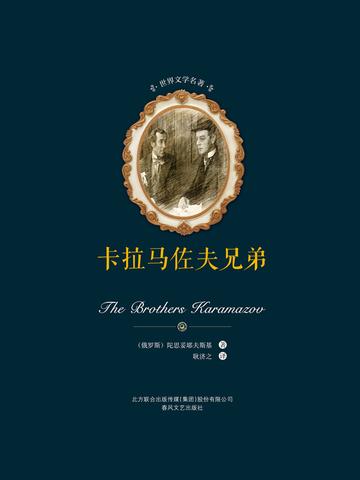
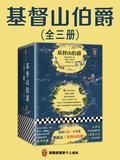
"The Brothers Karamazov" is Dostoevsky's masterpiece. The story comes from a real patricide case and describes the contradictions and conflicts between two generations. The protagonist Karamazov has four sons: Dmitry, Ivan, Alyosha and the illegitimate son Smerdyakov. The old Karamazov, who was in his twilight years, did not change his greedy and lustful nature. He not only occupied the inheritance left by his wife to the children, but also became jealous of a romantic woman with his eldest son Dmitri, which led to discord between father and son. Dmitri hated his father and threatened to kill him. One night, he suspected that his father was having a tryst with his lover. In a rage, he beat his father seriously and fled in a hurry. That night, old Karamazov died and Dmitri was arrested. However, the real murderer was the illegitimate son Smerdyakov. In order to vent his long-standing grudges, he secretly brutally killed his seriously injured father. This confusing murder triggered a series of thrilling stories. The ending of the novel is very tragic: Dmitry is innocently imprisoned, Smerdyakov commits suicide in fear of crime, Ivan becomes insane, and Alyosha leaves for a foreign country.
The novel is a faithful record of the social era. On the surface, "The Brothers Karamazov" is about a patricide case, about the entangled grievances between a father and his sons. In fact, this family tragedy is also a metaphor for the disintegration of the Tsarist autocratic society. The theme of the novel is the human spirit and the moral battle between faith, suspicion, reason and free will. Since the 10th century AD, Christianity has become the spiritual pillar of Russians, carrying many connotations such as society, morality, and humanity. However, after the serfdom reform in the 19th century, the materialistic desires and moral decay brought about by the development of capitalism increasingly fragmented Russian society. The democratic revolutionary movement against the tsarist autocratic rule was in full swing. Various social trends impacted the traditional Russian value system, and atheists began to question the existence of God. These social, political, economic, religious and philosophical trends of thought profoundly influenced Dostoevsky's thoughts and creations.
Similarly, the writer's own life experience also has an important impact on novel creation. During his exile in Siberia, Dostoevsky came into contact with the prototype of the patricide case - a young man who was wrongly convicted of killing his father for financial gain. About 10 years later, the real murderer was brought to justice and the young man was acquitted. In 1878, Dostoevsky began writing "The Brothers Karamazov", and this story became the main plot of the novel. In May of the same year, Dostoevsky's three-year-old son Alyosha unfortunately died of epilepsy inherited from his family. His spirit suffered a heavy blow and his creation was temporarily suspended. Picking up the pen again, the writer incorporated the pain of losing his son into the novel and created Alyosha, who has the same name as his son, making him the embodiment of faith and virtue. At the end of the novel, Alyosha encourages the children to be friendly, kind, and honest. "We will definitely be resurrected" and our spirits will be immortal. Obviously, Alyosha placed his thoughts on the writer's thoughts on his son, as well as his deeper universal feelings.
Reader comments
Why did he send me a text message to tell me that he updated...
We must be kind, honest and never forget each other
Hmm... It hurts, it hurts, it hurts. Today, we won't talk about Karamazov's crime and viciousness, let alone how Sofia Ivanovna suffered? Why doesn't Smergashaya have any social backing? What we want to delve into is:
Why is the world so painful? If God really does not exist (what is God, the world is God, the stone is God), then can everything really be allowed? If suffering is allowed, who will end it? They are human beings, the "benevolent" type.
After reading this book, I dare not admit how profound my thoughts are. When I know, the world is sinful, and life is also sinful.
I formed a word myself (because no one has a structural language for this situation at present), which is the evil (inertia) of the world. Why does the world have "inertia" and "evil"? , Because its physical underlying code is evil-oriented, but it only has a greater effect on individuals.
1. When a thief steals other people's property, it is indeed the greatest short-term gain for the individual, but the greatest long-term damage to the collective. Those who have been stolen will feel resentful and steal other people's property. Then a world where everyone is a thief is born.
2. Regarding goodness, I give two examples:
A netizen who attacks people who are living a difficult life online with full of malice brings attention to the person being attacked, while netizens regard this person as a saint. The kindness here involves "the principle of paper and pen."
There is also a purer kind of good, which is the well-known "borrowing an umbrella". Evil will produce a "domino effect", and so will good, but the cycle is longer and the benefits are greater.
Summary:
Evil has short-term benefits for individuals, but it is harmful to the collective in the long term, and the boomerang will also cause harm to individuals when it comes back.
Kindness may bring short-term losses or gains to individuals, but the "umbrella" handed out will eventually come back.
Therefore, the "good and evil theory of human nature" that people have been arguing about is a problem in this world.
Oh, I have one more sentence here, which is my understanding of how to treat the world:
The principle of paper and pen: The world is a piece of transparent black paper, and the good and evil deeds performed by human beings are pens. This pen will produce completely different results if it is applied to any position on the paper with an unknown amount of force.
For example, if a person writes with a white (good)/black (evil) pen, but the force may be too strong or too weak, the blue pen may write red words.
"If there is no God, then everything is allowed"
"Benevolence does not allow it!"
"The world is toward evil, and people are born toward evil, but this is caused by the laws of physics. Benevolence is born toward good."
——
Suffering, how much more suffering do humans have to endure before they can obtain the so-called happiness? The world, God, even give a little response?
Therefore, I call God a stone. He is the inconspicuous stone in the rushing river. When a person falls into the water, this stone may become a stepping stone, but maybe... He may also become the stone that hits you on the head and kills you.
Therefore, human beings have subjective emotions. I have personified the world, but I do not condemn it. I only objectively describe his tendency to evil. Will he respond to me?
He won't, just like... "Good people will be rewarded with good things, and evil people will be rewarded with evil things." Who will promise this result? World? God? God? He will not pay attention to you, he will just remain silent and sit there. This is how divinity is. It is also said in the Tao Te Ching: "Heaven and earth are not benevolent, and treat all things as stupid dogs."
It was so exciting, I read this chapter in one sitting. Each of us can learn a lot about Elder Zosima's notes.
Finally finished reading
To be honest, it may be a translation problem. I don't quite understand it.
It is also a 500,000-word world-famous novel, but I read The Count of Monte Cristo word for word. The stories of The Count of Monte Cristo are interlocking and fascinating.
The plot of The Brothers Karamazov is also very concise in logic, but the author likes to intersperse some philosophical discussions into it, which makes it relatively obscure and difficult to understand.
Maybe this is a characteristic of Russian literature. I have read other books by Dostoevsky, but I didn't like them very much. Maybe I don't like his writing style very much.
The translation is a bit too stiff
Moreover, I can't quite understand the Russian character and thoughts.
Simply put, it's a family similar to the Shameless
He is actually a nobleman. To put it simply,
The eldest son and his father competed for the same woman
The fourth illegitimate son killed his father and then framed the eldest son
The second son is equivalent to authorizing the fourth son to kill his father.
The second son is equivalent to the spiritual murderer, while the fourth son is the execution murderer.
The second son left home early, knowing that the fourth son was going to kill his father, giving the fourth son time and opportunity to kill his father, and finally suffered from split personality.
The third son is like an angel, spreading messages and doing peacemaking everywhere.
The eldest son never went to school and was a soldier since he was a child, so he has a bad temper and speaks loudly.
The second son has excellent academic performance. He went to college and studied science.
Illegitimate children were raised by servants
Tuoye will not let you down
A very shocking book, especially Ivan's chapter "The Great Master of Religion", the discussion about freedom and bread, about freedom and order. Good works have universal value no matter how long they pass.
This is an extremely delicately written novel that depicts the characters' personalities and real psychological activities from several angles.
I can't describe how difficult it was to understand at first, and I wanted to give up at any time, but the old Karamazov made me both despairing and knowledgeable about human nature, and I felt sorry for the experiences of his wives. However, the elder's suicide note and Alusa's teachings benefited me a lot. In the middle, I felt depressed when I was studying as a religious judge. In the end, the defense of the two lawyers made me applaud.
This book is very real and made me see the complexity of society. The conflict between Dmitry and his father, just like the conflict between me and my boss, was all about money. I understand his mood and hope he can find a solution to the problem. I like the character of Alyosha, he is kind and strong. His words made me believe that no matter how difficult life is, we must have hope. This book made me think more about life.









Why did he send me a text message to tell me that he updated...
We must be kind, honest and never forget each other
Hmm... It hurts, it hurts, it hurts. Today, we won't talk about Karamazov's crime and viciousness, let alone how Sofia Ivanovna suffered? Why doesn't Smergashaya have any social backing? What we want to delve into is: Why is the world so painful? If God really does not exist (what is God, the world is God, the stone is God), then can everything really be allowed? If suffering is allowed, who will end it? They are human beings, the "benevolent" type. After reading this book, I dare not admit how profound my thoughts are. When I know, the world is sinful, and life is also sinful. I formed a word myself (because no one has a structural language for this situation at present), which is the evil (inertia) of the world. Why does the world have "inertia" and "evil"? , Because its physical underlying code is evil-oriented, but it only has a greater effect on individuals. 1. When a thief steals other people's property, it is indeed the greatest short-term gain for the individual, but the greatest long-term damage to the collective. Those who have been stolen will feel resentful and steal other people's property. Then a world where everyone is a thief is born. 2. Regarding goodness, I give two examples: A netizen who attacks people who are living a difficult life online with full of malice brings attention to the person being attacked, while netizens regard this person as a saint. The kindness here involves "the principle of paper and pen." There is also a purer kind of good, which is the well-known "borrowing an umbrella". Evil will produce a "domino effect", and so will good, but the cycle is longer and the benefits are greater. Summary: Evil has short-term benefits for individuals, but it is harmful to the collective in the long term, and the boomerang will also cause harm to individuals when it comes back. Kindness may bring short-term losses or gains to individuals, but the "umbrella" handed out will eventually come back. Therefore, the "good and evil theory of human nature" that people have been arguing about is a problem in this world. Oh, I have one more sentence here, which is my understanding of how to treat the world: The principle of paper and pen: The world is a piece of transparent black paper, and the good and evil deeds performed by human beings are pens. This pen will produce completely different results if it is applied to any position on the paper with an unknown amount of force. For example, if a person writes with a white (good)/black (evil) pen, but the force may be too strong or too weak, the blue pen may write red words. "If there is no God, then everything is allowed" "Benevolence does not allow it!" "The world is toward evil, and people are born toward evil, but this is caused by the laws of physics. Benevolence is born toward good." —— Suffering, how much more suffering do humans have to endure before they can obtain the so-called happiness? The world, God, even give a little response? Therefore, I call God a stone. He is the inconspicuous stone in the rushing river. When a person falls into the water, this stone may become a stepping stone, but maybe... He may also become the stone that hits you on the head and kills you. Therefore, human beings have subjective emotions. I have personified the world, but I do not condemn it. I only objectively describe his tendency to evil. Will he respond to me? He won't, just like... "Good people will be rewarded with good things, and evil people will be rewarded with evil things." Who will promise this result? World? God? God? He will not pay attention to you, he will just remain silent and sit there. This is how divinity is. It is also said in the Tao Te Ching: "Heaven and earth are not benevolent, and treat all things as stupid dogs."
It was so exciting, I read this chapter in one sitting. Each of us can learn a lot about Elder Zosima's notes.
Finally finished reading To be honest, it may be a translation problem. I don't quite understand it. It is also a 500,000-word world-famous novel, but I read The Count of Monte Cristo word for word. The stories of The Count of Monte Cristo are interlocking and fascinating. The plot of The Brothers Karamazov is also very concise in logic, but the author likes to intersperse some philosophical discussions into it, which makes it relatively obscure and difficult to understand. Maybe this is a characteristic of Russian literature. I have read other books by Dostoevsky, but I didn't like them very much. Maybe I don't like his writing style very much. The translation is a bit too stiff Moreover, I can't quite understand the Russian character and thoughts. Simply put, it's a family similar to the Shameless He is actually a nobleman. To put it simply, The eldest son and his father competed for the same woman The fourth illegitimate son killed his father and then framed the eldest son The second son is equivalent to authorizing the fourth son to kill his father. The second son is equivalent to the spiritual murderer, while the fourth son is the execution murderer. The second son left home early, knowing that the fourth son was going to kill his father, giving the fourth son time and opportunity to kill his father, and finally suffered from split personality. The third son is like an angel, spreading messages and doing peacemaking everywhere. The eldest son never went to school and was a soldier since he was a child, so he has a bad temper and speaks loudly. The second son has excellent academic performance. He went to college and studied science. Illegitimate children were raised by servants
Tuoye will not let you down
A very shocking book, especially Ivan's chapter "The Great Master of Religion", the discussion about freedom and bread, about freedom and order. Good works have universal value no matter how long they pass.
This is an extremely delicately written novel that depicts the characters' personalities and real psychological activities from several angles.
I can't describe how difficult it was to understand at first, and I wanted to give up at any time, but the old Karamazov made me both despairing and knowledgeable about human nature, and I felt sorry for the experiences of his wives. However, the elder's suicide note and Alusa's teachings benefited me a lot. In the middle, I felt depressed when I was studying as a religious judge. In the end, the defense of the two lawyers made me applaud.
This book is very real and made me see the complexity of society. The conflict between Dmitry and his father, just like the conflict between me and my boss, was all about money. I understand his mood and hope he can find a solution to the problem. I like the character of Alyosha, he is kind and strong. His words made me believe that no matter how difficult life is, we must have hope. This book made me think more about life.
It's actually painful to watch, it's too long
Good, good, good, good