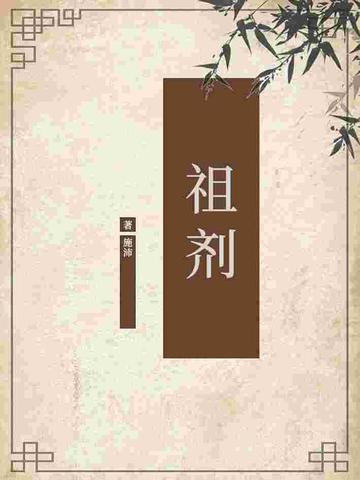
Since the changes of diseases cannot be studied in detail, in treatment, we can neither stick to one method and cure all diseases, nor can we treat one syndrome and use many prescriptions indiscriminately. Doctors in the past dynasties have paid attention to flexible prescriptions and symptomatic treatment based on certain prescriptions. In this way, treatises on "ancestral prescriptions" and "similar prescriptions" of prescriptions were produced. The book "Zuji" written by Shi Pei (also known as Peiran, also known as Lize Jutu), a physician in the late Ming Dynasty and early Qing Dynasty, is the earliest monograph on "ancestral prescriptions" and "similar prescriptions" among many prescription books in my country. "Zuji" is a collection of prescriptions, with four volumes in total, containing 75 main prescriptions and 768 supplementary prescriptions. This book connects the prescriptions from before the Ming Dynasty to each other, starting with classic prescriptions such as Huangdi Neijing, Decoctions, Treatise on Febrile Diseases, and Synopsis of the Golden Chamber, thereby inferring their evolution and tracing back to their origins. The classification criteria are that they are related by adding or subtracting the same prescription, or they are related because the names of the prescriptions are similar, or they are related because the main medicines in the prescription are the same, or they are similar because the prescriptions have similar effects. So that future generations can understand the outline of ancient and modern prescriptions that connect the past and the future. Shi also added notes and annotations to some prescriptions, which was published more than a hundred years before the "Jiangxueyuan Ancient Prescriptions" published by Wang Zi, a physician in the Qing Dynasty. It provides valuable information for studying the development history of prescription science.
At the end of "Zuji", there is also "Yunqitang Clinic Book", which is Shi's medical record. The causes and syndromes in the case were examined, the analysis was thorough, and the prescription of the remaining medicine was meticulously detailed. It is a precious material for studying medical cases.
As a representative work of the prescription system, "Zuji" not only contributes to the taxonomy of prescriptions, but also provides convenience for the research and clinical application of traditional Chinese medicine. On the basis of elaborating its classification principles, this article points out the application value of the book and further optimizes the classification method of similar prescriptions, so as to improve the classification system of similar prescriptions and make it better serve the functions and effects of medicine. "Zuji" is a representative work using the similar style, and its classification has been recognized by many scholars in later generations. Compared with other classification forms, this has both commonalities and uniqueness. The essence of this classification method is based on the correspondence between prescriptions and syndromes, syndrome differentiation of prescriptions as the basis, the historical process of prescription development as clues, and drug composition as the core. Its appearance enriches the content of prescription classification, deepens people's understanding of ancestral prescriptions that play a role in reproduction, and contributes to the theory and application of prescriptions.
Reader comments
Just like my relative, who always looks for different prescriptions when seeing a doctor. If you have this book, you can understand more about the ins and outs of the prescriptions. There are also the author's medical records, which I feel are very practical! It is a good reference book for those of us who are interested in Chinese medicine.


Just like my relative, who always looks for different prescriptions when seeing a doctor. If you have this book, you can understand more about the ins and outs of the prescriptions. There are also the author's medical records, which I feel are very practical! It is a good reference book for those of us who are interested in Chinese medicine.