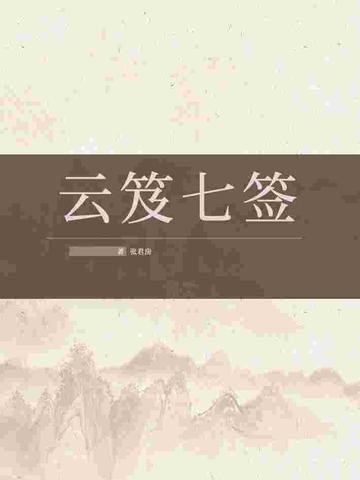
"Yunji Qizhu" is a large-scale Taoist book that selects and compiles the contents of "Treasures of the Heavenly Palace of the Song Dynasty". In the third year of Tianxi in the Northern Song Dynasty (AD 1019), Zhang Junfang, who was then Zuo Lang, compiled "Treasures of the Heavenly Palace of the Song Dynasty" and selected more than 10,000 essential items that he thought were essential. Between the third and seventh years of Tiansheng (1025-1029), he compiled this book and presented it to Emperor Renzong.
Reader comments
This book is orthodox to the Shangqing sect, so it contains many Taoist scriptures from this sect. It describes the Shangqing sutra transmission system and the Shangqing cultivation method in detail, reflecting the characteristics of the times when the Shangqing sect occupies a prominent academic position. In addition, it contains more works from the Tang Dynasty than other newly published Taoist books from the Five Dynasties and the early Song Dynasty. However, in addition to continuing to recognize Laozi's status as the leader, this book particularly highlights the worship of the Holy Ancestor (Zhao Xuanlang) that emerged during the Zhenzong era of the Song Dynasty.
For example, the "Xiantian Ji Xu" and "Xuanyuan Ben Ji" produced by Zhenzong are listed at the top of the Ji, ranking above the "Yuanshi Tianwang Ji", "Tai Shang Dao Jun Ji" and "Hunyuan Emperor Sheng Ji". The biography first records the "Biography of Yisheng Baode Zhenjun", which is the preface to the Zhenzong system of the Song Dynasty and is mainly characterized by promoting the divine right of kings in the Song Dynasty, and then continues the biographies of Zhongzhen in the Qing Dynasty. In terms of style, this book clearly inherits the formatting characteristics of "The Supreme Secret", which takes "Tao" as the first, "Experience" as the sufficiency, and "Dharma" as the main body, but the structure is more compact and the classification is more reasonable.
"Yunji Qizhu" has always been valued by Taoist circles and academic circles. "The Treasures of the Heavenly Palace of the Song Dynasty" has been lost for a long time, but thanks to this book, we can get an overview of it. Therefore, the book has the advantages of being systematic, comprehensive and concise, so it is called "Xiao Dao Zang" and is an essential material for understanding and studying Taoism.
Yunji Qizhan has preserved a large number of Taoist books and other ancient books before the Northern Song Dynasty. Some of them have been scattered or lost. However, this book can be used to spread or preserve Jiguang Pianyu in its entirety. After understanding the Taoist classics, it is indeed well-deserved. After reading it once, it is actually better than most so-called "masters" on the market. However, many operations require basic worldview and operation method teaching. Taoism places the greatest emphasis on the integrity and coordination of things.
Yu Ai is not the real ruins, Taiyuan is my museum. How can Mr. Xuan be bad? He is troubled by his loneliness. The falling phoenix controls the purple clouds, and the bridle is trimmed to climb the morning crotch. There is no end of silence; the sky is bright and clear. Hidden in the beautiful phoenix hills, wandering around the Yaolin. The dragon fetus takes the shape of a baby, and the eight qiong return to Sudan. The prosperous Jade Palace in Langhua is decorated with colorful flowers and colorful flowers. The fan blows across hundreds of millions of mountains, and the flying feather supports the sky. There is a long song in the west court, Yun Ao abandons the empty bomb, eight winds entangle the green sky, and the smoke suddenly disperses. The soul boy throws away gold, and the fire slightly opens the resignation case. Three Yuan bows to dance, and the Purple Emperor waves his sleeves in praise. Lang Lang fan Jing Hui, Ye Ye Chang Geng Huan. The bright blade of Chao Zan makes me sad. Dear immortals, why do you live in forest streams?
Zhang Junfang remembers the ghosts and gods turning into monsters. After Junfang compiled the book of Taoism, he compiled its essence into more than 10,000 pieces and compiled it into 122 volumes of "Yunji Qizhuan". Through the study of Taoism, it supplemented the Taoist culture. He believed that the three corpse gods were actually stationed to monitor the human body. These three names are Peng Kuo, Peng Zhi and Peng Jiao. Every Gengshen Day, the three corpses will temporarily leave the human body while the host is sleeping, enter the underworld and report everything their hosts have done that month, and the underworld will make decisions on the safety of humans based on these records.
Philosophy is a gift to human society, and thinking about philosophy makes people progress. Taoist philosophy, as our country's native philosophy, has a profound impact on our current society, our standards for judging right and wrong, and our three views. This book is a large-scale Taoist work that selects and compiles the contents of "Treasures of the Heavenly Palace of the Song Dynasty". In the Tianxi year of the Northern Song Dynasty, after Zhang Junfang compiled "Yungong Treasures of the Great Song Dynasty", he selected more than 10,000 items that he thought were essential and compiled them into "Seven Lots of Yunji"
This book is orthodox to the Shangqing sect, so it contains many Taoist scriptures from this sect. It describes the Shangqing sutra transmission system and the Shangqing cultivation method in detail, reflecting the characteristics of the times when the Shangqing sect occupies a prominent academic position. In addition, it contains more works from the Tang Dynasty than other newly published Taoist books from the Five Dynasties and the early Song Dynasty. However, in addition to continuing to recognize Laozi's status as the leader, this book particularly highlights the worship of the Holy Ancestor (Zhao Xuanlang) that emerged during the Zhenzong era of the Song Dynasty. For example, the "Xiantian Ji Xu" and "Xuanyuan Ben Ji" produced by Zhenzong are listed at the top of the Ji, ranking above the "Yuanshi Tianwang Ji", "Tai Shang Dao Jun Ji" and "Hunyuan Emperor Sheng Ji". The biography first records the "Biography of Yisheng Baode Zhenjun", which is the preface to the Zhenzong system of the Song Dynasty and is mainly characterized by promoting the divine right of kings in the Song Dynasty, and then continues the biographies of Zhongzhen in the Qing Dynasty. In terms of style, this book clearly inherits the formatting characteristics of "The Supreme Secret", which takes "Tao" as the first, "Experience" as the sufficiency, and "Dharma" as the main body, but the structure is more compact and the classification is more reasonable. "Yunji Qizhu" has always been valued by Taoist circles and academic circles. "The Treasures of the Heavenly Palace of the Song Dynasty" has been lost for a long time, but thanks to this book, we can get an overview of it. Therefore, the book has the advantages of being systematic, comprehensive and concise, so it is called "Xiao Dao Zang" and is an essential material for understanding and studying Taoism.
Yunji Qizhan has preserved a large number of Taoist books and other ancient books before the Northern Song Dynasty. Some of them have been scattered or lost. However, this book can be used to spread or preserve Jiguang Pianyu in its entirety. After understanding the Taoist classics, it is indeed well-deserved. After reading it once, it is actually better than most so-called "masters" on the market. However, many operations require basic worldview and operation method teaching. Taoism places the greatest emphasis on the integrity and coordination of things.
Yu Ai is not the real ruins, Taiyuan is my museum. How can Mr. Xuan be bad? He is troubled by his loneliness. The falling phoenix controls the purple clouds, and the bridle is trimmed to climb the morning crotch. There is no end of silence; the sky is bright and clear. Hidden in the beautiful phoenix hills, wandering around the Yaolin. The dragon fetus takes the shape of a baby, and the eight qiong return to Sudan. The prosperous Jade Palace in Langhua is decorated with colorful flowers and colorful flowers. The fan blows across hundreds of millions of mountains, and the flying feather supports the sky. There is a long song in the west court, Yun Ao abandons the empty bomb, eight winds entangle the green sky, and the smoke suddenly disperses. The soul boy throws away gold, and the fire slightly opens the resignation case. Three Yuan bows to dance, and the Purple Emperor waves his sleeves in praise. Lang Lang fan Jing Hui, Ye Ye Chang Geng Huan. The bright blade of Chao Zan makes me sad. Dear immortals, why do you live in forest streams?
Zhang Junfang remembers the ghosts and gods turning into monsters. After Junfang compiled the book of Taoism, he compiled its essence into more than 10,000 pieces and compiled it into 122 volumes of "Yunji Qizhuan". Through the study of Taoism, it supplemented the Taoist culture. He believed that the three corpse gods were actually stationed to monitor the human body. These three names are Peng Kuo, Peng Zhi and Peng Jiao. Every Gengshen Day, the three corpses will temporarily leave the human body while the host is sleeping, enter the underworld and report everything their hosts have done that month, and the underworld will make decisions on the safety of humans based on these records.
Philosophy is a gift to human society, and thinking about philosophy makes people progress. Taoist philosophy, as our country's native philosophy, has a profound impact on our current society, our standards for judging right and wrong, and our three views. This book is a large-scale Taoist work that selects and compiles the contents of "Treasures of the Heavenly Palace of the Song Dynasty". In the Tianxi year of the Northern Song Dynasty, after Zhang Junfang compiled "Yungong Treasures of the Great Song Dynasty", he selected more than 10,000 items that he thought were essential and compiled them into "Seven Lots of Yunji"
As a scholar, there is no end to learning!
Okay, you should learn it
This is the essence of Tao Zang.