Stats
8.6Score
8Chapters
Tags
Synopsis
Reader comments
In booklists 7
Authentic Medical Books
148.5MViews219Books2dUpdated
TCM Health Books
Family members, I'm begging for books on Chinese medicine. Do you have any recommendations?
118.1MViews428Books3dUpdated
If You Want a Medical Article, the Important Thing Is That It Has Been Completed! ! ! ! ! ! !
Any short film is fine
12.7MViews176Books13dUpdated
Please Read Chinese Medicine Articles, Don't Pretend to Be a Cultivator
7.6MViews133Books10dUpdated
Medical Books
Looking for something similar in medicine
3.9MViews262Books7dUpdated
Are There Any Medical Books? Books About Medicine, Which Will Give You More Knowledge 😂😂
2.2MViews143Books3dUpdated
Books You Can Read About Pharmacy Majors to Learn More Knowledge and Keep It Simple
1.9MViews320Books23dUpdated
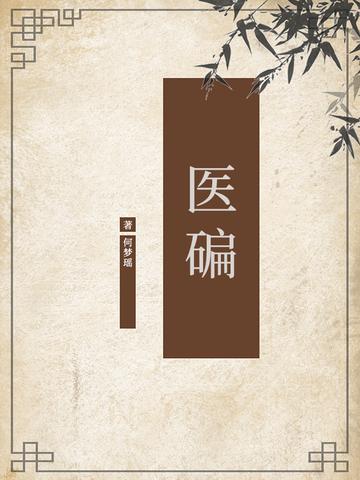
He strongly admired and inherited the academic thoughts of Wang Kentang, a famous physician in the Ming Dynasty. Therefore, most of the main contents of "Yi Qi" were directly compiled from Wang's "Principles of Syndrome and Treatment". He believes that although "The Criterion of Syndrome and Treatment" is the top medical book in the contemporary era, it is still too complex and difficult to read for beginners, so he wrote "Yi You" to give it a try. "Yi You" is characterized by its simplicity, clarity, and ease of reading and understanding. "Yitei" means the medical ladder. "Xin Xu" of "Yi You" commented on "Yi You" that it is "simple but concise, profound yet simple", which is indeed true. In fact, being concise and clear does not mean being crude and superficial. It is difficult to condense the essence from a masterpiece like "Principles of Syndrome and Treatment" without profound clinical practice skills.
Taking ancient medicine as the theme, the connotation and characteristics of traditional medical culture were discussed. The book is rich in content, extensive and profound, and introduces in detail the development process of ancient Chinese medicine and many other aspects. While elaborating on the basic concepts of ancient medicine, the book also summarizes the development trajectory and cultural connotation of ancient medicine, reflecting the breadth and depth of Chinese civilization. In this book, the author uses concise and easy-to-understand language to describe the knowledge system and clinical practice of ancient medicine in a simple and easy-to-understand manner, so that readers can understand the basic theory and practical skills of traditional Chinese medicine, and reflect on their own understanding of health and life.
The content of this book "Yi Qi" is really good! It introduced the structure and function of the internal organs in detail, which gave me a deeper understanding of the theory of traditional Chinese medicine. Especially the explanation of the relationship between heart qi and tongue made me understand the importance of tongue in TCM diagnosis. Moreover, the descriptions in the book are very vivid, just like communicating with the author face to face. In short, this is an ancient Chinese medicine book worth reading.
The debate between Chinese medicine and Western medicine has existed for many years. We should view the science of traditional Chinese medicine dialectically, which is also a treasure of our traditional culture. For example, the Huangdi Neijing is composed of two parts: "Suwen" and "Lingshu", covering many aspects of traditional Chinese medicine theory such as the internal organs, meridians, qi, and blood. Another famous doctor, Zhang Zhongjing of the Han Dynasty, wrote a TCM clinical classic "Treatise on Febrile and Miscellaneous Diseases", which systematically elaborated on the causes, pathogenesis, syndromes and treatment methods of many common diseases, and made important contributions to the promotion of acupuncture and drug treatment.
The homework is very well written and can be incorporated into school studies. . I recommend it to my brothers and sisters who love Chinese medicine.