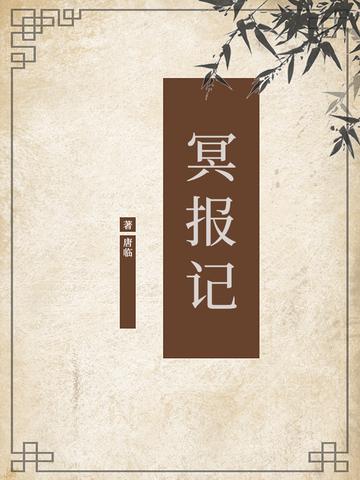
"Ming Bao Ji" is a documentary story from the Tang Dynasty, written during the Yonghui period of Emperor Gaozong of the Tang Dynasty (650-655). In 1959, People's Literature Publishing House printed it based on this version. Tang Lin's "Ming Bao Ji" was written during the Yonghui period of Emperor Gaozong of the Tang Dynasty (650-655). It is a collection of documentary stories from the Tang Dynasty. This book has been lost in China for a long time, and the current version of "Beimeng Suoyan" does not contain the article "Seng Yifu". Therefore, predecessors and current scholars have different views on the issue of the attribution of this article. A recent scholar, Yang Shoujing, was engaged in the compilation work of "Ming Bao Ji". Based on the Japanese Sanenzan Temple edition, he compiled the lost text of "The Book of the Underworld" from "Fa Yuan Zhu Lin" and "Taiping Guang Ji". The collected lost articles are divided into six volumes, and the article "Tang Monk Yifu" is included in volume six.
Mr. Li Jianguo said in "Records of Legends of Legends of Legends of Tang and Five Dynasties": "According to the fact that the current version of "Beimeng Suoyan" does not contain it, and the essays compiled by Lin Aiyuan School Base also do not include this article, it should be "Ming Bao Ji". Yang Mu compiled it into Volume 6. "Monk Yifu embezzled money and silk to write scriptures and died." (Nankai University Press, 1993, page 198) However, according to the textual research of Mr. Cen Zhongmian's "Recovery of Tang Tang Lin's "Ming Bao Ji".
Some of the lost texts compiled by Yang Shoujing were not written by Tang Lin. The article "Tang Monk Yifu" is listed as "those who cannot be regarded as Lin's writings" (Collection of the Institute of History and Philology of Academia Sinica, Volume 17, 1947, page 190).
Mr. Hou Zhongyi pointed out in "History of Novels of the Sui, Tang and Five Dynasties": "Cen Zhongmian's "The Restoration of Lin Ming Bao Ji in the Tang Dynasty" reviewed Yang's edition item by article and corrected errors. It can be said to be a revised version of "Ming Bao Ji"." But he " Among the examples given after "The Book of Ming Bao Ji promotes the supernatural power of Buddhism", it also mentions the article of "Seng Yifu" that has been excluded by Mr. Cen (Zhejiang Ancient Books Publishing House, 1997, pp. 162, 163), Which is puzzling.
Mr. Fang Shiming explained the reason why Tang Lin could not have created the article "Seng Yifu" in the appendix of "Ming Bao Ji" "Yang Ji Ming Bao Ji Lost Essays": "This article says: "I sent money and silk to Xichuan to write Tibetan scriptures." The name "Xichuan" appears. Therefore, although this article does not appear in the modern Yayutang version of "Beimeng Suoyan", it must not be included in the collection of Tang Lin. Judging from the circulation situation of the edition of "Taiping Guangji", the Song version of this book no longer exists. During the Jiajing period of the Ming Dynasty, Tan Kai published the manuscript according to it and began to spread widely. Wang Shaoying, a recent scholar, took Tan Kai's version as the base, and used the remaining Song version edited by Chen Chang in the Qing Dynasty, the Yezhuzhai note version of the Ming Dynasty, Xu Zichang's version in the late Ming Dynasty, and Huang Sheng's version in the Qing Dynasty as reference to compile a better version.
In 1959, People's Literature Publishing House typed based on this version. In 1961, Zhonghua Book Company corrected some typographical errors and republished it. Wang Shaoying's organizing work is very valuable. Mr. Zhou Xunchu pointed out in "Research on Notes and Novels of Tang Dynasty": "Wang added notes after many articles to introduce the titles of the books marked in the Mingchao edition. Each of them is different from the Tankai edition, but those marked in the Mingchao."
Reader comments
This book "The Book of Hades" is very interesting! The story inside reminds me of a relative of mine who is also a kind person and often helps others. The book says that good deeds are rewarded, and I think he will be rewarded with good deeds. And these stories also make me believe more that we should be kind and do more good deeds. I think this book is very educational and worth reading.


This book "The Book of Hades" is very interesting! The story inside reminds me of a relative of mine who is also a kind person and often helps others. The book says that good deeds are rewarded, and I think he will be rewarded with good deeds. And these stories also make me believe more that we should be kind and do more good deeds. I think this book is very educational and worth reading.