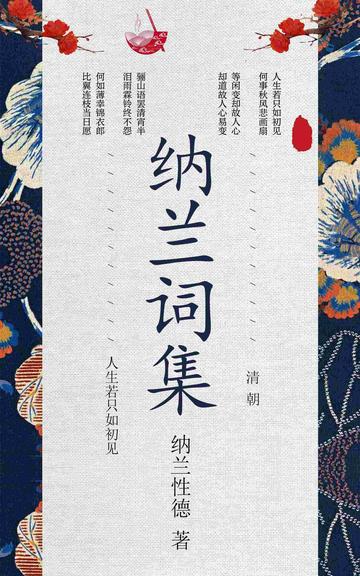
Nalan Xingde's poems are characterized by their "truth", and their descriptions of scenes are lifelike and vivid. His style of poems is "clear and graceful, with a strong sense of sadness and a high and far-reaching rhyme", which has impressed countless readers in later generations and has been widely circulated for hundreds of years. The content involves love and friendship, frontier fortress in the south of the Yangtze River, chanting things and history, and miscellaneous feelings. The scenery described is mostly about water and lotus. The poems are emotional and charming. Kuang Zhouyi praised him as "the first lyricist in the early days of the Republic of China" in "Hui Feng Ci Hua".
Nalan Xingde (January 19, 1655 - July 1, 1685), surnamed Yehenala, also known as Rongruo, was a native of Langjia Mountain, a native of Zhenghuang Banner in Manchuria, and a poet in the early Qing Dynasty. His original name was Nalan Chengde. He changed his name to Nalan Xingde because he avoided tabooing the prince Baocheng.
If life were just like the first time we met,