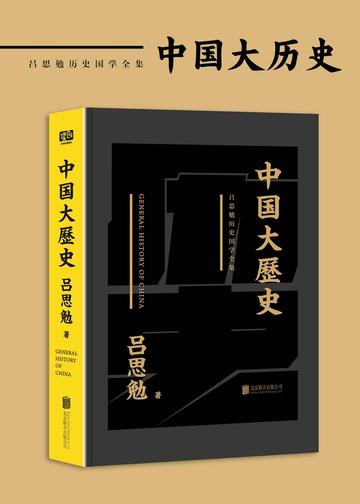
"The Great History of China" is divided into five different periods according to the changes in Chinese history and society: ancient history, medieval history, modern history, modern history, and modern history. It describes in detail the history of China from ancient times to the eleventh year of the Republic of China.
Reader comments
Want to learn about the entire history of China in a short book? This book can help you. It is a panoramic view of China's historical development. The author shows readers China's historical process, important events and cultural inheritance in an easy-to-understand way. The goal of this book is to help readers comprehensively understand China's historical evolution, so as to better understand and grasp China's reality and future. The author attempts to explain the entire Chinese history through one framework after another, covering the political, social, economic, cultural and other aspects of each historical period. The author's logic is clear and the language is easy to understand, which helps readers have a more comprehensive understanding of the overall framework and important nodes of Chinese history.
This is a book that covers the panoramic view of China's historical development. The author shows readers China's historical process, important events and cultural heritage in an easy-to-understand way. The goal of this book is to help readers comprehensively understand China's historical evolution, so as to better understand and grasp China's reality and future. The author attempts to explain the entire Chinese history through one framework after another, covering the political, social, economic, cultural and other aspects of each historical period. The author's logic is clear and the language is easy to understand, which helps readers have a more comprehensive understanding of the overall framework and important nodes of Chinese history.
Compared with history, big history has a longer time dimension and expands the level of telling. Starting from the origin of the Han people, our huge country has its first historical records, and then to the Three Sovereigns and Five Emperors, Emperor Qin and Han Wu; the feudal era is the most stable and lasting page in Chinese history; Lu Lao's classification in this book is not like this. From ancient times, medieval times to modern times, China has a serious history of five thousand years. Here you sing and I appear, writing civilization in a troubled world.
Wow, this "Chinese History" is so great! Mr. Lu Simian divided Chinese history into five periods, allowing me to clearly understand the characteristics of each period. I especially like ancient history, those myths and legends are so interesting! Moreover, the characters in the book are all vivid. My favorite is Qin Shihuang. I admire his domineering power in unifying the six kingdoms. But I also have characters I hate, like Qin Hui, who framed Yue Fei and is such a bad guy! This book gave me a deeper understanding of Chinese history. I want to learn from Mr. Lu Simian, study hard, and change my life!
The five thousand-year history of Chinese civilization is extensive, profound and has a long history. The Great History of China compiled by Lu Simian is divided into five different historical periods according to the historical changes of Chinese society: ancient history, medieval history, modern history, modern history, and modern history. It covers the economic, social, cultural and other aspects of each historical period. It shows readers China's historical process, important historical events, and historical and cultural inheritance, and can help readers understand China's historical evolution and changes in the times more clearly and comprehensively.
It is a good book with careful examination of historical data. It would be better if the language and chronology were revised and standardized. The surnames of important figures are omitted, and there are various ways of chronology. For example, why the ancestral or sect is asked to be narrated in this way, which adds to the confusion for ordinary readers.
This is an important reference book for studying the Southern and Northern Dynasties. The structure inside is divided into two categories. The first part talks about political and historical changes, including the rise and fall of dynasties and the development of major events, the political construction and success or failure of each era, and the relationship with surrounding ethnic minorities, etc. The second part gives a detailed description of the society and culture at that time. Overall, it is a broad and diverse social and cultural history. Through this work, we can have a basic understanding of the entire history of the Jin, Southern and Northern Dynasties.
As the author stated, this book takes a historical macro perspective, starting from the Shang Dynasty with the beginning of oracle bone inscriptions to the founding of the People's Republic of China in 1949, taking historical development as the axis, and using an inductive method to highly condense historical materials from the aspects of politics, economy, culture, military, ethnic policy, and foreign relations, and conducts in-depth research and analysis based on the development characteristics of different dynasties. At the same time, comparison and research were conducted based on the historical development of the West.







Want to learn about the entire history of China in a short book? This book can help you. It is a panoramic view of China's historical development. The author shows readers China's historical process, important events and cultural inheritance in an easy-to-understand way. The goal of this book is to help readers comprehensively understand China's historical evolution, so as to better understand and grasp China's reality and future. The author attempts to explain the entire Chinese history through one framework after another, covering the political, social, economic, cultural and other aspects of each historical period. The author's logic is clear and the language is easy to understand, which helps readers have a more comprehensive understanding of the overall framework and important nodes of Chinese history.
This is a book that covers the panoramic view of China's historical development. The author shows readers China's historical process, important events and cultural heritage in an easy-to-understand way. The goal of this book is to help readers comprehensively understand China's historical evolution, so as to better understand and grasp China's reality and future. The author attempts to explain the entire Chinese history through one framework after another, covering the political, social, economic, cultural and other aspects of each historical period. The author's logic is clear and the language is easy to understand, which helps readers have a more comprehensive understanding of the overall framework and important nodes of Chinese history.
Compared with history, big history has a longer time dimension and expands the level of telling. Starting from the origin of the Han people, our huge country has its first historical records, and then to the Three Sovereigns and Five Emperors, Emperor Qin and Han Wu; the feudal era is the most stable and lasting page in Chinese history; Lu Lao's classification in this book is not like this. From ancient times, medieval times to modern times, China has a serious history of five thousand years. Here you sing and I appear, writing civilization in a troubled world.
Wow, this "Chinese History" is so great! Mr. Lu Simian divided Chinese history into five periods, allowing me to clearly understand the characteristics of each period. I especially like ancient history, those myths and legends are so interesting! Moreover, the characters in the book are all vivid. My favorite is Qin Shihuang. I admire his domineering power in unifying the six kingdoms. But I also have characters I hate, like Qin Hui, who framed Yue Fei and is such a bad guy! This book gave me a deeper understanding of Chinese history. I want to learn from Mr. Lu Simian, study hard, and change my life!
The five thousand-year history of Chinese civilization is extensive, profound and has a long history. The Great History of China compiled by Lu Simian is divided into five different historical periods according to the historical changes of Chinese society: ancient history, medieval history, modern history, modern history, and modern history. It covers the economic, social, cultural and other aspects of each historical period. It shows readers China's historical process, important historical events, and historical and cultural inheritance, and can help readers understand China's historical evolution and changes in the times more clearly and comprehensively.
It is a good book with careful examination of historical data. It would be better if the language and chronology were revised and standardized. The surnames of important figures are omitted, and there are various ways of chronology. For example, why the ancestral or sect is asked to be narrated in this way, which adds to the confusion for ordinary readers.
This is an important reference book for studying the Southern and Northern Dynasties. The structure inside is divided into two categories. The first part talks about political and historical changes, including the rise and fall of dynasties and the development of major events, the political construction and success or failure of each era, and the relationship with surrounding ethnic minorities, etc. The second part gives a detailed description of the society and culture at that time. Overall, it is a broad and diverse social and cultural history. Through this work, we can have a basic understanding of the entire history of the Jin, Southern and Northern Dynasties.
As the author stated, this book takes a historical macro perspective, starting from the Shang Dynasty with the beginning of oracle bone inscriptions to the founding of the People's Republic of China in 1949, taking historical development as the axis, and using an inductive method to highly condense historical materials from the aspects of politics, economy, culture, military, ethnic policy, and foreign relations, and conducts in-depth research and analysis based on the development characteristics of different dynasties. At the same time, comparison and research were conducted based on the historical development of the West.