People are both noble and insignificant. People are noble because of their thoughts. They are so noble that they know they are insignificant and noble.
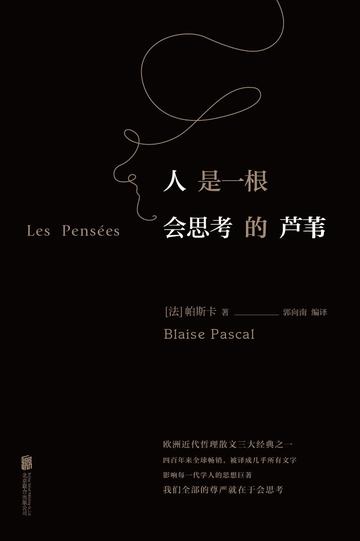
Man is the most fragile thing in nature, so he is a reed, but because he can think, he can encompass the universe and lead to infinity. This is the entire dignity of man in the universe. Man is a thinking reed. God created the heaven and the earth, but the heaven and the earth do not know it, only man knows.
Because man can think, he is higher than all things, rules all things, and is as noble as the king of the world. Even death cannot take away his dignity, for he knows that he is going to die and the universe is unaware of it. Even if he is destroyed, it is a deposed king who dies, because nothing can take away his dignity and blood, and that is his mind.
Reader comments
I personally admire Pascal's interpretation of the image of reed and human nature. I understand what Pascal means: human beings are accidental and fragile, just like an accidental and fragile reed. People are otherworldly and egocentric, because this is the only reed that can think. People are painful and powerless because thinking is infinite and uncertain, or they can't find the direction and lose themselves, or they don't want to find the direction and drift randomly with the wind.
This book is the product of the author's rigorous thinking. I feel that it is quite harsh and critical. It has been criticized by almost everyone, both those who have faith and those who have no faith, and who are rational and emotional. (But from a certain perspective, I also think that the author praises the diversity of people.) It has a little bit of a missionary style. I have not read the Bible, but I feel that its concept should be rigorous, unique and attractive. Although I don't agree with some parts of it, I can still absorb many of Lao Pa's ideas in life and social life.
Long live thinking, long live speculation
The commentary of this book is also very chewy (this book can reveal some of Pascal's character. Some parts of him feel that he was taking time to record some things he may have encountered at that time, including crickets and others, which are very vivid. Of course, there are also some limitations of the times, such as the definition of women)
On the surface, I don't understand faith, which drives me to pursue faith; just like our thoughts, they seem invisible but can distinguish people from the primates of all things and give people dignity; people's thoughts can belong to various isms, whether they are skeptics or dogmatists, and they are all based on the exploration of the origin of human beings on the basis of free will. This book is Pascal's attempt to use reason to explore the source of faith, and it is the exploration and reflection of thought itself by a man of great talent.
Ancient Greek philosophers often adopted a simple materialistic spirit to understand the world and the nature of human beings. Pascal's famous assertion that man is a thinking reed is not only an intuitive reflection of this philosophical view, but also deeply reveals Pascal's theological views and his unique understanding of human nature and the world. In this collection of essays, we can often gain understanding and identity of specific things through Pascal's ravings. For example, he said: "The most painful thing is complete rest, no passion, nothing to do, no entertainment, and no learning." When people live in this world, they always have to find some meaning.
Although there are few words, there are many meanings, which makes it difficult to read. For example, people become great because of their thinking. The universe surrounds man in space and time, but man encompasses the universe through his thoughts. Man is a reed that is resilient because of thinking. Skepticism can doubt everything, but it cannot be directed at itself, and the same is true for deconstruction. Human beings are neither beasts nor gods. There are many more…
The sentence in the title is very famous. It comes from a passage in the book "Reflections" by the French philosopher Pascal. This sentence expresses the idea that humans as thinking beings, unlike other living beings, are able to think, reason and reflect on themselves. It emphasizes human intelligence and thinking ability, as well as our thinking about our own existence and the world. This quote is widely quoted and discussed in the fields of philosophy and humanities. The author uses this sentence as an introduction to outline the title of the literary novel.
If we give up the ability to think and are driven by instinct like other creatures all day long, we will lose the fun of being a human being, which is the wisdom and satisfaction that thinking brings. If we are like the green grass in spring, letting ourselves sway in the wind, but withering in autumn without thinking about the meaning of our existence, then our value is no different from any other plant, not even a reed, but thinking allows us to have human wisdom.
The limits of human reason. Summarize the essence of seeing everything clearly from the analysis of daily things! The language is humorous, vivid and interesting! The first good book in the world!
Believe it or not, choose one to avoid confusion in your heart.
I don't know if anyone feels the same as me. The heavy head of the reed bends with the body, and thinking develops the human brain and makes it heavy. However this is not the most important thing.
What matters is how to cast bait and fish in the sea of nothingness to please the "highest good" in your own reason. What is this supreme good? Carefree, lazy, stranded, pursuing the truth, being as wise as foolish...
Human happiness lies in the unity of knowledge and action. Once reason and behavior run counter to each other, there will be unspeakable pain. A group of lunatics swimming in pain, convinced of pain and joy, real and sane. A group of good people insist on their own ideas, which seems a bit stubborn but not annoying. There are also some people who have lost their ideas and the power of action. They are half-dead and wandering souls in the world. Unfortunately, they have not yet arrived.
It is very philosophical and thought-provoking, and it is enlightening to read [heartfelt]
Perfect and smitten
There is depth of thinking.
A very good book, I think it will give me a new perspective on everything in the world
I personally admire Pascal's interpretation of the image of reed and human nature. I understand what Pascal means: human beings are accidental and fragile, just like an accidental and fragile reed. People are otherworldly and egocentric, because this is the only reed that can think. People are painful and powerless because thinking is infinite and uncertain, or they can't find the direction and lose themselves, or they don't want to find the direction and drift randomly with the wind.
This book is the product of the author's rigorous thinking. I feel that it is quite harsh and critical. It has been criticized by almost everyone, both those who have faith and those who have no faith, and who are rational and emotional. (But from a certain perspective, I also think that the author praises the diversity of people.) It has a little bit of a missionary style. I have not read the Bible, but I feel that its concept should be rigorous, unique and attractive. Although I don't agree with some parts of it, I can still absorb many of Lao Pa's ideas in life and social life. Long live thinking, long live speculation
The commentary of this book is also very chewy (this book can reveal some of Pascal's character. Some parts of him feel that he was taking time to record some things he may have encountered at that time, including crickets and others, which are very vivid. Of course, there are also some limitations of the times, such as the definition of women)
On the surface, I don't understand faith, which drives me to pursue faith; just like our thoughts, they seem invisible but can distinguish people from the primates of all things and give people dignity; people's thoughts can belong to various isms, whether they are skeptics or dogmatists, and they are all based on the exploration of the origin of human beings on the basis of free will. This book is Pascal's attempt to use reason to explore the source of faith, and it is the exploration and reflection of thought itself by a man of great talent.
Ancient Greek philosophers often adopted a simple materialistic spirit to understand the world and the nature of human beings. Pascal's famous assertion that man is a thinking reed is not only an intuitive reflection of this philosophical view, but also deeply reveals Pascal's theological views and his unique understanding of human nature and the world. In this collection of essays, we can often gain understanding and identity of specific things through Pascal's ravings. For example, he said: "The most painful thing is complete rest, no passion, nothing to do, no entertainment, and no learning." When people live in this world, they always have to find some meaning.
Although there are few words, there are many meanings, which makes it difficult to read. For example, people become great because of their thinking. The universe surrounds man in space and time, but man encompasses the universe through his thoughts. Man is a reed that is resilient because of thinking. Skepticism can doubt everything, but it cannot be directed at itself, and the same is true for deconstruction. Human beings are neither beasts nor gods. There are many more…
The sentence in the title is very famous. It comes from a passage in the book "Reflections" by the French philosopher Pascal. This sentence expresses the idea that humans as thinking beings, unlike other living beings, are able to think, reason and reflect on themselves. It emphasizes human intelligence and thinking ability, as well as our thinking about our own existence and the world. This quote is widely quoted and discussed in the fields of philosophy and humanities. The author uses this sentence as an introduction to outline the title of the literary novel.
If we give up the ability to think and are driven by instinct like other creatures all day long, we will lose the fun of being a human being, which is the wisdom and satisfaction that thinking brings. If we are like the green grass in spring, letting ourselves sway in the wind, but withering in autumn without thinking about the meaning of our existence, then our value is no different from any other plant, not even a reed, but thinking allows us to have human wisdom.
The limits of human reason. Summarize the essence of seeing everything clearly from the analysis of daily things! The language is humorous, vivid and interesting! The first good book in the world!
Believe it or not, choose one to avoid confusion in your heart.
I don't know if anyone feels the same as me. The heavy head of the reed bends with the body, and thinking develops the human brain and makes it heavy. However this is not the most important thing. What matters is how to cast bait and fish in the sea of nothingness to please the "highest good" in your own reason. What is this supreme good? Carefree, lazy, stranded, pursuing the truth, being as wise as foolish... Human happiness lies in the unity of knowledge and action. Once reason and behavior run counter to each other, there will be unspeakable pain. A group of lunatics swimming in pain, convinced of pain and joy, real and sane. A group of good people insist on their own ideas, which seems a bit stubborn but not annoying. There are also some people who have lost their ideas and the power of action. They are half-dead and wandering souls in the world. Unfortunately, they have not yet arrived.
It is very philosophical and thought-provoking, and it is enlightening to read [heartfelt]
Perfect and smitten
There is depth of thinking.
A very good book, I think it will give me a new perspective on everything in the world