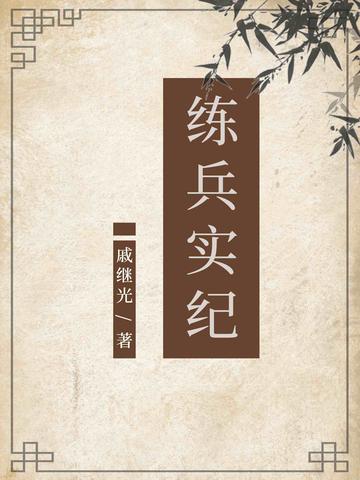
"Records of Military Training" is a military work written by the Han people in the Ming Dynasty. Written by Qi Jiguang during military training in Jizhen. This book consists of 9 main volumes and 6 miscellaneous volumes. It and the "New Book of Ji Xiao" are called the companion chapters of Qi's Military Book. There are nine chapters in nine volumes with a total of 264 items. The specific titles are: training of martial arts first, training of courage and energy second, training of ears and eyes third, training of hands and feet fourth, training of camp formations fifth (field drills), six volumes and six chapters of miscellaneous works attached after the training: general theory of storage and training (Part 1 and 2), Baojian for generals to take office, dictation on the altar (edited by Li Chao and Hu Shouren), explanation of weapons, explanation of chariots and cavalry formations. The front of the book is also preceded by "Rules", that is, "assigned teaching procedures", a total of fifteen items, describing the content and standards that generals and soldiers should learn, methods of distributing teaching materials, and measures to supervise learning, etc. The sixth camp formation (camping), the seventh training camp formation (camping), the eighth training camp formation (battle engagement), and the ninth training camp formation.
Reader comments
Moreover, he also emphasized the need to conduct training according to the specialties of soldiers, so that everyone can bring out their own advantages. I particularly like his views on the training and selection of generals, and I think they make sense. However, I don't really like those who only have theory but no practical experience. After all, practice is the only criterion for testing truth. Overall, this book is very helpful for military research and is recommended to friends who are interested in military affairs.



Moreover, he also emphasized the need to conduct training according to the specialties of soldiers, so that everyone can bring out their own advantages. I particularly like his views on the training and selection of generals, and I think they make sense. However, I don't really like those who only have theory but no practical experience. After all, practice is the only criterion for testing truth. Overall, this book is very helpful for military research and is recommended to friends who are interested in military affairs.