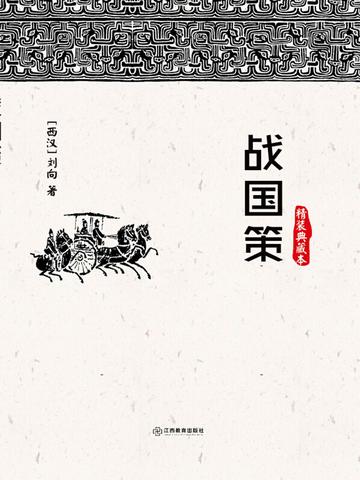
"Warring States Policy" is a country-specific history book, also known as "National Policy". It mainly describes the political opinions and strategies of politicians during the Warring States Period, and shows the historical characteristics and social features of the Warring States Period. The history recorded in the book ranges from Zhibo's destruction of the Fan family in 490 BC to Gao Jianli's attack on Qin Shihuang in 221 BC. It is the most complete work in ancient my country that records the political struggles during the Warring States period.
Reader comments
My first impression after reading it was that it was pretty good. I actually read all the classical Chinese descriptions and seemed to understand what the whole article was about. This also shows that the author really wrote well. This article is described in the form of volumes. The first volume is one week, and the first chapter is about the Eastern Zhou Dynasty. The second volume is about the Western Zhou Dynasty. The third volume is about the Qin Dynasty. The Qin Dynasty is written in more detail. It is not a story narrated in a whole article, but a string of stories. The beginning of the story of the Qin Kingdom is from "Wei Yang died in Wei and entered Qin", and even "Qin Xuan's Empress Dowager Loves Wei Chou Fu" is described, which is also very interesting to read.
"Warring States Policy" is a history book in ancient China. It mainly records the political, military and cultural conditions of various countries during the Warring States Period in China. It is one of the very important historical books in Chinese history and has great reference value for studying the politics, culture and military aspects of China's Warring States Period. It records the rise and fall of various vassal states at that time, as well as the diplomatic, war, alliance and other relations between these countries, showing a diverse and complex historical picture.
The author's writing style in this book is beautiful, the language is vivid, full of eloquence and wit. The description of the characters in the article is also very exciting and unique, which makes readers have memory points. Each character in the author's writing is lifelike and has its own characteristics, making readers very imaginative and full of curiosity about the characters at that time. I admire and admire the strategies of those politicians. The value of this book is also very great. It occupies an important position in the history of Chinese classical literature, and its influence goes far beyond that. It also has a profound impact on the formation of Sima Qian's "Historical Records" biography, and it is worth reading.
It mainly describes the political opinions and strategies of politicians during the Warring States Period, and shows the historical characteristics and social features of the Warring States Period. The history recorded in the book ranges from Zhibo's destruction of the Fan family in 490 BC to Gao Jianli's attack on Qin Shihuang in 221 BC. It is the most complete work in ancient my country that records the political struggles during the Warring States period. The ideological concepts of "Warring States Policy" are completely different from the history books of the time. Liu Xiangxu believed that "during the Warring States Period, the virtues of the monarchs were shallow, and those who made plans for them had to use their resources according to the situation and paint according to the times. Therefore, their planning, support, and support were all rights; they could not be enlightened."
Diplomatic relations are treacherous and interests are uncertain.

My first impression after reading it was that it was pretty good. I actually read all the classical Chinese descriptions and seemed to understand what the whole article was about. This also shows that the author really wrote well. This article is described in the form of volumes. The first volume is one week, and the first chapter is about the Eastern Zhou Dynasty. The second volume is about the Western Zhou Dynasty. The third volume is about the Qin Dynasty. The Qin Dynasty is written in more detail. It is not a story narrated in a whole article, but a string of stories. The beginning of the story of the Qin Kingdom is from "Wei Yang died in Wei and entered Qin", and even "Qin Xuan's Empress Dowager Loves Wei Chou Fu" is described, which is also very interesting to read.
"Warring States Policy" is a history book in ancient China. It mainly records the political, military and cultural conditions of various countries during the Warring States Period in China. It is one of the very important historical books in Chinese history and has great reference value for studying the politics, culture and military aspects of China's Warring States Period. It records the rise and fall of various vassal states at that time, as well as the diplomatic, war, alliance and other relations between these countries, showing a diverse and complex historical picture.
The author's writing style in this book is beautiful, the language is vivid, full of eloquence and wit. The description of the characters in the article is also very exciting and unique, which makes readers have memory points. Each character in the author's writing is lifelike and has its own characteristics, making readers very imaginative and full of curiosity about the characters at that time. I admire and admire the strategies of those politicians. The value of this book is also very great. It occupies an important position in the history of Chinese classical literature, and its influence goes far beyond that. It also has a profound impact on the formation of Sima Qian's "Historical Records" biography, and it is worth reading.
It mainly describes the political opinions and strategies of politicians during the Warring States Period, and shows the historical characteristics and social features of the Warring States Period. The history recorded in the book ranges from Zhibo's destruction of the Fan family in 490 BC to Gao Jianli's attack on Qin Shihuang in 221 BC. It is the most complete work in ancient my country that records the political struggles during the Warring States period. The ideological concepts of "Warring States Policy" are completely different from the history books of the time. Liu Xiangxu believed that "during the Warring States Period, the virtues of the monarchs were shallow, and those who made plans for them had to use their resources according to the situation and paint according to the times. Therefore, their planning, support, and support were all rights; they could not be enlightened."
Diplomatic relations are treacherous and interests are uncertain.