Stats
12Reads
5.8Score
59Chapters
2Listens
179.3kReads · all time
Synopsis
Reader comments
In booklists 3




Travel Through All the Worlds and Become Invincible at the Beginning of Every World
11.9MViews327Books12hUpdated
Must-Read Classics in High School Books
I want to read a book similar to "Russian China". I'm looking for high school classics. Children really need them. Thank you.
1.5MViews599Books13hUpdated

I Read the Novel About How to Pass the High School Entrance Exam.
Those who can study Chinese, mathematics, English, physics, chemistry, history, Taoism, and physical education are about to take the high school entrance examination. I want to improve myself by reading novels.
840.7kViews435Books25dUpdated
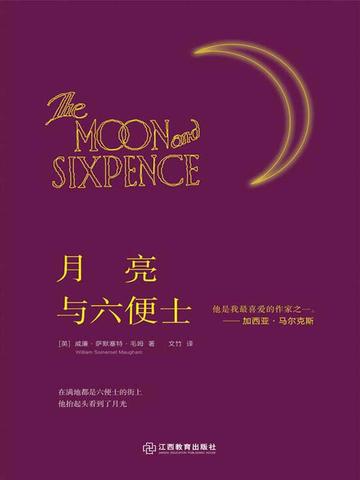
Sixpence is the former Strickland, an upper-class person who dealt with money, and the moon is Strickland who later bravely pursues beautiful dreams. The moon is the ideal overhead, and reality is the sixpence beneath your feet.
I admire those who run to the moon desperately. If it were me, I would choose the moon, but the goal is sixpence. I want the moon, the buildings of gold, the flickering clouds, and the countless banknotes.
I have just started reading it. It was recommended to me by my ex-girlfriend. Now that we have broken up, I am thinking of reading it. Maybe she was inspired by this book and I can also be relieved.
How should a person spend his life? Should he follow the worldly perspective and strive to achieve the established standards of happiness, or should he choose to rush to a spiritual calling regardless of everything. Perhaps this question will never have a unique answer, because this is not a true or false question at all, but an essay question with a self-made title.
I thought this story would be very long, but it is not. Strickland is a talented painter. His life is pieced together in the author's memory, but it makes us feel the reality and bloodiness of the characters. As a painter, he is well-deserved. His pursuit of beauty, his cruelty to himself, and his lifelong creation in pursuit of the ideal paintings in his heart. But as a person, his character is a bit annoying. He doesn't care about other people's evaluations and is content with other people's kindness. In order to pursue creation, he abandons his wife and children, and abducts the wife of his good friend Slyotefu. He has no apology at all. After satisfying his carnal desires, he abandons others. On the other hand, I have to say that I was really angry when I saw this. This may be the reason why he became a great artist. He could give up everything and disregard everything. In his eyes, relatives, friends, and children were all inferior to the passion for pursuing creation in his heart. It was these that made him great. People are always imperfect and have to give up something for their ideals. If he had chosen to be a good husband and father, then we would have lost a great artist. This may be the meaning of life.
Really good! Can it be said to be a great book? The contradiction between reality and ideals has been well interpreted in Maugham's writings. The greatness and despicability of human nature are entangled in seemingly plain words... The author's text organization skills are very strong! The many "redundant words" in the first person are full of deep feelings when you carefully read them.
I like this book because of a passage I saw accidentally. The content of this book is very exciting, but I just didn't find the sentence I wanted to read.
There is a sentence in the book, "There were six pennies all over the ground, but he saw the moon." Six pennies are the lowest-valued silver coin in the UK and are used to maintain life. The moon represents the distance that ordinary people cannot reach. The author uses the story of the male protagonist Charles Strickland to describe the dilemma between ideals and reality. Charles abandoned his wife in order to pursue his dream of painting. In the eyes of his wife, he was ruthless. In order to satisfy his selfish desires, he had an affair with Stroeve's wife, who had saved his life. It was against morality and unacceptable. However, from an ideal perspective, he was brave and bold, pursuing his ideals with all his love. Individual human nature is complex, selfish and loving. Many times it is difficult for us to balance reality and ideals.
Nowadays, we like to come out of the simple rural areas and come to the big cities to work hard and find our own place. People with real pursuits come to the countryside from bustling big cities to find inner peace and tranquility! We are just ordinary people with no ambitions, but those who finally achieve peace and pursuit are truly great!
"The moon was all over the ground, and he looked up and saw the moon." I originally thought this was a sentence in the book, but I couldn't find it after looking carefully. After reading it, I realized that this was talking about the protagonist in the book. To be honest, I was quite shocked after reading it. What is love, what is ideal and pursuit. The protagonist left his wife and a life that could have been happy and beautiful, but instead chose wandering, freedom, and ideals. I don't understand that he is wandering all over the world just to paint. He didn't care about anything except painting, and everything that happened was sudden. The novel is based on a painter, and I think this work can give us a glimpse into the spiritual world of the great painter.
"Sixpence was all over the floor, but he raised his head and chose the moon🌙" He pursues the courage and perseverance of the "moon", the love and persistence of the "moon", and works hard for it. On the road of pursuing the "moon", stumbling is unstoppable. He loves the moon, not sixpence; sixpence is a rigid, closed window, while the moon is the charming light that illuminates him. He was immersed in his love and died in his love. Because love can last a long time.
There is a sentence in the book, "There were six pennies all over the ground, but he saw the moon." Six pennies are the lowest-valued silver coin in the UK and are used to maintain life. The moon represents the distance that ordinary people cannot reach. The author uses the story of the male protagonist Charles Strickland to describe the dilemma between ideals and reality. Charles abandoned his wife in order to pursue his dream of painting. In the eyes of his wife, he was ruthless. In order to satisfy his selfish desires, he had an affair with Stroeve's wife, who had saved his life. It was against morality and unacceptable. However, from an ideal perspective, he was brave and bold, pursuing his ideals with all his love. Individual human nature is complex, selfish and loving. Many times it is difficult for us to balance reality and ideals.
Sixpence is material and is the foundation on which we stand in this world. The moon is beyond our reach and is the sustenance of our dreams. As we live in this world, whether we choose the moon or sixpence is our choice, and both are worthy of our respect and pursuit.
"The Moon and Sixpence" Strickland lived a mediocre life, but he never forgot to pursue his dreams, but it was still unremarkable. This is human nature! Some people win at the starting line, and some people need to work hard to see hope before persisting. However, there are also some people who may have dreams but still cannot realize them. Is the method wrong? Not enough experience? Or just a simple idealist? Maybe I'm an idealist too! People who tend to think more and do less. But he is not willing to let it go like this. I also hate living like this. The so-called contradictory self-employed business. 🌚🌚
Of the sixpences on the ground, he was the only one who chose the moon. From a literary perspective, he is a successful and great person, but from a life perspective, he is a very bad person, abandoning his wife and children, destroying other people's families, and being arrogant and rude. However, none of these can deny his sparkling paintings, which are worth pondering!
It took me three days of sleepless nights to finish reading it, and I have to say that the author's writing style will really captivate you. From the beginning to the end, there was no plot that made me feel that I read this book just to finish it. I was deeply immersed in the author's own perspective, as if I had experienced those things together, got to know those people, and felt the courage and nobility of Strickland's soul. This has just begun. From disgust to real admiration later, if a person's soul is really separated from the secular world, then it is impossible to empathize with it from a secular perspective. I envy people who know what they really want to do in this life. It's not like us who work hard to make money, get married and raise children, and when our eyes are no longer as bright as when we were young, we finally live this life, but we always feel as if we have missed our own life.
Each of us is like Strickland, looking for the deepest self. Maybe you are not understood by the world, maybe you are shackled by everything around you, but don't give up, one day you will find your own piece of pure land...
What about me? Will I be your moon? I also want to be like Scritland and just keep moving forward for the pursuit in my heart. I can take it and let it go. Like him, free and easy, without worries or regrets. But it is precisely this courage that few people can achieve.
I saw this book recommended many times in different places in high school, but I didn't finish reading it until two years after I dropped out of high school. The hurried process was intermittent, and I didn't feel anything. On the contrary, I didn't feel any excitement after reading the last chapter of the book. I don't want to be arty and say what kind of feelings I got. Some of them are just an extra stepping stone when I will be proud of Habitat and compare books in the future. I read this book and other books mostly to praise the difference between me and ordinary people, to kill time and so on. The more I read, the more aloof and arrogant my heart becomes, the sharper the thorns become, and the number of friends becomes fewer and fewer, but I never tire of it. How strange, man…
Strickland realized his ideal of painting the whole wall of the room one by one, which should be his lifelong pursuit. He completed it with great satisfaction and took it with him to another world.
This book is described in the author's autobiography. Charles Strickland's character clues are thought-provoking. An artist's growth often experiences unusual things, and his unique character is finally reflected in his paintings. He gives up a stable and comfortable life to pursue inner peace, and is able to persist in his love for art no matter how difficult the environment is. Many painters were not understood during their lifetime, but their paintings will be discovered by the world after their death. Real art does not lie in being recognized by others, but in being able to face it calmly.
The world is diverse, and people with different personalities have different ideas. From the perspective of others, Strickland is really not a likable character. His way of doing things and his selfishness are just like what his wife said at the beginning. It may be that the starting point is different. For Strickland himself, what he is pursuing may be the desire deep in his soul, the pursuit of art, even if he gives up a stable life and never looks back. The great and the small think that good and evil can be in one person at the same time. In the face of reality and ideals, he runs alone and bravely towards his ideals. This is indeed admirable. Maybe he is really a genius with a very perceptive power. I think he should have no regrets in the end. The painting he created at the end of the article may be what he has been pursuing all his life. Maybe he has separated himself from the world and never wanted to seek recognition from others. He was just pursuing Seeking his own satisfaction, indifference is also true. But the last few months were the Eden he found. Maybe when Aita cried and didn't want him to leave, he really got emotional. He is a man and doesn't understand that women treat love as the most important part of life. I don't know if you understood at that time, ha! Maybe you still think so! Strickland has his greatness, his courage, tenacity, decisiveness, pursuit of art to death, and separation from the world, but his indifference and selfishness are also scornful of the good things others do to him, and the harm he thinks he causes to others is equally annoying. Perhaps it is a common quirk of artists, which is difficult for ordinary people to accept and understand. Human nature is three-dimensional, not one-sided and monochromatic. It is rich and colorful, just like the world is not black and white. Sometimes hazyness is more beautiful. My opinion about the Lord Strickland is that he may be an admirable artist, but he may not be suitable to get along with. In real life, he may not like to be close to people with such a personality. There is still a bit of distance. Maybe it is because of different latitudes and heights of thinking. Everyone has his own ambitions and destiny, so People in the past will become passers-by in life, easy to get together and easy to part with, and what I want more is to enjoy the present. Maybe it's because I'm underage and a little naive, but I still want to be as kind as possible, but I also have to control my temper. I don't like Stroeve's fate, so take care of yourself and control it within your ability. I feel deeply, so let's live a good life!
In contemporary times, ideals still need material support, otherwise it will be very embarrassing on the way to pursue dreams.
Ideals are useless things and cannot be equated with inner yearnings, because everyone has their own ideals, but not everyone knows their inner yearnings. Cowardice trapped in sixpence is everywhere, and the courage to look up at the moon is precious. If it is for the inner yearning, then to me, abandoning everything and risking one's life is not a compliment, but a necessity, a basic thing, a matter of course, and this is how it should be.
When an adult man is 40 years old, he has the courage to pursue his dream, start from scratch, give up everything, go through so many things, and become a real artist, he is really a great man^O^
If you want to be a valuable artist, you have to be crazy and lonely to the point of suffering that ordinary people cannot understand. Even if you are poor and about to die, I think the real value is that death is life and you can see through all human nature. The author expresses human nature rationally in the first part, and a little pity in the evil nature in the second part. I think if you are following your dream, you have to look down on everything. As long as there is a trace of red dust, it will be broken, because God will not let things with soul value be contaminated by the world. You don't have to understand the protagonist, but you have to respect his ideas, even if he is dilapidated, because he thinks he is the value. Regarding his death, I think he only died physically, but his soul was liberated and went to heaven with the painting of his burning house. Therefore, when he was about to die, he strongly requested that the painting of his soul be taken away. It was because his soul belonged to the world, and he would be peaceful and peaceful after death.
I admire Strickland's fearless character, but I hate his lack of responsibility as a man and his indifference.
This book gave me a great shock and allowed me to see a different life. I cannot judge Strickland's life. Life is diverse. Sadly, my education and experience forced me to choose the latter between moonlight and sixpence. However, I was deeply moved by being involved in his life. I am very grateful for this book.
The writing technique is fascinating, allowing readers to slowly enter the state, arousing interest in continuing reading, and making them unable to stop.
My story is told from the third person at the beginning. I am a tiny member wandering around in life. I live day by day, living a comfortable life and tasting ordinary. I have a "happy" family, a very gentle wife and two children, but as the days pass by, the simplicity of life and the pursuit in my heart are constantly awakened. I start to release, I start to chase, I like art, and what people say about art is nonsense. I see through the world, I see through the universe, but it is difficult for me to express it in the picture. What I need is more inspiration.