Stats
5.8Score
Synopsis
No synopsis yet.
We haven’t got an English blurb for this one. It appears once the source description has been translated.
We haven’t got an English blurb for this one. It appears once the source description has been translated.




The history of foreign countries is quite detailed, but the history of China is just hearsay.
Very good, very classic
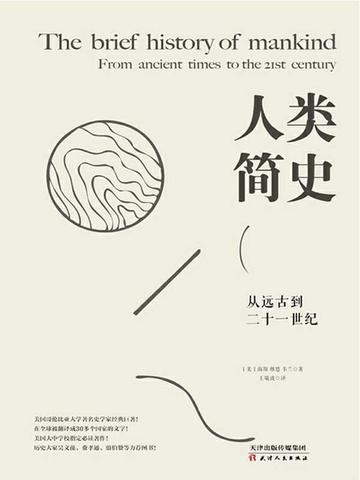
This book is a brief history of human development written by Israeli historian Yuval Harari, who was born in the 1970s. Taking the "cognitive revolution", "agricultural revolution" and "scientific revolution" as the main lines, it tells the history of human development from the conquest of the world by Homo sapiens (the ancestor of our current human beings) 100,000 years ago to the current state of human technology in the 21st century. There are contents and opinions in it that I didn't know before, or haven't thought about carefully, such as: Based on the "replacement theory" point of view, why was it Homo sapiens that wiped out other human species and conquered the earth, rather than Neanderthals who had better physical adaptability? What makes Homo sapiens different from other species is that they have always been obsessed with the development of their brains, and what makes them stand out is their "gossip" and "bad-mouthing."
Good book, tells a lot... I checked and found out that there were two, and then I realized that I had read the wrong version. The Israeli version seemed to be more exciting, but it doesn't matter. I also have a lot of goods with bad history.
The author of this book does not understand Chinese history.
This book takes human history as the main line and explores the origin and evolution of human society. Through the introduction of human origins and the development of civilization, the author allows readers to understand the diversity and changes of human society. As the book says: "A brief history of mankind is a grand story that witnesses the evolution and progress of human civilization." This book deeply explores the evolution of human society and cultural exchanges through the analysis of specific historical events and civilization development. By narrating major events such as the agricultural revolution, industrial revolution, and technological revolution, the author demonstrates the tremendous changes in human society from primitive society to modern society. At the same time, the author also explores the impact of civilizational exchanges and cultural collisions on human development, triggering thoughts on cultural diversity and globalization.
Looking at the descriptions of the long history of mankind by different authors, the history of civilization has always been filled with blood and violence. It is best not to have personal subjective judgments mixed in such books. Readers have their own understanding and interpretation. Reading this book is only used as a reference to mutually confirm the historical events of similar books!
The content is vivid, comprehensive and rigorous. This publication has undergone rigorous revision, giving you a more comprehensive understanding of human history from ancient times to the 21st century. The original English version has been translated and revised to perfectly present the original masterpiece. Absolute reality is lost and imaginary order is gained. Before the cognitive revolution, Homo sapiens in the tribe would run away when they saw a tiger and pick off the fruit when they saw it; after the cognitive revolution, Homo sapiens would think: the tiger is our patron saint and totem, and we should fear him; fruits are the spirits of our tribe, and we cannot just ask for them.
The school summer homework is finally completed←_← The history of Europe and the United States is a bit detailed, but the rest is a bit sketchy, but it is quite popular in science, and some of the ideological theories are quite interesting. It allowed me to read a lot of new things, broaden my horizons, and understand more about history. Overall, worth reading
When I first read the title, I started reading this book with piety and respect. I thought it would be like the book A Brief History of Humanity, telling the story of the thousands of years of human existence and the wisdom and ingenious destiny arrangements of human beings when facing nature. After reading a few chapters, I felt a little disappointed. There is not much description of philosophy and human power in this book, but it focuses on narrating history and just sorting out the historical development process of mankind.
After reading this book, I realized how small civilization is and how long the history of mankind is, which is beyond my imagination. I can only glimpse human development through words.
Such a good book, 8:05, amazing!
Worth reading! Past life, present life and next life.
Looks good, I recommend watching it
It's okay as an introductory book on history. It helps novices establish the conceptual framework of world history (mainly Western history) with very few details.
It feels like it's not over yet
Very good book
Good! It should be super pretty!
Very good, very good!
Good, good, good, good, good, good
Very comprehensive, very objective, very real, very good