Weird Stories
怪谈
- Status
- Completed
- Length
- 130k Words
- Genre
- Unknown
- Subgenre
- Unknown
- Updated
- 5y ago
- Source
- Fanqie
Stats
45Chapters
6Reads
8.3Score
2Listens
66.2kReads · all time
Tags
Synopsis
More by this author

In booklists 1

Reader comments 26
Google Translate
I always feel something when I read this book alone. It has an indescribable weird atmosphere. I read a few of them before going to bed, and I feel like dreaming👀
I especially like reading this kind of weird story. This book is very good.
Koizumi Yakumo is a Japanese writer in the Meiji period. He is famous for his ghost novels. This book is full of mysterious, terrifying and supernatural elements, involving ghosts, monsters, supernatural events, etc. It tells us the story of the grudges of the Taira family who were exterminated due to defeat, the fox spirit, and the willow tree spirit who repay their kindness. Thanks to the author's excellent writing style, it conveys people's fear and curiosity about the unknown and the supernatural. These stories make us feel the mystery and horror beyond reality, and at the same time trigger people's thinking about the human mind and human nature.
This book is not just a collection of anecdotes and strange stories, but more importantly, it shows the diversity and unknown charm of human nature through these stories. With a unique perspective and in-depth thinking, the author explores the secrets hidden behind human psychology and behavior. This mysterious and bizarre story arouses readers' curiosity about human beings and their desire to explore the world. During the reading process, readers are not only immersed in the attraction of the story, but also gain some thoughts and revelations about human nature and the world.
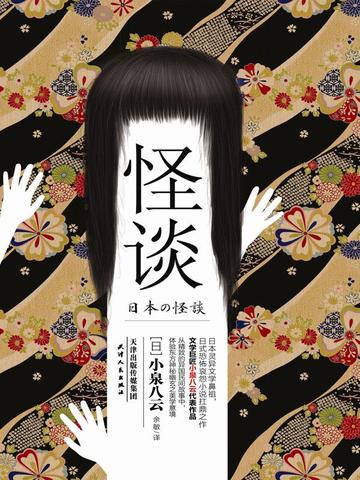
Rather than saying that the real book is the Japanese "Strange Stories from a Chinese Studio", it is better to say that it is a "Monster Search" that collects and records Japanese folk tales of ghosts and ghosts. What I admire is that the author Koizumi Yakumo is not a Japanese, but an Irish-Greek who had a difficult childhood. He later became a journalist in the United States. In 1890, when he was about forty years old, he went to Yokohama, Japan. He immediately discovered that he fit in with this land, so he decided to stay. At the end of the same year, he married Setsuko Koizumi, an English teacher who came from a samurai family, and settled in Japan until the end of his life. However, the book "Keidan" has a strong authentic Japanese flavor, and its tone and context make it unbelievable that it was written by a non-Japanese writer. It is said that the book was originally written in English and then translated into Japanese by a Japanese writer. If you read this book carefully, you will find that the short stories in "Kaitan" are like the red camellias blooming on the dark kimono, exuding mysterious, mysterious, delicate and sad beauty in the shade. The author, through the eyes of ghosts, laments the impermanence of the world and the helplessness of the world.
Koizumi Yakumo is a Japanese writer in the Meiji period. He is famous for his ghost novels. This book is full of mysterious, terrifying and supernatural elements, involving ghosts, monsters, supernatural events, etc. It tells us the story of the grudges of the Taira family who were exterminated due to defeat, the fox spirit, and the willow tree spirit who repay their kindness. Thanks to the author's excellent writing style, it conveys people's fear and curiosity about the unknown and the supernatural. These stories make us feel the mystery and horror beyond reality, and at the same time trigger people's thinking about the human mind and human nature.
Koizumi Yakumo created "Ghost Story", a collection of Japanese folk tales, and this book is also a representative work of Japanese supernatural literature. Seeing life through the eyes of ghosts is the unique feature of this book. It depicts stories of loneliness or loneliness in the dark. In fact, when reading this book, I felt that "Kaidan" is an indirect reflection of Japanese history, and it also carries the cultural beauty shared by the East. It is different from Western culture and has a unique oriental cultural color.
This book is the originator of ghost story literature. There are no imaginary monsters. Some of the stories can even be said to be very touching and heartwarming. In Koizumi Yakumo's writing, all kinds of men and women, monks, and samurai have different personalities, but they have different views and behaviors towards similar things (love, hatred). Most Japanese ghost stories originate from China, and the shadow of Chinese ghost stories can be seen in many chapters of this book. Monsters come from the human heart and reflect the culture and demands of that time and place. Ghost stories are part of folk customs and a mirror for understanding the cultural character of a nation. Compiled by a Westerner who loves Japan, this book is close to China's Strange Tales from a Chinese Studio, with vivid dialogues and psychological descriptions, and is worth reading.
When I read this book, I thought the author was a Japanese scholar at first, but I finally found out that he is a mixed-blood Irish and Greek who is obsessed with Japanese culture. He has even become the originator of Japanese ghost story literature. The author's experience itself can be worthy of the name "Kai Tan". The book is actually a collection of Japanese Buddhism, Shintoism and folklore. It is a bit like the Japanese version of "Liao Zhai". Many of the characters in it are characters that often appear in Japanese animations, such as Yuki Onna, Yamata no Orochi... Perhaps like "Liao Zhai" in China, this book is a source of inspiration for Japanese literary creators.
This book is not just a collection of anecdotes and strange stories, but more importantly, it shows the diversity and unknown charm of human nature through these stories. With a unique perspective and in-depth thinking, the author explores the secrets hidden behind human psychology and behavior. This mysterious and bizarre story arouses readers' curiosity about human beings and their desire to explore the world. During the reading process, readers are not only immersed in the attraction of the story, but also gain some thoughts and revelations about human nature and the world.