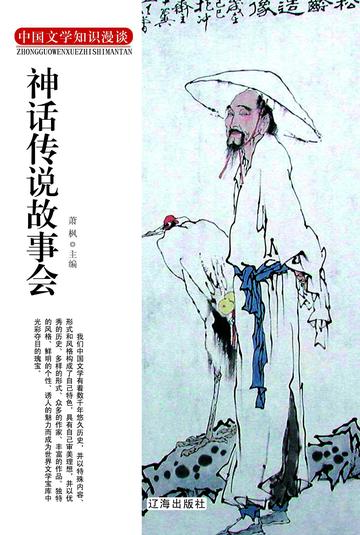
A Collection of Mythical Tales
神话传说故事会
- Status
- Completed
- Length
- 134k Words
- Genre
- –
- Subgenre
- –
- Updated
- 5y ago
- Source
- Fanqie
Synopsis
4Chapters
8.6Score
More by this author
 The Great Palace Intrigue Between Cixi and Ci'an
 The Intricate Schemes Behind Mysterious Cases
 A Look at Chinese History: Winning Through Military Ingenuity
 A Compendium of Chinese Historical Tales of Strategy: Stories of Grand Vision and Statecraft
 A Story of Cunning and Strategy
 The Law of the Jungle: The Way to Survive
In booklists 1

Reader comments 14
Translated by Google Translate
Folktales are better stories, pictures of the past, relics of history, waves of trends, and spiritual torches. The truth is based on facts and is absolutely not fiction.
In the book "Myths, Legends and Stories", Xiao Feng provides us with a wonderful journey of Chinese literature. The book is rich in content, including poetry, prose, sketches and other literary forms, fully revealing the charm and depth of Chinese literature. From the development history of Chinese literature, to national and folk literature, to the literature of Hong Kong and Taiwan, the author shows his profound insights and unique perspective. Through selected literary works, Xiao Feng leads readers into the world of myths and legends and experiences the charm of literature and the heritage of culture. This book is not only highly literary and readable, but also an important way to improve literary literacy and understand and appreciate Chinese literature.
King Pangu created the heaven and the earth, Shennong created the grass and trees, Fuxi created the birds and beasts, and Nuwa created humans. From then on, the world became lively. It has been lively for several years, but no one knows who offended the Emperor of Heaven. The Emperor of Heaven sent the God of Plague to the world to spread the plague. Within a few years, people were dying from all kinds of diseases, and none of them were decent. If this continues, humans will become extinct. Nuwa panicked and went to find Fuxi. Fuxi said, "We have to find Shennong." Nuwa went to find Shennong. Shennong said: "All herbs are medicines, but I don't know them. I'm going to taste them." Shennong was going to taste the herbs. Shen Nong climbed mountains and waded through waters. He tasted all the grass, trees, vines and fungi that grew in mountains, hung on rock walls, floated in swamps and lay on the plains, regardless of roots, stems, leaves or fruits, sweet, sour, bitter or spicy. He finally recognized 16,000 kinds of medicinal herbs and wrote a book called "Compendium of Materia Medica".
Xiao Feng's "Myths, Legends and Stories" is a comprehensive and highly literary work. It covers all aspects of the development history of Chinese literature, including national and folk literature, Hong Kong and Taiwan literature, myths and legends, etc. The in-depth analysis of each topic in the book undoubtedly gives readers an immersive feeling. It is particularly worth mentioning that the poetry, prose, sketches and other literary works in the book all demonstrate the author's profound literary attainments and keen cultural insight. This book not only helps readers improve their literary literacy and understand Chinese culture, but is undoubtedly a treasure for libraries and personal collections.
Myths and legends are an interesting form of story collection. I personally like myths and legends very much. After thousands of years of historical development, myths and legends have undergone many changes and migrations. This collection contains familiar myths and legends as well as some intriguing legends. Through these stories, people can deepen their understanding of various myths and legends and experience the values of different stories in the same cultural background.
The Chinese language and culture are extensive and profound, but the spirit of the Chinese nation is inclusive. We are familiar with poetry and prose. However, there are different opinions on the status of myths and legends in literature. Most people think that these are folk anecdotes that cannot be promoted to the elegant hall. In fact, from the ancient Nuwa creating the world to the Eight Immortals crossing the sea, they have shown their magical powers; these Behind myths and legends are actually rich religious connotations and the deified worship of political leaders; or it may be the creation of idols - Lu Ban, Chang'e, Du Kang, etc., Are all perfect people according to the people's ideals. They are either hard-working and simple, or chaste and ethical; but in any case, it is the proper meaning of history to excavate myths and legends and preserve them.
If you like this kind of mythology the most, watch it!
The myth is so wonderful that you will never tire of it
There are no typos, the article is wonderful, each myth and legend is written with its own basis, and the descriptions of magical characters are different.
Wonderful support support