Stats
5.8Score
Synopsis
No synopsis yet.
We haven’t got an English blurb for this one. It appears once the source description has been translated.
Reader comments
In booklists 4
Books That Students Should Read, In-Volume Essentials
Mathematics, Chinese, English, chemistry, physics, biology, geography, history, ancient poetry...
128.3MViews931Books9hUpdated
Nobel Prize for Literature, Mao Dun Literature Prize, Lu Xun Literature Prize and Other Literary Works
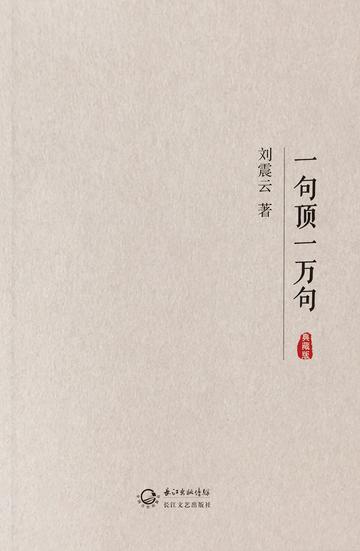
I want to read a book similar to "One Sentence is Worth Ten Thousand Sentences: Collector's Edition".
122.5MViews725Books1dUpdated
Worth Reading Literary Works
Keep it for the record and look at it again when you have time.
48.1MViews651Books3dUpdated
A Book on Self-Discipline and Learning Methods
A book on self-discipline and learning methods
7MViews545Books2dUpdated
For one sentence, ten thousand sentences are involved. A story involves ten thousand past events. Our ancestors have been living among these past events for generations.
It tells a story that spans nearly a hundred years without any preaching. It took me 10 hours to read it in one go. The author's ability to narrate stories is very strong, and it loops forward and backward without leaving anyone confused. As for the meaning of the story, in fact, the novel does not have to be very meaningful, as long as the lives of the people in the story can make the readers feel a little moved after reading the book, that's it!
After reading it, I felt an unspeakable feeling of depression and loneliness. No matter how much you cherish your friendship and get to know each other, the final breakup will always be because of trivial things, or you will have to separate in the end, and you will never be able to return to the closeness you once had. There are always roads that you have to walk on your own, and there are always things that you have to do by yourself. Traveling alone may not be so scary after all.
The author is like a Go master. The first half is a layout, a little here and there, seemingly carelessly; in the second half, he starts to work hard and gradually connects these points, as if weaving a big net, and the story becomes more and more exciting. There are many characters and events in the story, which may seem random, but they all contain hidden mysteries. There is not a single nonsense word in the whole story. True novelist everyone.
Liu Zhenyun's novels have the poison of a running account. Originally I wasn't addicted, I was just bored; I wasn't bored watching it, I watched "Chicken Feathers in a Land" and then watched it; originally it wasn't "Chicken Feathers in a Land", but "My Name is Liu Yuejin". Some things are not complicated, but they feel complicated when they are heard, and even more complicated when they are stuck in their hearts. But I didn't expect that after Liu Zhenyun wrote it, the complicated things became streamlined hahaha😁
"One Sentence is Worth Ten Thousand Sentences", I thought this book would be about literary language, but I didn't expect that the story content in the book would be so profound and connotative. From the story of leaving Yanjin to the story of returning to Yanjin, both stories contain descriptions of people's lives. The twists and turns of life are busy and hard work. They also have descriptions of marriage, life, and family relationships, and each has its own life philosophy. The protagonist Yang Baishun in "The Story of Yanjin" has been wandering around from a place where he hated selling tofu. In the end, there is still one sentence: go back to your original thoughts, and start your own life again with the name of the person who cried out for mourning. After reading Yanjin Chronicles, the one who obeyed the leader was deeply remembered: "Who are you, where are you from, and where are you going." These three questions run through the second half of the protagonist's life from beginning to end, including confusion, anxiety, frustration and disappointment in life and marriage. At the same time, we also need to understand these three questions, which are worth pondering. The protagonist of the story in Return to Yanjin does indeed return to the original place: Yanjin at the end of the story. The postscript uses flashbacks and inter-narrative methods. It develops flashbacks based on the protagonist's story and slowly guides readers step by step to develop the content of the story. The most impressive thing here is: "People have to live backward, not forward." Don't hold on to the past things in life, but live a good life in the future.
It's a good book, and it's refreshing to see this in the online literature world! Just a little depressing
"Life is for the future, not the past." But why don't many people in the book understand? I think it is probably because they are in that kind of environment and have a low level of education. They may think that life is just to get a wife and have children, and live a life without having their own ideal goals. They just live blindly and busy. When a major change occurs in his life and he doesn't know why he lives, he can't think about the future because he feels that his future is the future where his original life will continue before the major change occurs. . . . . . . I feel like I can't figure it out after talking about it. Anyway, I want to express that if a person does not have a goal that he pursues and has not yet achieved, it will be difficult for him to look forward and live for the future. He will only look for answers in the past and live for the past (personal opinion, don't criticize if you don't like it)
The first half of the novel is about the first half of Wu Moxi's life, and the second half is about the first half of Niu Aiguo's life. The matchmaker in the middle is the life of Niu Aiguo's mother, Cao Qing'e, Wu Moxi's adopted daughter. It spans hundreds of years. From Yanjin, Henan to Qinyuan, Shanxi. The stumbling lives of the three unfolded with one sentence followed by another. The words contained human thoughts and twists and turns of right and wrong. In this book, "words" are destiny. In a troubled life, everyone is looking for someone who can talk to them for some comfort. The rights and wrongs involved among close relatives such as parents, husband and wife, brothers and sisters are too many and complicated, so there is nothing to say. Even if you can find someone who can talk to each other, as time goes by, you can no longer talk to each other. People are born lonely. Life is boring. But people will not stop and look for the person they can talk to and a city that makes them feel at ease. Even if it is a high-ranking county elder, Shi, even if the other party is a male actor in a Xi opera, even if it is just a hand-to-hand conversation, even if it is misunderstood. There is also Lao Jiang, the owner of the dyeing shop, even if the other person is just a monkey, not to mention us all living beings, with people who can talk and thoughts, life becomes less boring and more interesting. I think of Sisyphus pushing the stone. He repeated it day after day. He was bored to death and worked hard to death, but he did not die or fall. He was supported by the thought of pushing to the top of the mountain. It turns out we are all Sisyphus.
Maybe it was the first time I read it, and I stumbled a lot in the middle. I felt uncomfortable, sad, and deeply touched. But when I read it to the end, I felt very calm, which I can't describe. The book is good overall, but I always think that the female images in it are a bit extreme, as if there is nothing redeeming from head to toe.
The writing is simple and the content is very close to life. I feel like I am reading others as well as myself. What I am saying is that one sentence is worth ten thousand sentences. People have probably been bound to the seven emotions and six desires since they came into the world, and until their gray hair and old age, they have been searching hard for a word until the last moment of their lives. Finally, I quote a sentence from the novel that touched me a lot: Life is about living in the future, not in the past. If I couldn't figure this out, I wouldn't be alive today.
I have never dared to write book reviews. My writing skills are really poor and often what I write does not express my inner feelings. But after reading the whole book, I had mixed feelings. The author used very relaxed words to express something that was originally very sad, making it less strenuous to read. I always thought that Wu Moxi might be able to see Qiaoling again. After all, they used to depend on each other. Times have changed, and at the last moment of their lives, they still thought about each other. Every character in the book is vividly depicted, as if these people are living in front of you. A sentence only takes a few seconds to say, but it can make or destroy a person or a group of people. Our life is like this. You never know what will happen in the next moment. What consequences will a random choice of yours have in your life? You can only go back and forth. In short, no matter what you should say or what you should choose, you must remember your original intention.
The language of this novel is concise, but the content of the story is repeatedly narrated. In a plain language environment, every character is inextricably linked, and every character is vividly described by the author. The image of every character is so distinct. In the ups and downs of the story, you can feel the hardship of the people of that era, and also feel the happiness and joy of the people. The author's writing style is relaxed and humorous, which makes people feel deeply involved.
The language of the novel is simple and plain, reflecting the real social life of that era. Although it is short and long, it is also an important part of everyone's life. What impressed me the most in the book is that everything in this world is convoluted. When talking about one thing, it is not about this thing, but about another thing. It is not about another thing, but actually about that thing. This very well reflects the roundabout way of speaking of the Chinese people. The book also teaches people something: life is not about living before, but living after. I also have some opinions of my own about this sentence. I think we should not always be entangled in things that have passed and cannot be changed. We should not be able to extricate ourselves from the depression. We should live on and look for new light in life. But for things that have passed but still have the opportunity to change, for example, I did not achieve a certain goal and failed, this is the past, but it can be changed. We can continue to work hard in the days to come, make up for the regrets of the past, and live a future that is "the same as before."
Why can one sentence be worth ten thousand sentences? It must be because of the truth that speaks to the heart, because of the emotional attachment, and because of the understanding from the perspective of the person involved. However, life is always moving forward, and the past principles, feelings, and understandings will deepen, deteriorate, or dissipate as the environment changes. Therefore, we must continue to pursue on the path of growth, pursue that sentence, and pursue the better self in the subconscious. Yang Baishun, who came out of Yanjin, finally "woke up" at the cost of being separated from his native family, failing in many academic studies, and being unhappy in his first marriage, and became Luo Changli, who had been in love since childhood. But he seemed to be Luo Changli, but he was not, because the regret when he dreamed back at midnight and died was always heavy on his heart. Mixed joys and sorrows may be the best comment on his life. Niu Aiguo, who returned to Yanjin, secretly followed the same path as his ancestors. The absence of his parents when he was young, the betrayal of his wife when he became an adult, and the withering of friendships, he has never really gotten rid of the difficulties of life, but he has never sunk into it. He constantly seeks inner peace. In conversations with friends, and in his own state of mind, he arranges the messy life like weeds into order again and again, finds a way out of the quagmire for himself, and strives to live a good life now. The trivial things in life actually contain grievances hidden in them. The beauty we strive to pursue may be the best armor to resolve those grievances.
If you want to do it, be the kind of person whose words are worth ten thousand words.
Life is about living in the future, not in the past. The title of the book is "One sentence is worth ten thousand words." In the end, Niu Aiguo was also looking for that unspoken sentence. When he was upset, it was worth a thousand words to him. He and Luo Changli They are all looking for someone who can speak. The story is very good. The one on the top is Luo Changli, the one on the bottom is Niu Aiguo, and the connection between the characters is Cao Qing'e. Both the older and younger generations are looking for someone who can speak, and they have been waiting for hundreds of years.
Four Generations Under One Roof was written about Beijing, The Ordinary World was written about Shaanxi, and One Sentence is Worth Ten Thousand Sentences was written about Henan. It was full of intimacy when I read it💙 Each section of the book seems to be an independent chapter and yet connected with each other. One person leads to another person, and one thing leads to another thing. Chinese-style loneliness probably means that everyone is looking for someone to "talk to". Many people in the book are looking for someone to "talk to" others. Some people began to look for someone with whom they could talk, some chose to run away, some learned to "spray the air", some played the three-stringed string instrument, some performed drama, and some talked to God, all in order to "break away from the life in front of them and give their hopeless hearts something to rest on." Things in the world go round and round and are full of grievances. Some people will always have moments when they want to kill people and set things on fire, but there are also moments when they are inadvertently redeemed. There are people who can't let go, and there are reasons to live. In this case, just live optimistically. After all, "life is about living in the future, not in the past."
2022.5.2🌊The content of this book is very detailed, and it is very tongue-in-cheek to read, but this is the normal life in the world. The old ladies and grandfathers under the big trees and walls at the entrance of the rural areas also read in detail. It is very close to real life. It is very important whether you can talk to someone or not. Only when you can talk to someone can you live on and life will not be so lonely. How important it is to speak well. If people don't speak, they will get choked up. It's such a blessing to meet like-minded people.
I know what I want, but because I worry too much, I get nothing. My life is in a mess and I can't see the way forward. I want to know what happened to Niu Aiguo in the end.
Life will never be the same again. Life goes around and around, and one thing is often not due to one reason, but to another reason, and not to another reason but to other reasons. Not many people understand it.
The greatest happiness in life is to have someone who you can talk to and who is willing to listen to your nonsense.
No one can tell what a person wants to do in this life. Trivial things and trivial people constitute our whole life. Looking for people, looking for trouble, not knowing the consequences or the future, maybe life is lonely.
It was a bit hard to read at first and a bit convoluted. Then I calmed down. The more I read, the more interesting it became. It attracted me to keep reading. The different narrative and the twists and turns of the story are quite interesting. The author's perspective in writing the book is very novel. It is a good work. One sentence is really worth ten thousand sentences. At first I didn't understand why the title of the book was chosen like this. But I understood after reading it.
The language is simple but very picturesque. In a few words, it outlines the helplessness in the lives of a group of small people. Every small choice will have an unexpected impact on one's own life many years later.
What is written is the things of ordinary people, and the principles are explained by ordinary people, but many people do not understand this principle.
In the novel, we cannot judge who is living well and who is not living well. We can only say that life is like a play, and play is like life. This is in line with a sentence in the book: You can make choices in life, except for life, you cannot make choices!
Good books, good books worth reading by men
People at that time were simple-minded. The characters are all vividly drawn. They are inextricably linked to each other. For one person, one can cross thousands of rivers and mountains. Those who can talk about each other can become good friends, and those who can't talk about each other can become friends. No matter how good the relationship is, it may break up over a trivial matter. I feel sorry for Moses the most, but fortunately Qiaoling is doing okay after being sold. Don't imprison yourself because you want to imprison the other person. Missing something always becomes a regret, I hope he can find Zhang Chuhong.
We have seen half of it. The first half of Yang Baishun's life was full of twists and turns. Compared with his current life, I admire him for being able to leave home at will. Although everything went against his wishes, he did not succumb to his native family, confront his father, confront the unknown, and confront himself.