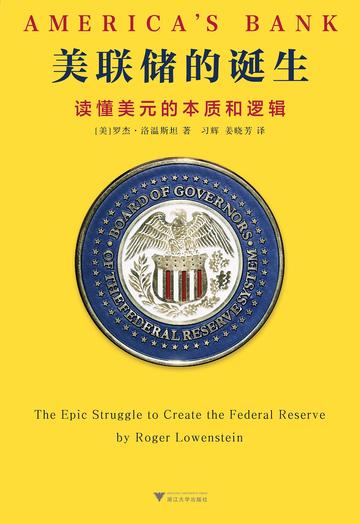
The U. S. Dollar is the foundation of the international financial system. As the institution that issues U. S. Dollars, the Federal Reserve's influence is everywhere, and every adjustment it makes has a profound impact on the international financial system. However, before the birth of the Federal Reserve in 1913, the United States did not even have a unified currency, the financial market had no ability to resist risks, and its economic strength was only second-rate in the world. As the Federal Reserve established the dollar system and improved U. S. Financial policies, the United States gradually became the center of the country's financial system. In fact, the process of the Federal Reserve's unification of the U. S. Monetary system did not happen overnight. Its Federal Reserve system for regulating the U. S. Dollar was also the product of compromise among many parties. This compromise is the root of the variability and complexity of the U. S. Dollar in today's international financial markets.
"The Birth of the Federal Reserve" is a chronological review of the Federal Reserve's process from its inception to its birth. Its long time span, rich historical data, and vivid speeches are extremely rare and precious among the existing literature on the U. S. Dollar and national financial systems. So much so that some scholars believe that only through the birth of the Federal Reserve can we truly understand the nature and logic of the U. S. Dollar. Open "The Birth of the Federal Reserve" to understand the nature and logic of the U. S. Dollar and the rise of the U. S. Financial system.
Lowenstein tells a gripping story; "The Birth of the Federal Reserve" is rich in vivid character and period details. The stories he describes from the days of Taft, Roosevelt and Wilson are playing out in today's financial industry - the struggle between central power and local government, the game between politicians and bankers, the conflict between businessmen and farmers.