Stats
5.8Score
Synopsis
No synopsis yet.
We haven’t got an English blurb for this one. It appears once the source description has been translated.
We haven’t got an English blurb for this one. It appears once the source description has been translated.


It's like a travel essay, suitable for reading on the train to calm your heart when traveling. Alai's writing is very gentle, flowing through your heart like water, making you seem to have the same mood and thoughts as her. In addition, her writing skills are very profound. I think children can read it and feel how the travel notes use grand descriptions to set off inner peace. In addition, they can also practice their writing skills. Here's an excerpt to give you a taste: "Beside the lake, daphne that looks like some kind of cuckoo is blooming, and its strong and turbid fragrance makes everything in front of you have a psychedelic color. The masculine part of the heroic story has not yet appeared, and its feminine part is already in front of you."
Literature is his life-long belief and the original intention of his constant pursuit of beauty and truth; every era has its own writers, and Alai's ethnic minority identity and life experience also determine his uniqueness in the selection of materials; it also determines the breadth and depth of his literary works; coming from the Aba District of Tibet, as a writer A genius who is called a foreign writer. His writing is not driven by bestsellers, nor does he want to reveal the novelty of the so-called foreign land to the audience, but faithfully records the people on that land. Even if real life is so mediocre, his love for literature, music and poetry can help him use language to build isolated islands between people.
The subject matter of this book is diverse, the language is brilliant, and the lines are full of bookishness. It is a prose work worth reading. This book selects forty prose works written by Alai, with a wide range of themes, including the natural and cultural scenery of the southwest minority areas, as well as the author's new understanding of literature and new reflections on his own works. Readers will see many different life experiences and ideological logic in this book. The author's writing style is clear and eclectic, making it very free and easy to read.
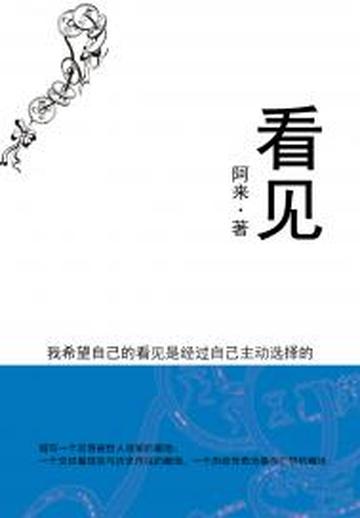
As Alai said, this is an era when everyone has the opportunity to be seen, but it is also an era when everyone is easily forgotten. The development and popularization of the Internet has given everyone who can connect to the Internet the opportunity to show themselves. However, the information explosion has brought about competition for attention, and not everyone has equal access to traffic. What Alai believes in is a different kind of seeing, one that is spontaneously chosen and actively seen in one's own heart, rather than a seeing that caters to other people's preferences and is discovered by others. Alai shares the scenery he sees and his life insights, and also allows this seeing to be seen by those who are destined to see it.
The author writes well