In 1641, Nan Shifang, a refugee fleeing famine, escaped from Henan to Datong, where he met Jiang Xiang, the newly appointed commander-in-chief of Datong.
In 1644, the seventeenth year of the Chongzhen reign in the Ming dynasty, the Chongzhen Emperor hanged himself at Coal Hill.
In 1649, Jiang Xiang switched sides and rebelled in Datong.
This story takes place between Sword Stained with Royal Blood and The Deer and the Cauldron. However, apart from a few overlapping characters, it has little in common with either of those two books.
This was a chaotic age. The Ming dynasty was collapsing, while the Qing dynasty began establishing its rule over the Central Plains.
It was an age when many different powers rose up across China: the Ming, the Qing, the Southern Ming regimes of Hongguang, Yongli, and Longwu, the peasant armies of Dashun and Daxi, as well as the Oirat Mongols, Khalkha Mongols, and Khorchin Mongols, seldom seen in the public eye, and the colossal power to the north, Russia.
Overseas, Spain, the empire on which the sun never set, coveted the Ming dynasty's maritime borders. The Edo shogunate had ended the turmoil across the Japanese islands and was preparing to restore its strength. The English had already arrived in India, while the Dutch, the carters of the sea, were preparing to seize Taiwan. This was an age of flourishing voyages of discovery, and the last time the Chinese held sway overseas. Zheng Zhilong and his maritime empire were the true rulers of the South China Sea, The Great Ruler.
This was a tragic age that had a profound impact on the entire world. The Thirty Years' War broke out in Europe, laying the groundwork for the Reformation and England's Great Charter movement. In China, the Ming-Qing transition brought a new dynasty into being.
The next time such a tragic age would come along was World War II. Thankfully, China endured both times, and Shanxi played an important role on each occasion.
The course of Chinese history turned its focus to Datong, a small city entrusted with the task of bringing about China's rise. Faced with an impossible mission, what choices would this little city and its people make amid the tides of history?
Let me lead you into this extraordinary era. Here, there is none of the Southern Ming court's petty scheming, and Hong Chengchou is no longer a major character. This is a story of the choices made by a series of ordinary people. As history moved forward, they turned its gears, bringing profound changes to the history of China and the world.
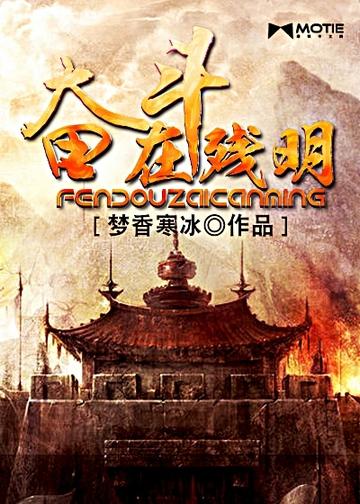
Striving in the Dying Ming: a historical tale you have never read before.
Well written 👍