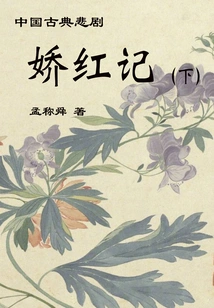
Classical Chinese Tragedy: the Story of Jiao Hong (part 2)
About This Novel
"Jiaohong Ji" is based on a true story during the Xuanhe period of the Northern Song Dynasty, and adapted from the novel "The Story of Jiaohong" by Song Meidong of the Yuan Dynasty. Written by Meng Chengshun of the Ming Dynasty, it describes the tragedy of Wang Jiaoniang and scholar Shen Chun who died in love because their love was not allowed. The theme of young men and women fighting for the freedom of marriage expressed in "Jiao Hong Ji" has been repeatedly expressed in operas between the Yuan and Ming Dynasties. However, "Jiao Hong Ji" does not stay at the heights reached by its previous love works. No matter in the shaping of characters or the depth of reflecting reality, it has its own characteristics and shines with the brilliance of new ideas. It is listed as one of the top ten tragedies of Chinese classical music. The layout and writing style of the novel inherit the legends of the Tang Dynasty, but the plot is more twists and turns and the mood is more lingering; the scale is also expanded a lot, marking the transition of classical Chinese novels from short stories to medium and long novels. The publication of the novel "Jiao Hong Ji" broke the short pattern of classical Chinese novels in Chinese history. With the tragedy of life and death love, the novella-oriented narrative structure, and the narrative technique of alternating rhyme and prose, it formed a spectacular novella legendary novel genre in the Yuan and Ming dynasties. The writing style of this book is exquisite, and the psychological portrayal is profound; in terms of technology, it also inherits many of its predecessors and goes further. The text of the novel breaks through the rough outlines of the weird novels of the Wei and Jin Dynasties and the concise descriptions of the legends of the Tang and Song Dynasties, forming a slightly longer novella structure that is self-contained and published separately. "Jiao Hong Ji" had a wide-ranging influence on later generations. Most of the novels about the love between men and women in the Ming and Qing dynasties can be seen in the imprint of this book.
Official Sources
What Readers Think
Rating
Community(0)
Rating
Community(0)