Late Ming Dynasty: Rebuilding the Ming Dynasty in the Second Year of Chongzhen
About This Novel
In the second year of Chongzhen in the Ming Dynasty, half a month after Yuan Chonghuan promoted the city of Mizi Harashen, the soul of a future person replaced the original ruler of this decadent dynasty, Emperor Chongzhen. After quickly understanding his situation, he needed to make the right decision as quickly as possible. He must change the situation on the Mingjin border within half a year and protect hundreds of thousands of border residents. He must not repeat the same mistakes again and allow Huang Taiji's Manchu and Mongolian soldiers to crush this important border crossing. So? Zhu Youjian. What to do?
Official Sources
What Readers Think
Rating
Community(0)
Official(28)Scraped 2mo ago
The author can only eat enough if he listens to others' advice.
Didn't you realize that all your comments in defense of moving south have zero likes? You always achieve the purpose of your debate by emphasizing certain one-sided facts and selectively ignoring certain facts. You also label readers as talented and funny from time to time, which just exposes the poverty of your arguments and over-interprets the readers' opinions. (The reader thinks that a hasty move south is not conducive to the reconstruction of the Ming Dynasty. The author directly interprets it as moving south will lead to the destruction of the country.) Then criticize. I just have nothing to do now, so I will give a comprehensive and systematic review of the debate between the author and several readers. When you reply to me, please don't make excuses and he shouldn't blame me directly. Can you reply one by one? We are all civilized people if we are reasonable and well-founded. The direction of the reply should be clear and organized. Don't talk to yourself. If there are any gaps or errors in my opinions, please correct me! But if the small gaps are not enough to completely deny my argument, please don't cover it up with partiality. Just come to a complete defeat. The author's ultimate goal is to rebuild the Ming Dynasty, and moving south is an important means, or the author thinks it is a clever move. Chongzhen, who traveled through the country in the second year of his reign, decided to move the capital in the third year of his reign. Many readers think this is a bad game. The author's arguments probably include the following points: The nine sides have relatively independent defense systems. There is no need for the emperor to guard the country; the water transport burden in the north is heavy, so it is better to go south directly; in the early years of the Ming Dynasty, it was in Kyoto in the south, so returning to the old capital is not a bad thing. ; Zhu Yuanzhang killed millions of soldiers in Jiangnan, which shows that Zhu Yuanzhang had strict control over Jiangnan. The southern economic center is a land of important wealth, so it is necessary to move south. I won't talk about the reader's point of view. Because I will mention them one by one when I refute you. 1: The nine-sided system relies on the endorsement of the authority of the central government. Although the nine-sided system has hierarchical commands such as commander-in-chief, governor, and governor-general, major decisions (such as sending troops, negotiating peace, and allocating military pay) require the approval of the imperial court. During the Jiajing period, when Anda Khan's troops came to Beijing, the generals on the nine sides did not dare to move without permission. It was only because Emperor Jiajing issued an edict that King Qin organized a counterattack 7. In the last years of Chongzhen, as the prestige of the imperial court collapsed, generals from the nine borders either surrendered to the Qing Dynasty (such as Wu Sangui) or supported their own troops (such as Zuo Liangyu), proving that the authority of the central government was the core link to maintain the border defense system. The emperor's abandonment of the capital was equal to the collapse of the people's will to resist. In 1644, news of Chongzhen's suicide spread to Jiubian. Jiang Yang, the general of Datong, and Wang Chengyin, the general of Xuanfu, immediately surrendered to the Qing Dynasty. Only Wu Sangui's lone army remained outside Shanhaiguan. It is recorded in history that "the emperor's star has fallen, and the soldiers have no masters" is a portrayal of the collapse of people's hearts. Before the humiliation of Jingkang in the Northern Song Dynasty, Emperor Qinzong of the Song Dynasty fled south and was angrily scolded by Li Gang: The parents and wives of the Sixth Army are all in the capital, and they are willing to defend to the death! "--The emperor who abandons the country declares the spiritual death of the regime. The emperor guards the country" is essentially political deterrence. The nine sides are the military framework, and the emperor is the symbol that unites the people. When symbols collapse, the framework must collapse. You ignore the role of the human heart. (During the Vietnam Self-Defense Counterattack, Teacher Gu Yue went to the front line to express condolences to the soldiers. Everyone knew that Gu Yue was not him. Moreover, he did not pay them an extra cent when he went, but after being sent condolences, their morale skyrocketed.) Water transportation is the lifeline that maintains the north, not just a burden In the Ming Dynasty, there were 400,000 troops stationed on nine sides, and their annual food and salary consumption accounted for more than 60% of the national finance, and they all relied on water transportation. If the capital is moved to Nanjing, the northern defense line will be deprived of food and the nine sides will collapse without attack. Wang Zongmu, the governor of water transportation in the Jiajing Dynasty, said bluntly: "Without canals, there would be no Jiubian, and without Jiubian, there would be no capital." Moving the capital to the south will cause a more serious economic imbalance. After Lin'an was established as the capital in the Southern Song Dynasty, tax revenue from the occupied northern areas was cut off, and the imperial court relied entirely on taxes from the south of the Yangtze River, which ultimately led to "the wealth in the southeast was drained and the danger in the northwest was not solidified." If they moved southward at the end of the Ming Dynasty, the northern economy would completely collapse, and the Manchu and Qing Dynasties could easily integrate their manpower and material resources, recreating the historical cycle of "using northern resources to crush the south." Water transportation is a national defense investment! This thing can't just be about saving money or not. (Poverty alleviation also costs money, and in many places it is still thankless, so how can we not do it? Third-line construction also costs money? We are not making much money yet, so how can we not do it?) In the 24th year of Hongwu, Zhu Yuanzhang sent Prince Zhu Biao to inspect Xi'an and Luoyang, with the intention of moving the capital to the north, but failed because the prince died of illness. His concern was that "Nanjing is relatively peaceful and it is difficult to control Shuomo" (Lao Zhu himself felt that Nanjing was not suitable and wanted to move the capital, but he did not complete it.) Zhu Di moved the capital to Beijing in order to learn from the lessons of the Song and Yuan Dynasties. The Yuan Dynasty made Dadu (Beijing) the capital to realize the "integration of Hua and Yi". Zhu Di imitated this system: "The mountains and rivers are powerful enough to control the four barbarians and dominate the world" (Six Memorials in the 14th year of Yongle) 1. After the Southern Song Dynasty established its capital in Hangzhou, it was unable to regain an inch of the Central Plains. This was the consensus of the emperor and his ministers in the early Ming Dynasty. The essence of Nanjing as the capital was to back up Yongle and retain the Nanjing institution to prevent "the fall of Beijing and retreat to Jiangnan", which did not recognize its status as the capital of a unified nation. Emperor Hongguang of the Southern Ming Dynasty made Nanjing his capital and died in just one year, confirming his separatist nature. In the early Ming Dynasty, it was an expedient measure to establish the capital in Nanjing, and Zhu Di moved north to establish the foundation of the country for a century. (The founding of Nanjing as the capital was a precedent. Why didn't you mention it when Taizu Ming Dynasty moved the capital in his later years? Why didn't you mention Zhu Di's move to the north? Isn't this a precedent? Co-authors are just like those officials in the Ming Dynasty, and they turned a blind eye to the things that were not conducive to their own ancestral system, right?). The location of the capital is based on multiple considerations of politics, economy, military, and geography. It is not just about going where there is money. At the end of the Ming Dynasty, Jiangnan was no longer comparable to the Hongwu Dynasty, which relied on force to suppress the gentry in the south of the Yangtze River (such as heavy taxes in Suzhou and banning Su Song people from serving as household officials). However, in the Wanli Dynasty, the gentry in the south of the Yangtze River controlled the government through the Donglin Party and was able to expel the emperor's tax envoys (such as the massacre of tax collectors in the Suzhou uprising). The imperial court that moved south was bound to become a puppet of the Jiangnan gentry. After Emperor Hongguang of the Southern Ming Dynasty established his capital in Nanjing, the real power fell into the hands of Jiangnan bureaucrats such as Ma Shiying and Qian Qianyi. When the Qing army went south, Qian Qianyi said when he presented the city to surrender: "How can the cultural heritage of Jiangnan be ruined?" - The gentry gave priority to preserving their own interests. It was difficult to convert the wealth in Jiangnan into central combat power. At the end of the Ming Dynasty, 80% of the wealth in Jiangnan was in the hands of the gentry associated with the Donglin Party. Chongzhen's repeated increases in Liao pay were resisted. Even if the capital was moved, the imperial court still could not effectively collect taxes (referring to the Southern Song Dynasty's "Jingzong money system" which triggered civil unrest). In the early Ming Dynasty, the butcher's knife could suppress Jiangnan, and in the late Ming Dynasty, the royal family's prestige was completely lost. Moving south is actually throwing yourself into a trap (and your argument is also very inappropriate. Just use the killing of a million soldiers in the south of the Yangtze River as an argument. Then the diary of the transport brigade captain clearly stated that 100 million enemies were wiped out, so why did Taiwan return to Taiwan?) It cannot be completely controlled, and it rushes to join forces and kill people! Those who abandon the northern border will lose the world . Geographical determinism: Without the barrier of Yanshan Mountain, the cavalry could march directly into the Central Plains (lessons from Kaifeng in the Northern Song Dynasty); . Resource reversal theory: the combination of northern manpower + war horses + minerals crushes the southern wealth (the Mongolian Yuan Dynasty destroyed the Song Dynasty); . The theory of rapid decay of people's hearts: The emperor abandons the country = declares the spiritual death of the regime (Chongzhen died and the Ming army descended like a tide) Strategic nature: The author's proposed move to the south is actually to abandon northern Xinjiang, gamble on Jiangnan, and seek partial peace, but it is called "rebuilding the Ming Dynasty." Isn't this just a matter of pretending to be a monkey?
When he saw the capital being moved to the south, he ran away. The biggest enemies in the whole north are the Manchus and Mongols, so you went south. What about the troops on the border? What should the people in the north do? As long as the Manchu Qing invades and occupies the entire north, it will be easy to conquer the south with the manpower, financial and material resources of the north.
? ? ? ? ?
Moved the capital to the south. Chongzhen passed through in the second year and moved in the third year of Chongzhen! And rebuild the Ming Dynasty? In the early Ming Dynasty, even Lao Zhu could not completely suppress Jiangnan. In the Qing Dynasty, he even handled major cases and killed everyone in Jiangnan! The wealth that was cleared was hundreds of millions of taels of silver to keep Jiangnan honest for a hundred years. At the end of the Ming Dynasty, you moved the capital in less than a year without saying anything. Does the author have any cheats? Is it reliable to have a plug-in? For example, take a group of absolutely loyal troops to the south! If there are no plug-ins, then don't talk about rebuilding the Ming Dynasty! I, Chongzhen, do not guard the country's gates, but only seek to cross to the south! This title is very good and quite novel. Don't sell dog meat with a sheep's head.
The author is much smarter than the ancients. When he went south, he lost the north. Which regime can last long? The Kuomintang is still in front of him.
History has clearly told us that it was unreliable to count on southerners during the Ming and Song dynasties. Why did Yue Fei's Northern Expedition fail? Who are the Donglin Party members from? Where did the materials smuggled from Liaodong in the Ming Dynasty come from? The author also moved the capital, thinking that all the emperors of the Ming Dynasty who wanted to make a difference died. As for whose hands he died, I don't know, but I know that Emperor Zhengde wanted to go to Nanjing and fell into the water and died, while Emperor Tianqi was collecting taxes in the south and fell into the water and died. Now medical science has proven that if you don't die on the spot after falling into the water, then basically nothing will happen, but it is ridiculous that the emperor dies.
Are you going to update or not? It's been 2 months now. I'll have a chapter every week. If you don't update, I'll delete the book early.
The author's data basically doesn't consider whether it is reasonable or not. At most, it depends on the plot. The whole book looks like a running account
The last word "的" in many sentences affects the reading sense. The author should read it himself.
I haven't started watching it yet, so I wasn't interested at all, but the first comment mentioned moving south, which is very interesting. I think moving south is worth discussing, especially when later people saw that during the Chongzhen period, the north suffered a drought that had not been seen in a thousand years for more than ten years. I couldn't figure out how to solve this problem. Rebuild the central government in the south as soon as possible, and deploy internal military towns to protect the financial and taxation areas directly under the central government - Huguang, Sichuan, Nanzhi, Fujian, Zhejiang, Jiangxi, Guangdong and Guangxi. The remaining north will directly delegate central power to them and allow them to govern themselves. As long as the Manchus cannot enter the pass, it will be a great victory.
Hello, I'm back to write a book review again. I rarely scold the author for being a jerk, but he is really a jerk. Does he think we are competing with him for interests?
Rating
Community(0)
Official(28)Scraped 2mo ago
The author can only eat enough if he listens to others' advice.
Didn't you realize that all your comments in defense of moving south have zero likes? You always achieve the purpose of your debate by emphasizing certain one-sided facts and selectively ignoring certain facts. You also label readers as talented and funny from time to time, which just exposes the poverty of your arguments and over-interprets the readers' opinions. (The reader thinks that a hasty move south is not conducive to the reconstruction of the Ming Dynasty. The author directly interprets it as moving south will lead to the destruction of the country.) Then criticize. I just have nothing to do now, so I will give a comprehensive and systematic review of the debate between the author and several readers. When you reply to me, please don't make excuses and he shouldn't blame me directly. Can you reply one by one? We are all civilized people if we are reasonable and well-founded. The direction of the reply should be clear and organized. Don't talk to yourself. If there are any gaps or errors in my opinions, please correct me! But if the small gaps are not enough to completely deny my argument, please don't cover it up with partiality. Just come to a complete defeat. The author's ultimate goal is to rebuild the Ming Dynasty, and moving south is an important means, or the author thinks it is a clever move. Chongzhen, who traveled through the country in the second year of his reign, decided to move the capital in the third year of his reign. Many readers think this is a bad game. The author's arguments probably include the following points: The nine sides have relatively independent defense systems. There is no need for the emperor to guard the country; the water transport burden in the north is heavy, so it is better to go south directly; in the early years of the Ming Dynasty, it was in Kyoto in the south, so returning to the old capital is not a bad thing. ; Zhu Yuanzhang killed millions of soldiers in Jiangnan, which shows that Zhu Yuanzhang had strict control over Jiangnan. The southern economic center is a land of important wealth, so it is necessary to move south. I won't talk about the reader's point of view. Because I will mention them one by one when I refute you. 1: The nine-sided system relies on the endorsement of the authority of the central government. Although the nine-sided system has hierarchical commands such as commander-in-chief, governor, and governor-general, major decisions (such as sending troops, negotiating peace, and allocating military pay) require the approval of the imperial court. During the Jiajing period, when Anda Khan's troops came to Beijing, the generals on the nine sides did not dare to move without permission. It was only because Emperor Jiajing issued an edict that King Qin organized a counterattack 7. In the last years of Chongzhen, as the prestige of the imperial court collapsed, generals from the nine borders either surrendered to the Qing Dynasty (such as Wu Sangui) or supported their own troops (such as Zuo Liangyu), proving that the authority of the central government was the core link to maintain the border defense system. The emperor's abandonment of the capital was equal to the collapse of the people's will to resist. In 1644, news of Chongzhen's suicide spread to Jiubian. Jiang Yang, the general of Datong, and Wang Chengyin, the general of Xuanfu, immediately surrendered to the Qing Dynasty. Only Wu Sangui's lone army remained outside Shanhaiguan. It is recorded in history that "the emperor's star has fallen, and the soldiers have no masters" is a portrayal of the collapse of people's hearts. Before the humiliation of Jingkang in the Northern Song Dynasty, Emperor Qinzong of the Song Dynasty fled south and was angrily scolded by Li Gang: The parents and wives of the Sixth Army are all in the capital, and they are willing to defend to the death! "--The emperor who abandons the country declares the spiritual death of the regime. The emperor guards the country" is essentially political deterrence. The nine sides are the military framework, and the emperor is the symbol that unites the people. When symbols collapse, the framework must collapse. You ignore the role of the human heart. (During the Vietnam Self-Defense Counterattack, Teacher Gu Yue went to the front line to express condolences to the soldiers. Everyone knew that Gu Yue was not him. Moreover, he did not pay them an extra cent when he went, but after being sent condolences, their morale skyrocketed.) Water transportation is the lifeline that maintains the north, not just a burden In the Ming Dynasty, there were 400,000 troops stationed on nine sides, and their annual food and salary consumption accounted for more than 60% of the national finance, and they all relied on water transportation. If the capital is moved to Nanjing, the northern defense line will be deprived of food and the nine sides will collapse without attack. Wang Zongmu, the governor of water transportation in the Jiajing Dynasty, said bluntly: "Without canals, there would be no Jiubian, and without Jiubian, there would be no capital." Moving the capital to the south will cause a more serious economic imbalance. After Lin'an was established as the capital in the Southern Song Dynasty, tax revenue from the occupied northern areas was cut off, and the imperial court relied entirely on taxes from the south of the Yangtze River, which ultimately led to "the wealth in the southeast was drained and the danger in the northwest was not solidified." If they moved southward at the end of the Ming Dynasty, the northern economy would completely collapse, and the Manchu and Qing Dynasties could easily integrate their manpower and material resources, recreating the historical cycle of "using northern resources to crush the south." Water transportation is a national defense investment! This thing can't just be about saving money or not. (Poverty alleviation also costs money, and in many places it is still thankless, so how can we not do it? Third-line construction also costs money? We are not making much money yet, so how can we not do it?) In the 24th year of Hongwu, Zhu Yuanzhang sent Prince Zhu Biao to inspect Xi'an and Luoyang, with the intention of moving the capital to the north, but failed because the prince died of illness. His concern was that "Nanjing is relatively peaceful and it is difficult to control Shuomo" (Lao Zhu himself felt that Nanjing was not suitable and wanted to move the capital, but he did not complete it.) Zhu Di moved the capital to Beijing in order to learn from the lessons of the Song and Yuan Dynasties. The Yuan Dynasty made Dadu (Beijing) the capital to realize the "integration of Hua and Yi". Zhu Di imitated this system: "The mountains and rivers are powerful enough to control the four barbarians and dominate the world" (Six Memorials in the 14th year of Yongle) 1. After the Southern Song Dynasty established its capital in Hangzhou, it was unable to regain an inch of the Central Plains. This was the consensus of the emperor and his ministers in the early Ming Dynasty. The essence of Nanjing as the capital was to back up Yongle and retain the Nanjing institution to prevent "the fall of Beijing and retreat to Jiangnan", which did not recognize its status as the capital of a unified nation. Emperor Hongguang of the Southern Ming Dynasty made Nanjing his capital and died in just one year, confirming his separatist nature. In the early Ming Dynasty, it was an expedient measure to establish the capital in Nanjing, and Zhu Di moved north to establish the foundation of the country for a century. (The founding of Nanjing as the capital was a precedent. Why didn't you mention it when Taizu Ming Dynasty moved the capital in his later years? Why didn't you mention Zhu Di's move to the north? Isn't this a precedent? Co-authors are just like those officials in the Ming Dynasty, and they turned a blind eye to the things that were not conducive to their own ancestral system, right?). The location of the capital is based on multiple considerations of politics, economy, military, and geography. It is not just about going where there is money. At the end of the Ming Dynasty, Jiangnan was no longer comparable to the Hongwu Dynasty, which relied on force to suppress the gentry in the south of the Yangtze River (such as heavy taxes in Suzhou and banning Su Song people from serving as household officials). However, in the Wanli Dynasty, the gentry in the south of the Yangtze River controlled the government through the Donglin Party and was able to expel the emperor's tax envoys (such as the massacre of tax collectors in the Suzhou uprising). The imperial court that moved south was bound to become a puppet of the Jiangnan gentry. After Emperor Hongguang of the Southern Ming Dynasty established his capital in Nanjing, the real power fell into the hands of Jiangnan bureaucrats such as Ma Shiying and Qian Qianyi. When the Qing army went south, Qian Qianyi said when he presented the city to surrender: "How can the cultural heritage of Jiangnan be ruined?" - The gentry gave priority to preserving their own interests. It was difficult to convert the wealth in Jiangnan into central combat power. At the end of the Ming Dynasty, 80% of the wealth in Jiangnan was in the hands of the gentry associated with the Donglin Party. Chongzhen's repeated increases in Liao pay were resisted. Even if the capital was moved, the imperial court still could not effectively collect taxes (referring to the Southern Song Dynasty's "Jingzong money system" which triggered civil unrest). In the early Ming Dynasty, the butcher's knife could suppress Jiangnan, and in the late Ming Dynasty, the royal family's prestige was completely lost. Moving south is actually throwing yourself into a trap (and your argument is also very inappropriate. Just use the killing of a million soldiers in the south of the Yangtze River as an argument. Then the diary of the transport brigade captain clearly stated that 100 million enemies were wiped out, so why did Taiwan return to Taiwan?) It cannot be completely controlled, and it rushes to join forces and kill people! Those who abandon the northern border will lose the world . Geographical determinism: Without the barrier of Yanshan Mountain, the cavalry could march directly into the Central Plains (lessons from Kaifeng in the Northern Song Dynasty); . Resource reversal theory: the combination of northern manpower + war horses + minerals crushes the southern wealth (the Mongolian Yuan Dynasty destroyed the Song Dynasty); . The theory of rapid decay of people's hearts: The emperor abandons the country = declares the spiritual death of the regime (Chongzhen died and the Ming army descended like a tide) Strategic nature: The author's proposed move to the south is actually to abandon northern Xinjiang, gamble on Jiangnan, and seek partial peace, but it is called "rebuilding the Ming Dynasty." Isn't this just a matter of pretending to be a monkey?
When he saw the capital being moved to the south, he ran away. The biggest enemies in the whole north are the Manchus and Mongols, so you went south. What about the troops on the border? What should the people in the north do? As long as the Manchu Qing invades and occupies the entire north, it will be easy to conquer the south with the manpower, financial and material resources of the north.
? ? ? ? ?
Moved the capital to the south. Chongzhen passed through in the second year and moved in the third year of Chongzhen! And rebuild the Ming Dynasty? In the early Ming Dynasty, even Lao Zhu could not completely suppress Jiangnan. In the Qing Dynasty, he even handled major cases and killed everyone in Jiangnan! The wealth that was cleared was hundreds of millions of taels of silver to keep Jiangnan honest for a hundred years. At the end of the Ming Dynasty, you moved the capital in less than a year without saying anything. Does the author have any cheats? Is it reliable to have a plug-in? For example, take a group of absolutely loyal troops to the south! If there are no plug-ins, then don't talk about rebuilding the Ming Dynasty! I, Chongzhen, do not guard the country's gates, but only seek to cross to the south! This title is very good and quite novel. Don't sell dog meat with a sheep's head.
The author is much smarter than the ancients. When he went south, he lost the north. Which regime can last long? The Kuomintang is still in front of him.
History has clearly told us that it was unreliable to count on southerners during the Ming and Song dynasties. Why did Yue Fei's Northern Expedition fail? Who are the Donglin Party members from? Where did the materials smuggled from Liaodong in the Ming Dynasty come from? The author also moved the capital, thinking that all the emperors of the Ming Dynasty who wanted to make a difference died. As for whose hands he died, I don't know, but I know that Emperor Zhengde wanted to go to Nanjing and fell into the water and died, while Emperor Tianqi was collecting taxes in the south and fell into the water and died. Now medical science has proven that if you don't die on the spot after falling into the water, then basically nothing will happen, but it is ridiculous that the emperor dies.
Are you going to update or not? It's been 2 months now. I'll have a chapter every week. If you don't update, I'll delete the book early.
The author's data basically doesn't consider whether it is reasonable or not. At most, it depends on the plot. The whole book looks like a running account
The last word "的" in many sentences affects the reading sense. The author should read it himself.
I haven't started watching it yet, so I wasn't interested at all, but the first comment mentioned moving south, which is very interesting. I think moving south is worth discussing, especially when later people saw that during the Chongzhen period, the north suffered a drought that had not been seen in a thousand years for more than ten years. I couldn't figure out how to solve this problem. Rebuild the central government in the south as soon as possible, and deploy internal military towns to protect the financial and taxation areas directly under the central government - Huguang, Sichuan, Nanzhi, Fujian, Zhejiang, Jiangxi, Guangdong and Guangxi. The remaining north will directly delegate central power to them and allow them to govern themselves. As long as the Manchus cannot enter the pass, it will be a great victory.
Hello, I'm back to write a book review again. I rarely scold the author for being a jerk, but he is really a jerk. Does he think we are competing with him for interests?
You Might Also Like
Reborn Female General
Qianshan Tea Guest
I, the Ming Dynasty, Can Still Save Me
River Crab Taoist
Ming Dynasty Chenghua: I Am a Foolish King
Five And Six
Huang Ming
I Don't Dare To Worry When The Rain Falls
Anti-qing 1850
The Three Fat Men By The River
Taichang Daming
Magic Turtle Revo
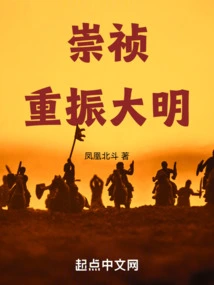
Chongzhen Revived the Ming Dynasty
Phoenix Beidou

Gou Became a Clan Member in the Late Ming Dynasty
Late At Night
Ming Dynasty Wanli Was Extremely Rebellious
Xingchenjiu
Late Ming Dynasty: Starting from Merchants to Build a Military-industrial Empire
Too Much To Say In A Hurry