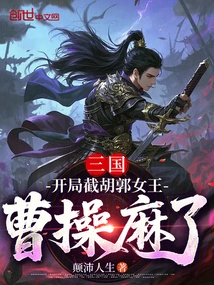
Three Kingdoms: Cutting Off Queen Hu and Guo at the Beginning, Cao Cao Was Paralyzed
About This Novel
Traveling through the Three Kingdoms, he became Cao Shuo, Cao Cao's most cynical and ineffective son. Dian Wei: "My lord, Mr. Cao Shuo stole Jueying and said he was going for a walk in Xuchang City!" Dian Wei: "My lord, Mr. Cao Shuo robbed Queen Guo on the street and said he learned this from you!" Dian Wei: "My lord, Mr. Cao Shuo privately led three thousand troops to attack Yuan Shu. He said that he would capture Yuan Shu as a gift to you!" ... Cao Cao was heartbroken and said: "I, Cao Mengde, have a great reputation all my life, why did I give birth to such a rebellious son!" Dian Wei: "My lord, Master Cao Shuo captured Shouchun and captured Yuan Shu alive!" Dian Wei: "My lord, Master Cao Shuo swept across Jiangdong, and Sun Bofu offered his land to Jiangdong to surrender!" Dian Wei: "My lord, Master Cao Shuo burned Wuchao, and the 700,000 Yuan army was disturbed and retreated north of the Yellow River." ... Cao Cao looked up to the sky and laughed: "Haha... God help me!" "I have this unicorn, and I can rule the world just around the corner!"
Official Sources
What Readers Think
Rating
Community(0)
Official(25)Scraped 2mo ago
Learn more about the information and don't create some obvious poison pits.
"Three Kingdoms: Killing Queen Hu and Guo at the Beginning, Cao Cao is in trouble" takes "the counterattack of the traitor" as its core and opens up a unique path in the market of homogeneous themes of the Three Kingdoms. It can be called an exquisite example of historical time travel literature. The novel breaks the situation at the beginning, anchoring the protagonist Cao Shuo as Cao Cao's "most useless son", but uses the subversive plot of "cutting off Queen Hu and Guo" to catch the eye, and uses Dian Wei's serial reports to create dramatic tension - one second he is a playboy who steals horses and robs people, and the next second he becomes a fierce general who captures Yuan Shu alive and sweeps across Jiangdong. This contrast accurately makes readers feel happy. The setting of the "inverse subsystem" is particularly clever, converting arrogant behavior into a source of points, which not only rationalizes the protagonist's early extraordinary actions, but also provides logical support for the awakening of force (such as the divine power of the Overlord of Western Chu), making the transformation of "dandy into Qilin'er" less abrupt. What is even more rare is the utilization of historical nodes. From the crisis in Wancheng that prevented Dian Wei from dying in battle, to the burning of Wuchao to rewrite the situation in Guandu, the intervention of the protagonist not only respects the historical framework, but also creates fresh variables. Cao Cao's attitude change from "sad and sad" to "laughing up to the sky" coincides with the survival rule of "strength comes first" in troubled times, making the fictional narrative resonate wonderfully with the weight of history.
After reading dozens of chapters, Cao Shuo has almost finished collecting all the beauties of the Three Kingdoms, haha!
After a quick glance, it turned out to be a good-looking book about the Three Kingdoms, 0k!
I don't comment, I just want to ask the author, when did Cao Cao become prime minister?
Damn it, I really ate shit. When I wrote about it, cars were written down, and when I was writing about airplanes and cannons, they came out.
Not bad, I have collected all the beauties of the Three Kingdoms, so cheers for the author! ! !
Throw your head directly to the author and take off immediately
I would like to call the author Yi Zhongtian Fentian
Why do I always feel like I've read books with similar plots elsewhere?
Rating
Community(0)
Official(25)Scraped 2mo ago
Learn more about the information and don't create some obvious poison pits.
"Three Kingdoms: Killing Queen Hu and Guo at the Beginning, Cao Cao is in trouble" takes "the counterattack of the traitor" as its core and opens up a unique path in the market of homogeneous themes of the Three Kingdoms. It can be called an exquisite example of historical time travel literature. The novel breaks the situation at the beginning, anchoring the protagonist Cao Shuo as Cao Cao's "most useless son", but uses the subversive plot of "cutting off Queen Hu and Guo" to catch the eye, and uses Dian Wei's serial reports to create dramatic tension - one second he is a playboy who steals horses and robs people, and the next second he becomes a fierce general who captures Yuan Shu alive and sweeps across Jiangdong. This contrast accurately makes readers feel happy. The setting of the "inverse subsystem" is particularly clever, converting arrogant behavior into a source of points, which not only rationalizes the protagonist's early extraordinary actions, but also provides logical support for the awakening of force (such as the divine power of the Overlord of Western Chu), making the transformation of "dandy into Qilin'er" less abrupt. What is even more rare is the utilization of historical nodes. From the crisis in Wancheng that prevented Dian Wei from dying in battle, to the burning of Wuchao to rewrite the situation in Guandu, the intervention of the protagonist not only respects the historical framework, but also creates fresh variables. Cao Cao's attitude change from "sad and sad" to "laughing up to the sky" coincides with the survival rule of "strength comes first" in troubled times, making the fictional narrative resonate wonderfully with the weight of history.
After reading dozens of chapters, Cao Shuo has almost finished collecting all the beauties of the Three Kingdoms, haha!
After a quick glance, it turned out to be a good-looking book about the Three Kingdoms, 0k!
I don't comment, I just want to ask the author, when did Cao Cao become prime minister?
Damn it, I really ate shit. When I wrote about it, cars were written down, and when I was writing about airplanes and cannons, they came out.
Not bad, I have collected all the beauties of the Three Kingdoms, so cheers for the author! ! !
Throw your head directly to the author and take off immediately
I would like to call the author Yi Zhongtian Fentian
Why do I always feel like I've read books with similar plots elsewhere?
You Might Also Like
Reborn Female General
Qianshan Tea Guest
Three Kingdoms: the Blind Box Draws Da Qiao at the Beginning
I Am A Cat Uncle
Starting from Rescuing Lu Bu in Xiapi
Righteous And Carefree
Da Qiao is Still Here. Madam, Please Respect Yourself
My Wife Forces Me To Open A New Book
Three Kingdoms: Dominate the World from Huainan
Stars In Leaves
Three Kingdoms: at the Beginning, Cao Cao Captured Him and Made Him His Son-in-law
Present Or Ancient
From Lu Bo Being a Neighbor to Ruling the World
Righteous And Carefree
Three Kingdoms: from Woodcutter to General Ji Han
Thousands Of Gold Gone Will Never Come Back
Red Mansion: the Death Camp Begins, and Our Military Merits the Title of King
Eyebrow Grease
At the End of Han Dynasty, the Struggle for World Hegemony Started from Youzhou!
Niujiao's Second Senior Brother